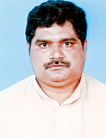
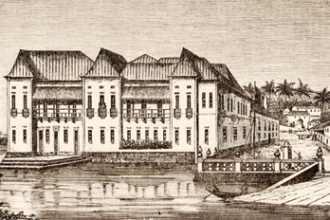
When the bells of St Stephen’s Church on the island of St Estevam toll out their mournful rhythm this evening, they will not only be calling for prayers for the soul of Bismarque Dias, a son of the island village, but also for the soul of Goa. For today as his family, relatives and friends lay to rest Bismarque’s body, there is also a cry going out to remember what the social activist battled for during his lifetime. He was a warrior for a green Goa, surfacing wherever there was a threat to the environment or where it was being destroyed. His battles led him from Tiracol and Tuem in Pernem taluka, to Corlim, a village close to his native St Estevam, and even further to Kharewado in Vasco, where he stood in solidarity with the fishermen.
Many of those who will meet at St Estevam Church today, where they will bid farewell to their comrade and leader, will have been there before, three years ago when they had gathered together in solidarity with Bismarque after the mind-numbing news of his death had spread across the State. At that time there was anger and a call to action. The anger may have reduced in intensity now, but the fire to fight still burns in a few of the good men and women of Goa, who have not allowed the rest of the State to forget that there lived a man called Bismarque who taught them to fight the good fight.
Bismarque strove to keep the Goa he loved green. He was the warrior who, with his guitar strung on his back, rode his two-wheeler to do battle with those he believed were destroying that Goa. He struck a chord with the youth, as he strummed his guitar strings, spoke out in a language they understood, and raised his fist in defiance. He had numerous friends across the State, who, when he was found dead under mysterious circumstances, raised the questions that the police investigation into his death hadn’t. They kept alive his memory as he lay in the morgue, never once letting the people forget that Bismarque’s death left many queries unanswered, and that they would rest, and so too would his body be laid to rest, only when there were answers to all of them.
Over the past 36 months, there have been numerous occasions when there was news that Bismarque, whose body remained preserved in the morgue since his death three years ago, was to be buried, but the funeral never did take place as the investigation did not provide an answer to every one of the queries raised. There still aren’t answers to every issue that cropped up, but today, Bismarque’s body reunites with the earth he so loved, in his village. As the earth covers his earthly body, and a tear is shed for the social activist and fighter, may there be a tear also for the Goa he so valiantly tried to save, and didn’t entirely succeed.
Bismarque’s body we still have with us three years after his death, but his soul left long ago. Sadly, it is also so with Goa, it exists, we live within its geographically demarcated boundaries, but its soul, the one Bismarque tirelessly fought to save, has long been gone. But it can still be redeemed. And that is what Bismarque would have wanted, not for the people to mourn his death, but for them to reaffirm their will to fight back to save the Goa he died while trying to secure from being destroyed. The greatest tribute that Goem and the Goenkar can pay Bismarque today, as his mortal remains make their last earthly journey, is to continue to fight the good fight for their land and that of their ancestors.