It has taken the first two days of the monsoon session of the Assembly, to firmly put bread and butter issues on the menu and on the plate of political discussion. This isn’t any surprise as this is election year. But as it is becoming increasingly clear, that the impassioned rhetoric over broader emotive issues will give way to those that are visible and need immediate attention.
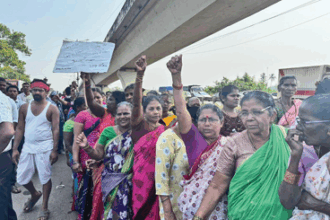
The strongest arguments and one on one disagreements have been over lack of water supply and power, bad roads, no response to complaints of delays over hot-mixing of roads, clearing of projects without reserving adequate parking space, partiality in providing government jobs, only to those from constiuencies of powerful ministers, and so on.
The narrative has quickly gone hyper local and that is the way this will ultimately stay till the elections take place. While this can be construed as an anti-incumbency wave, the equation isn’t so straight forward. It is much moré nuanced. An MLA, whether from the ruling party or the opposition is expected to deliver and while this is stating the obvious, MLAs who have delivered will beat any formations, ‘gatbandhans’ or anti-incumbency and those who haven’t will fall by the way side. Ultimately on the journey to the polling station, the thoughts that will dominate are not those on which agitations have taken place but those which deal with a man or a woman’s personal association with the government in any form or manner. A bribe paid for a job or for a genuine license or NOC or a power connection will rankle much more that then non-implementation of the Regional Plan or the building of the Mopa airport.
The BJP, which has the maximum number of MLAs has its task cut out. It will have to identify non-performing MLAs and prepare an alternate candidate in that constituency for 2017. An internal survey has been conducted by the party as a part of an ongoing exercise and one of the parameters for gauging an MLAs work has been the successful implementation of governments pet social welfare schemes like Girha Aadhar and Laadli Lakshmi. This is where issues like timely payment and ease of application and so on will count.
The government as well as the opposition will realise that its test starts as soon as a voter steps out of his house. From the condition of the road, to the extent of garbage strewn, to the dilapidated state of the primary school buildings to medicines available at the health centre, to the non-availability of school buses, each of these issues, not addressed will come to haunt the sitting MLA. The Goan voter wants a return on investment. The vote has become an investment and a return will be sought in 2017.
Which is why the biggest area of concern for the ruling party is job creation. The single biggest factor which is a cause of worry for the administration is that its target for providing jobs hasn’t quite been achieved. The push to clear more projects is aimed at job creation and decisions on major projects are being taken on the assurance that jobs will be provided to locals. These assurances must be tested and extracted.
2017 will be all about which party or formation realises where the real issues lie. This is going to be as local as a municipal and panchayat election as it can be and MLAs have realised that the trade off is clear – provide worry free standards of living and you are home. Neither the weight of history nor the crown of past reputation and glory will matter. What will is the fixing of hyper local issues on the road to power.