For all official purposes, the public hearings on the Coastal Zone Management Plan have been held and the minutes of the meeting will show that at least in the district of South Goa no member of the public spoke. If this was a strategic decision taken by various groups that have been spearheading the movement to challenge the plan, then it may just have been played wrong. In football parlance, it could be akin to having scored an own goal. Officially, there was no specific opposition to the plan at the public hearings.
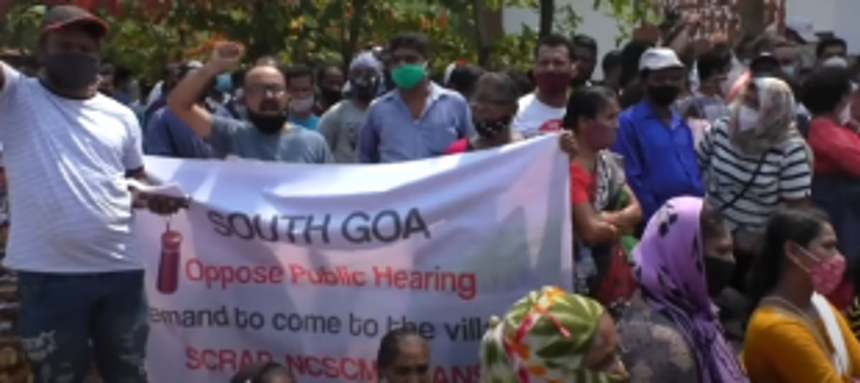
The minutes of the meeting have not recorded that outside the venue of the public hearing people were protesting. The minutes have not recorded that outside the venue traditional fishermen were demanding to be heard. The minutes have recorded that the names of the registered speakers were called out and the persons did not speak. The minutes will record that they waited five full minutes after each name was called out for the person to come up and speak. How does this help the people who have been protesting the errors in the Coastal Zone Management Plan? Affected parties are still able to send their representations in writing to Goa Coastal Zone Management Authority, but the ‘boycott’ of the public hearing gives the government an edge.

In Panjim the situation was a lot different. The speakers whose names were called out did approach the microphone to speak, but almost all criticised the process of holding the public hearing rather than point out flaws in the draft plan. What was the point of almost every speaker in Panjim, with the exception of a few, stating that the plan was not properly done? Or that the people should be given more time to make their presentations? Or that those who were outside should have been allowed to enter? Once the points had been made speakers should have moved to other issues. At one stage, there was also a call to walk out from the hall in protest and a large number did do so.
While the protests continued outside the venue, those given the opportunity to speak should have made use of it to put forth their grievances, for this was what the hearing was meant for. It has to be understood that abstaining from a process – whether speaking at a forum or voting in an election – does not produce the desired result as the presence is not recorded. In this case the actual objections to the plans have not been raised but the hearing process was challenged. When Chennai-based Centre for Sustainable Coastal Management takes up the minutes of the public hearing for inclusion in the draft Coastal Zone Management Plan, it will have little that it needs to alter.
There still, however, exists one more chance as the Environment Department will accept suggestions and objections in writing from the people up to March 15. If Goa is to get the coastal plan that it wants and error-free than the objections have to be raised in writing, failing which it will not be possible again.
On the other hand, it is not that the government authorities behaved in the most exemplary of manner where the public hearings were concerned. A huge police force was present at both venues – inside the halls where the hearing was taking place and outside. The allegation is that the force was there to keep people from entering. The time period to study the plan was also limited to 30 days, when, as pointed out by Goa Foundation, it should have been 60 days. Against this background, the government should reach out and accept the demands of the people to have the public hearing village wise, to ensure Goa gets the best possible Coastal Zone Management Plan.