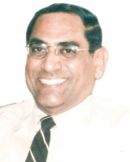
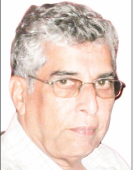
Devu Chodankar has been vindicated. The young Goan was arrested for saying on an online social media forum that a victory for Prime Minister Narendra Modi and the BJP could result in a ‘holocaust’ for Catholics in Goa. The complaint against him was filed by industrialist and former Confederation of Indian Industries (CII) Goa Chairperson Atul Pai Kane. Chodankar’s FaceBook (FB) post said: ‘If Modi is elected as PM this election, Christians will lose their identity in South Goa. Mark these words.” Another post said: “There is an imminent threat of holocaust as it happened in Gujarat though under the garb of cunning government policies of (Manohar) Parrikar. Save the identity of South Goa. Vote against BJP this election.” Had the Supreme Court not struck down the law under which he was arrested, young Devu could have been looking at a longish jail term.
Yesterday, in a landmark judgment upholding freedom of expression, the Supreme Court of India struck down the very provision in Information Technology Act that provided the power to the Goa government and Goa Police to arrest Devu Chodankar for allegedly “offensive” content online. Saying that liberty of thought and expression was “cardinal”, a bench of Justices J Chelameswar and R F Nariman said: “The public’s right to know is directly affected by Section 66A of the Information Technology Act.” Pointing out that terms like “annoying”, “inconvenient” and “grossly offensive” used in the provision are vague, the judgment added that Section 66A clearly affects the fundamental right to freedom of speech and expression enshrined under the Constitution. Therefore, Sec 66A is ‘unconstitutional’.
Referring to two judgments of separate UK courts, which reached diametrically different conclusions about whether some online material was offensive or grossly offensive, the Court pronounced that if judicially trained minds could reach such different conclusions, how was it possible for law enforcement agencies to decide what is offensive and what is grossly offensive? It added, “What may be offensive to a person may not be offensive to the other.”
The Court rejected assurances by the central government that it would not misuse the provision, and that the Court could lay down procedures to ensure that the law is not abused: “Governments come and go, but Section 66A will remain forever,” the Judges said, emphasizing that the present government cannot give any undertaking about its successors.
The Court was ruling on several Public Interest Litigation (PIL) petitions on the issue, the first of which was filed in 2012 by law student Shreya Singhal when two girls — Shaheen Dhada and Rinu Shrinivasan — were arrested at Palghar in Thane district of Maharashtra. One of them posted a FaceBook comment against a ‘bandh’ in Mumbai following the death of Shiv Sena leader Bal Thackeray. The other merely ‘liked’ it. The latest case was after the Court had reserved its judgment in the matter on 26 February this year, when a boy was arrested in UP on 18 March for allegedly posting ‘objectionable comments’ on FaceBook against senior Samajwadi Party leader Azam Khan.
Section 66A of the IT Act said: “Any person who sends, by means of a computer resource or a communication device: (a) any information that is grossly offensive or has menacing character; or (b) any information which he knows to be false, but for the purpose of causing annoyance, inconvenience, danger, obstruction, insult, injury, criminal intimidation, enmity, hatred or ill will, persistently by making use of such computer resource or a communication device; (c) any electronic mail or electronic mail message for the purpose of causing annoyance or inconvenience or to deceive or to mislead the addressee or recipient about the origin of such messages, shall be punishable with imprisonment for a term which may extend to three years and with fine.”
Among its victims: In October 2014, a student who posted on social media that Cyclone Hudhud was nature’s way of punishing those who did not vote for the YSR Congress Party, was arrested by the Andhra Pradesh CID. In August 2014, Kerala Police arrested college student Salman on charges of sedition for allegedly changing some words of a patriotic song with abuses in a FaceBook post. In August 2014, ‘abusive’ comments about Narendra Modi on FaceBook got CPI(M) worker Rajeesh Kumar arrested in Kerala. In August 2013, criticising the UP government for suspending bureaucrat Durga Shakti Nagpal landed poet and writer Kanwal Bharti in jail. In October 2012, saying on Twitter that Karti Chidambaram, son of former Union Finance Minister P Chidambaram, was ‘corrupt’, led to Pondicherry businessman Ravi Srinivasan being arrested… There are several other cases; all reflect gross misuse of the Act.
The Court, however, has not struck down another restrictive provision of the IT Act — Section 69A — and said that it can remain with certain restrictions. Section 69A provides the power to issue directions to block public access of any information through any computer resource. This is a battle that remains to be fought, on another day.