There has been an avalanche of articles on Indian leaders in global organisations. Rishi Sunak being the most recent one. Many (rather people of Indian origin) are leading the global top 500 companies. Egon Zehnder, a leading executive search firm confirms data suggesting Indians are scaling corporate heights. “In a study of S&P 500 companies, Egon Zehnder found more Indian CEOs than any other nationality except American”.
In the US, Indians make up less than 1% of the population, a median income of USD 100,000, significantly higher compared to other emigrants. Is this a mere statistical reality of India’s global population representation? Does ‘foreign soil’ combined with hard work explain the success? This is doubtful, else China ought to have had similar success, and so India in other avenues like sports, music, research, etc. The truth is 77% of all Indian American adults have a minimum college degree (compare this with 29% of all immigrants and 31% for native-born Americans who are graduates), come through the arduous H1-B visa route (involving a lottery) and most come from the affluent classes /and higher castes, and speak English. They benefit from ‘a triple selection process’ and skip the ‘ghetto stage’ common to most immigrants, figuratively, stepping into an escalator. These folks would have succeeded in India as well. Another MIT study, scores Indians higher to East Asians, as the latter suffer from ‘bamboo ceiling’ (being less assertiveness). To put things in perspective, the percentage of CEOs in Fortune 500 is still White male, with Indian CEOs being 13 (2%).

I travelled to Toronto (Canada) and Boston (USA) to meet our children, relatives, and friends. All these folks were ‘halfies’. They had moved from India, emigrating while they were adults, with a significant part of their formative years growing up in India, being educated here, and early employment. Lila Abu-Lughod refers to them as ‘halfies’ – those who have acquired binational or integrated cultural identities by virtue of migration, education abroad, or parenting. This is quite different to 2nd and 3rd generation Indian origin settlers/emigrants. Their children would be 2nd and 3rd generation.
What is their mindset? How do they relate to India and Indianness? Some immigrants carry images in the psyche at the time of their migration which are ‘frozen’ in time with scant recalibration. Folks had migrated decades ago, see India as that poor country which they left behind, for a better life and livelihood?
India symbolises the lost world of their ‘golden’ childhood. Yet, despite the distance one keeps alive the ‘Indian-ness’, to reconnect to one’s roots and keep aflame the pride and dignity of the culture of their original homeland. My relatives in New Zealand visit India every alternative year, to re-connect with family and friends. The diaspora celebrates festivals and keep up-to-date on Indian news. Indian films, even incorporate the West into their stories, as they woo the diaspora. The Indian diaspora continues to wish for more inclusivity and diversity, condoning racism in their ‘host’ environment, even as they extend political support for tighter traditional roots in India.
In the 18 million Indian diaspora is a continued emotional attachment to India. Some may embrace their Indian (Regional) identity with fervour and pride, some may repudiate it altogether, instead wholly identifying with their new culture. I found to my amusement while working in the UK, a desire to be more English than the British themselves, indicating perhaps an anxiety to ‘fit in’ to the new world, what psychologists would refer to as an ‘identification with the aggressor’.
Let us now come to the 2nd and 3rd generation folks, who ‘look Indian, but are Western within’. Do these particular individuals even relate to India? Some, politically make all the appropriate sound bites for appearance sake. They want to appeal to their Indian or Indian origin stakeholders? How well do they know India especially if they had been born and bred abroad? The next generations struggle to relate to what was their Motherland once, for the narratives they hear are twofold : one from their parents/grandparents whose view of India is almost frozen when they left its shores, and two from the media in their country which could range from almost no coverage on India to its own polarised view.
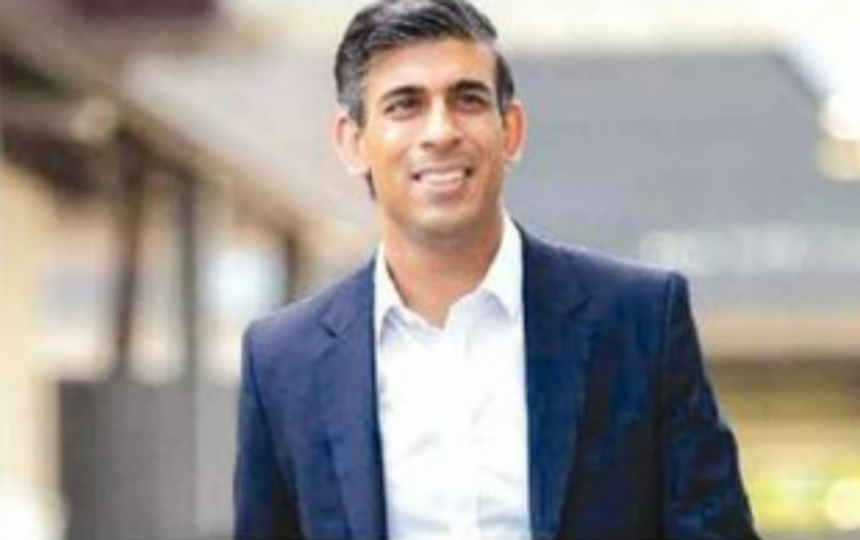
The case of UK Prime Minister Rishi Sunak is interesting. He was born in Southampton to parents of Indian descent, who migrated to Britain from East Africa in the 1960s. He is married to Akshata Narayan Murty, a UK-based Indian fashion designer.
There is an inclusion by associating him as an Indian, even pride of reverse colonisation, as in the Indian Empire strikes back. Do we as Indians (holding inferiority from our past colonisation) experience an occasional sense of schadenfreude (finding joy in someone else’s misfortune). It seems that an Indian is ruling UK! A Conservative party member on a radio show vehemently opposed his suitability to the role (clearly racism) at its core. Narayan Murthy said he was ‘Confident he’ll do his best for people of UK’. Our colonised past has led to ‘epistemic injustice’ with frozen images of self and others held in the mind. This, a result from long social relations and domination, leading to a loss of collective identity, with existential insecurity.
Democratic nations have got headway on their diversity and inclusion agenda. Indians need to introspect about what has happened to India’s history of real and symbolic exclusion of communities on the basis of caste. When will we in India be inspired, wherein marginalisation of minorities is the mood in the country?
(Steve Correa is an Executive Coach, HR Consultant, and author.
Ronald D’Souza is an entrepreneur, mentor, co-creator, angel investor and blogger.)