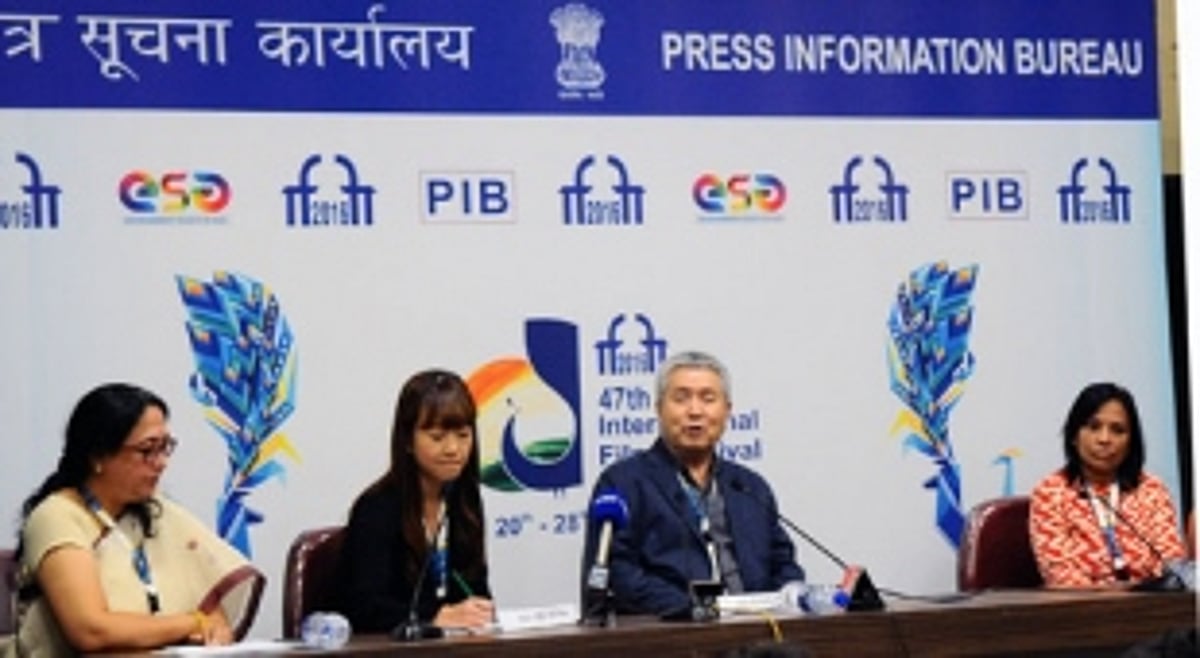
the celluloid reels have begun projecting their images on the screen, a sprinkling of film celebrities has already arrived in Goa, while others are packing their bags to make it to the State. The festival was inaugurated on Sunday and the films began showing on the silver screen on Monday. For the next few days delegates, invitees and officials will swarm the theatres to watch the selected movies and one film maker will go home richer by Rs 40 lakh, and taking along the Golden Peacock, celebrities will walk the red carpet on all the day and a few will interact with delegates and as has been peculiar with the film festival in Goa, some little controversy will possibly crop up to add a twist to otherwise cheery atmosphere.
But, after 12 festivals in the State, and the announcement that Goa is the permanent venue of the IFFI, there is little change to be noted – either in the festival’s programming or in its organisation. The inaugural ceremony was again held at a sports stadium as the plans of the promised convention centre are yet to be even drawn up on paper. The festival venues remain the same with no augmentation of seating capacity, and the films to be screened are a selection that critics have annually said could been better curated.
Goa was made a permanent venue of the festival in the hope that it could become another Cannes, a festival that would draw the best of international films and film celebs and created international headlines. It hasn’t happened, and before proponents of that argument say it is too early for Goa to become another Cannes and that reaching such heights takes time, we in Goa would like to say that we don’t want to be another Cannes, for Goa has an identity of its own, and this festival can aim at being better than Cannes, with an identity of its own.
After 12 years of hosting the festival, IFFI has not given Goa anything much in return, not even a sheen to the State’s brand as a tourism destination. Besides a permanent home to it and an annual investment in the organisation of the festival, Goa has given IFFI a setting that few locations could rival – a modern multiplex in the courtyard of a heritage building, with an ancient palace alongside, a shady promenade on the banks of the River Mandovi that flows placidly by and a five-minute leisurely stroll to the other venue, that is set right on the banks of the river. This unrivalled setting is what Goa and IFFI should build upon as they brand the State and the festival to rival the best of film festivals worldwide.
But the reality is that Goa is nowhere near even beginning to compete with the Cannes film festival, simply because while the bureaucracy and polity may wish it to happen, the focus towards reaching the target is missing.
It is this disconnect, between the reality and the goal, that needs to be addressed. To begin with there should be less bureaucracy and more private initiative in the organisation of the festival, with the involvement of film professionals. That would require a radical change in organisation that would perhaps give Entertainment Society of Goa (ESG) a bigger role, while minimising that of the Directorate of Film Festivals (DFF). It would also mean ESG shedding the political nature of appointments and bringing in more professionals to manage it, with the film fraternity actively involved in the planning process and contributing with drawing the blueprint in the manner in which only it can, giving the festival the quality of suspended disbelief that it does so well in its films. In simple terms, ownership of the festival needs to be in one hand. The current experiment of having two partners – DFF that owns the festival and ESG that is the vehicle to take it forward – may be one of the reasons that is hampering the growth of the festival.
Glamour, the quotient that is associated with films is also lacking in the festival. India’s film industry is so successful that few producers, directors or actors think that IFFI can add to their success, and even the struggling wannabes don’t appear to believe that this festival can be the vehicle to launch their careers. That has to change. You do come across a few regional film industry professionals at the festival, but the presence of mainstream successes are so few that they could possibly be counted on the fingers of one hand and most of these are in Goa only as invitees, not having come of their own will. Bollywood, and all the other ‘filmy woods’ in India, have to develop a connect with IFFI if the festival is to become an international success, that rivals the best elsewhere.
The festival is not all about money – that Goa invested an ‘X’ amount and earned only a ‘Y’ amount that is a miniscule percentage of what was spent. The earnings – besides what the ancillary businesses like hotels, restaurants, taxis earn during the duration of the festival – should be in brand recognition and promoting Goa as a convention tourism destination. If the State has not been able to take advantage of hosting IFFI to give itself a makeover and some new infrastructure, then it is time to start now, with a small change in attitude of doing better the next time. It’s surely possible all it needs is commitment and focus.
(Alexandre Moniz Barbosa is Executive Editor, Herald)