The aftermath of the Pahalgam terror attack and the subsequent India-Pakistan military engagement may have united Indians across political picket lines, but it has also exposed the deep faultlines in society — especially when it comes to how we shield those in positions of political power. It also shows that deep-rooted prejudice can’t be wished away by blowing the bugle of nationalism and patriotism.
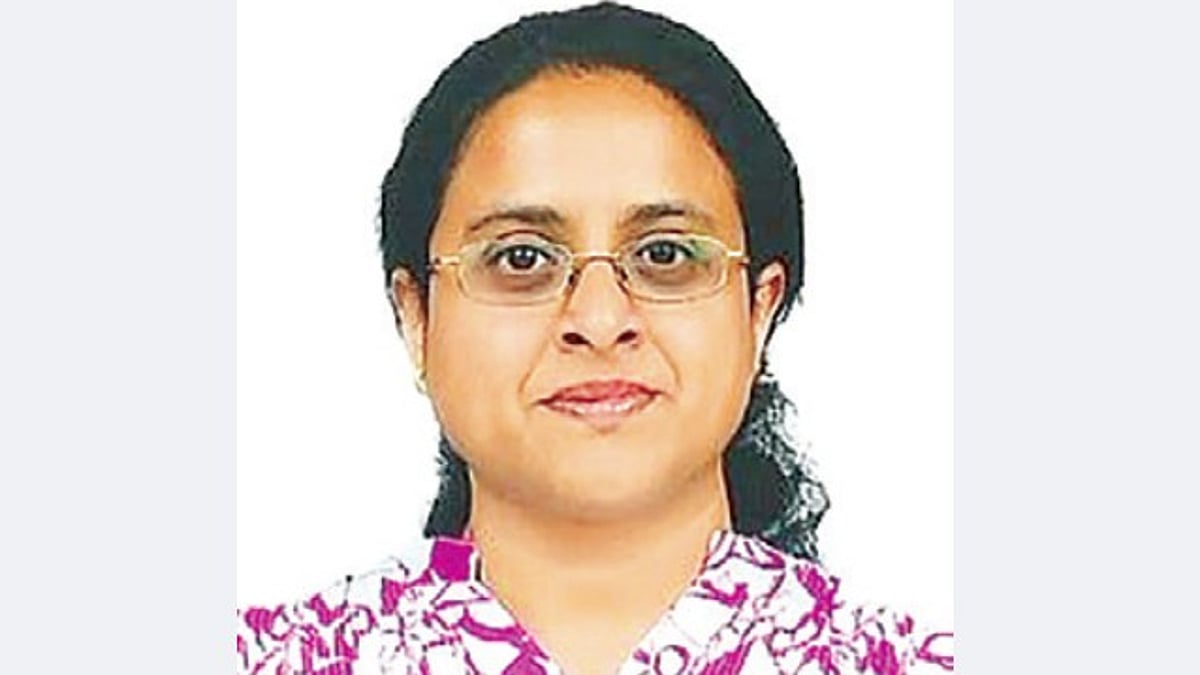
On one side of this debate is Ali Khan Mahmudabad, a respected academic and political science professor at Ashoka University. The other is Vijay Shah, a senior BJP leader and Madhya Pradesh minister. Their stories are not just about two individuals; they are symptomatic of a growing disparity in the application of justice in India today.

Prof. Mahmudabad was arrested for a social media post in which he criticised the performative nature of patriotism, noting the “optics” of women officers, like Colonel Sofiya Qureshi and Wing Commander Vyomika Singh, presenting military briefings during Operation Sindoor. He wrote that while the symbolism was powerful, real patriotism would also involve protecting the rights of mob lynching victims and those targeted by communal policies. The professor’s remarks were measured, civil, and firmly within the bounds of democratic critique.
Yet, for expressing a thought that challenged the ruling dispensation’s narrative, Mahmudabad was arrested by a police team reportedly 12 to 15 strong. He was charged with grave offences like endangering the sovereignty and integrity of India, promoting enmity between groups, and insulting the modesty of women — charges that legal experts and citizens have described as wildly disproportionate and politically motivated.
Contrast this with Vijay Shah, the Madhya Pradesh minister whose remarks about Colonel Qureshi — the very officer Mahmudabad was accused of insulting — were so vitriolic and communal in tone that they triggered not just outrage, but judicial intervention. Speaking at a public rally, Shah crudely referred to the Army colonel as a “sister of terrorists”, drawing a link between her faith and the perpetrators of the Pahalgam terror attack. His language was deemed “filthy and abusive” by the Supreme Court, which refused to accept his apology and ordered the creation of a Special Investigation Team (SIT) to probe the incident.
Despite this, Shah continues to enjoy freedom, government protection, and ministerial authority. His statement prompted a delayed FIR only after a high court directive, and no meaningful police action followed. The Supreme Court questioned this inertia, calling the FIR “weakly drafted” and pulling up the state government for its inaction.
It is difficult to overlook the pattern. One man calls for truth, accountability, and peace — and is jailed. The other incites religious animosity and degrades a serving officer of the Indian Army — and remains a minister in good standing. This glaring asymmetry cannot be dismissed as coincidence. It has become a feature, not a bug, in the current political climate, where dissenters are labelled as anti-national and those spewing hate speech are shielded.
Political leaders across the spectrum have spoken out. Congress’s Pawan Khera called Mahmudabad’s arrest a reflection of a government that fears its own people and views critique as a threat. Samajwadi Party chief Akhilesh Yadav highlighted the hypocrisy with a sharp observation: “Those in power are free even after speaking ill of others, and those who speak the truth are arrested.” Even the Supreme Court — often cautious in matters involving high-ranking politicians — stated plainly that Shah’s words had brought shame upon the nation.
Yet despite this clarity from the judiciary and condemnation from civil society, the central government has maintained a telling silence. If Shah’s comments had been made by a Muslim leader about a Hindu officer, would the response have been as sluggish? If Mahmudabad’s name were different, would he have been arrested so swiftly and aggressively? These are uncomfortable questions, but they must be asked if India is to remain a functioning democracy, rather than slide further into selective authoritarianism.
The BJP government has been eager to send parliamentary delegations abroad to present India as a unified, resolute democracy standing firm against terrorism. Yet domestically, it allows communal rhetoric from its own ministers to go unchecked while jailing professors for posts that advocate for justice and national introspection.
This duality — championing diversity and tolerance to the world while silencing internal dissent — weakens the moral authority of India’s democratic institutions. It sends a dangerous message: that criticism of the state, even when well-meaning and fact-based, will not be tolerated, especially if it comes from minority voices. At stake is not just the future of one professor or one minister, but the integrity of Indian democracy itself.