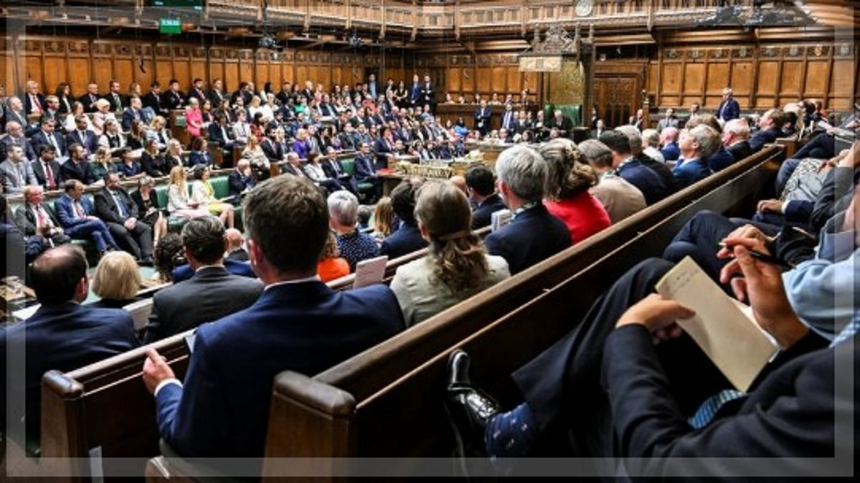
On the 29th November 2024, the House of Commons, UK, voted in favour of the ‘End-of-Life’ Bill. This will now be sent to the “Public Bill Committee” to consider any amendments if appropriate. It will then go back to the House of Commons for a revote and then onto the House of Lords for final amendments, and a vote into law. Currently, it is illegal in the UK to provide any form of assistance in euthanasia or assisted dying and is punishable with 14 years in prison. The provisions of this bill are available to anyone over 18 years without disabilities or mental disorder, residing in England or Wales for at least the previous 12 months. The patient must be “terminally ill” defined as having an illness which is deteriorating and refractory to any treatment, and death is reasonably expected in 6 months. Terminally ill adults will be able to request for help to end their lives in England and Wales.
The provisions of this bill are quite different from, and not to be confused with the provisions of the Indian law “Advanced Medical Directive” or “Living Will”. This was a result of a series of judgments, the most important of which was the “Common Cause vs The Union of India, 2018” which explicitly established the right to execute an AMD and to refuse life-sustaining treatments. Guidelines were laid down and eventually notified in August 2024. When it came to voluntary decisions, there was no procedural complexity. The guidelines were clear and a “Living Will” can be executed by anyone over the age of 21 years, and in full possession of their mental faculties. However, with respect to decisions made on behalf of the incapacitated patient, the procedure was complicated. Again, in response to SC appeals, the procedure has been simplified somewhat with a 2-tier medical board, and eliminating the need for attestation by a JFMC. However, hiccups still exist.

Justice M.S. Sonak, Executive Chairman, “The Goa State Legal Services Authority” (GSLSA) in his inaugural address said “Are there any judicially manageable standards to deal with these life-and-death issues? Are these not the issues of ethics and philosophy that are best left to Moralists and Philosophers so that some consensus evolves in civil society? There is the Hypocritic oath by which medical professionals swear to do everything within their means to save a life. Arguments about misdiagnosis and prognostic uncertainty also need to be addressed. Would not the hospital or clinic costs cloud our decisions? Could it not be that the relatives opt for a speedy exit to speed up the inheritance of the patient’s property?” “The secret of getting ahead is getting started”.
Active Euthanasia is illegal in India, and a crime. It is legal in the Netherlands, Belgium, Colombia, Luxembourg, Western Australia, Canada, and Spain. But the safeguards provided do not hold up in practice. According to Professor Etienne Montero, of the University of Namur in Belgium, it is extremely difficult to follow a strict interpretation of legal requirements once euthanasia is permitted. Cases of abuse abound in countries where assisted suicide is legal. For example, in Belgium deaf twins were euthanized at their request because they became blind. A woman was euthanized because she was suffering from anorexia. In the Netherlands, a woman was euthanized because she was going blind and could not see the dirt. In Oregon, US, a woman received a letter from her insurance company refusing to pay for her chemotherapy, but offering assisted suicide instead.
There are areas of genuine concern. What if the diagnosis is wrong and the medical assessment and prognosis incorrect? In many cases, proper palliative care and counselling are adequate to relieve pain, suffering and depression; reversing the desire to die. This includes better medical facilities both by way of doctors and hospitals. Even veterinarians receive five times more training than doctors about pain management! Often the request for euthanasia is a cry for help. The patient does not really want to die; he just wants his symptoms and fears relieved. He believes he is worthless, dependent on and a burden to the family and loved ones. Cases of abuse or neglect of elderly or disabled illustrate that this is a major issue to consider.
An overburdened health care system with its limits may pressurise patients, into choosing death. Patients estranged from their family may think that euthanasia is the only solution lowering the value of a human life. Doctors would be empowered to the extent that doctor/patient relationships are damaged.
Relatives and doctors could pressurise patients into euthanasia when it isn’t what they really want. It also is contrary to the Hippocratic Oath aimed at saving life. Research into new treatment and cures would be discouraged. Some people unexpectedly recover, or change their minds. Finally, there is a genuine concern that legalising voluntary euthanasia could be the first step to involuntary euthanasia, where killing is carried out for trivial reasons.
The main arguments put forward in favour of active euthanasia are: that “Death is a private matter and the state should not interfere with the individual’s right to die”. This is contrary to the judicial position in India which unequivocally states that the Constitution does not give you the right to die, but confers the right to die with dignity. A second argument does have some merit. It is expensive to keep people alive when there is no cure for their illness. Euthanasia would release precious resources for better purposes. And again, family and friends would be spared the pain of seeing their loved one suffer a long-drawn-out death.
And so, the arguments and counter arguments go on. But one thing is certain, we have not heard the last word on euthanasia yet.
(The writer is a Past President of the IMA Goa State Branch, a founder member of VHAG
and Past President, and a past Central Executive Member of VHAI)