TALLULAH D’SILVA
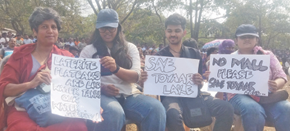
I asked this question and some more to the youth in Goa. Sashanka Sekaran from Tamil Nadu shared his thoughts, “Goa is so much more than just beaches and parties—it’s the rich local cul ture, deep traditions, timeless val ues, and fragile ecology that make it truly special.” Nigel D’Souza, an artist and 3D animator says, “Goa is very unique with natural beauty and great po tential for sustainability”. A young architect from Konkan Apurva Malgaonkar shares, “Goa is not a destination on a map. It is a pulse. It is red earth that stains your feet and stays in your mem ory. It is laterite walls glowing in the evening sun, swaying coconut palms and village roads that carry stories instead of traffic.” “It is old homes breathing qui etly, the scent of salt and soil min gling in the air. It is ‘susegad’ – not laziness, but a philosophy of living gently.” ‘Goa is the land I live in and the land I will live for. Goa I love is full of kanttam, chunnam, assale, kan era, torram, bimbli, imli, kokum, ponos, ambe!,” Vishal Rawlley, a na ture educator asserts. Anish Afonso, a young product designer from Panjim shares, “Goa is more than just land. Goa is where I made my friends, cherished mem orable moments and learned about myself and nature. Goa is like my mother, she provides me with food, purpose and inspiration every day.” Himani Devpura, a young ar chitect from St Inez, adds, “Goa is home to me, a connection, a place where I can walk around safely, breathe clean air and feel a sense of belonging. I remember it being greener, cooler, and filled with lush trees. There was a natural calm that made life feel balanced and grounded.” For Yash Shah from Mumbai, “Goa is a culture which is followed and respected by citizens, it is more than a vacation place.” Goa is a sacred place like any oth er but with cultural values found even in the smallest of the lanes. What is happening to Goa that upsets you?, I asked. Apurva expresses her concern, “What pains me is not change change is natural. What pains me is the speed, the carelessness, the for getting. Hills sliced open as if they are lifeless. Paddy fields buried under concrete. Ancient homes erased without a goodbye. Rivers chok ing. Beaches gasping. The quiet of villages replaced by the noise of urgency. The language of the land drowned by the language of profit.” “It feels as though Goa’s soul— slow, rooted, dignified-is being ne gotiated for short-term gain. What’s upsetting is how these treasures are being undermined in the name of “improving” tour ist spots, turning paradise into just another party zone,” laments Sashanka. Anish elaborates, “I am deeply concerned about the idea of “de veloping” Goa. The natural beauty and peace that I, my friends and my parents grew up with is slowly dis appearing.” Himani explains, “As a young person, I feel there is a lack of the right opportunities for local youth. The urban landscape has changed with tree cutting and a noticeable loss of green cover. Development with no preservation worries me. The Goa I grew up with feels like it is slowly shrinking.” Yash says, “It upsets me to see people treat Goa as a commodity. Where they feel free to litter, seek hedonism, and spoil its ethos. What can you do for Goa? “The best thing each one of us can do in Goa is to shrink our con sumption and carbon footprint to a minimum as a sign of respect for its pristine environment. Say no to luxury, to excess, to entertain ment and say yes to a simple, green and sustainable lifestyle,” exports Vishal. He also adds, “That is the least. But there is no limit to the most we can do. We need people to lead environmental movements, to think of sustainable development, redesign the educational model and more.” Apurva emotionally states, “I may not be able to stop everything, but I can choose differently. I can build with respect – for soil, cli mate, and culture.” “Goa does not need malls, multi plexes or large gated colonies with swimming pools. Like my home land in Mysore it needs preserva tion of its rich heritage and biodi verse ecology,” says Architecture student and biker Aanchal Bharat. Sashanka cajoles, “We can throw light on and share stories of Goa’s real soul, supporting eco-friendly initiatives, and urging visitors to respect its heritage beyond alcohol and nightlife.” Ojasvi Chitgopkar, a student from Manipal feels that we can cre ate awareness regarding issues be ing faced by citizens so leaders can be made accountable! “I hope to do my bit in simple but meaningful ways—not litter ing, consuming consciously, voting responsibly, and being more aware of how my actions impact the envi ronment,” shares Himani. Anish offers, “I want to help in creating awareness of this rapid development and lack of care in urban spaces. I can also help to organise educational initiatives on topics such as climate change, land stewardship, and circular econo my. Together we can create a new vision for Goa, one in which we live in harmony with nature and each other.” Kaniksha Bandodkar, a young architect from Goa responds, “We need to stand together against corruption and such social ills. Personally I would like to organ ise workshops that would show what Goa truly looks like, and how to preserve what’s left, to educate about our history and sustainable solutions for modern problems.” Apurva reflects, “I can remind others that development and dig nity can coexist-if we are willing to care. Change may be slow, but pres ervation begins with responsibility. And responsibility begins with us.” (Tallulah D’Silva is an archi tect and silver awardee of the Golden Door Award 2020 for truth and integrity.)