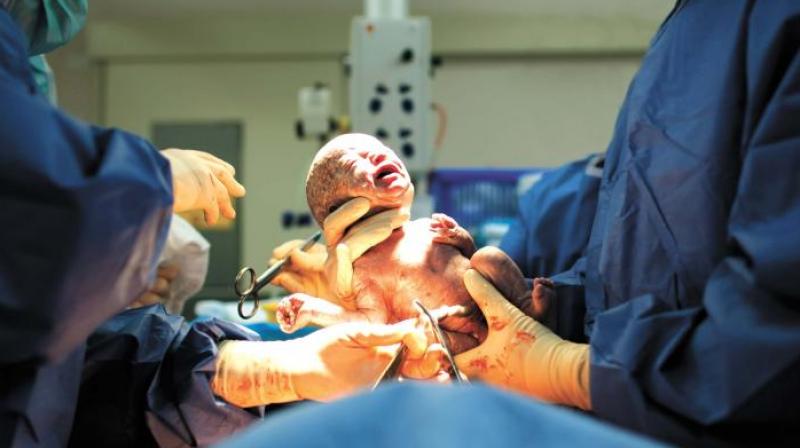
Telangana has recorded the highest Caesarean section delivery rate in the country, according to the latest National Family Health Survey (NFHS-6) released by the Ministry of Health and Family Welfare. The survey found that 62.2% of births in the State are now conducted through Caesarean section, significantly higher than the national average of 27.2%.
The findings show a further increase from the 60.7% C-section rate recorded during NFHS-5 conducted between 2019 and 2021. No other State or Union Territory reported a higher percentage of Caesarean deliveries in the latest survey. Andhra Pradesh followed with a rate of 52.2%, while Nagaland recorded one of the lowest rates at 13.2%.

Despite the rising Caesarean figures, Telangana continues to perform strongly across several maternal healthcare indicators. The State has nearly achieved universal institutional deliveries, with 98.8% of births taking place in healthcare institutions compared to the national average of 90.6%.
The survey also highlighted a sharp difference between public and private healthcare facilities. In Telangana, 83.9% of births in private hospitals were delivered through Caesarean section, compared to the national average of 54.1% for private institutions. Government hospitals in the State also reported a high Caesarean rate of 48.1%, much higher than the national public hospital average of 16.9%.
Maternal healthcare coverage in Telangana remained well above national levels. According to the survey, 89.6% of mothers registered for antenatal care during the first trimester of pregnancy, compared to 76.2% nationally. Nearly all mothers in the State received antenatal care during pregnancy, while 80.3% completed at least four antenatal visits.
The report also showed better nutritional support for pregnant women. About 81% of mothers in Telangana consumed iron and folic acid tablets for at least 100 days during pregnancy, compared with the national average of 54.9%.
Child health indicators in the State also improved. Stunting among children under five declined from 33.1% to 27%, while wasting and underweight prevalence also showed reductions. The survey further recorded improvements in postnatal care and lower rates of childhood illnesses such as diarrhoea and respiratory infections.