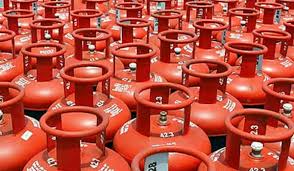
India’s Centre on Saturday said that liquefied petroleum gas (LPG) supply remains stable across the country despite growing concerns arising from tensions in West Asia. However, officials admitted that panic buying of LPG cylinders has become a major concern in recent days.
A senior official from the Ministry of Petroleum and Natural Gas said there has been a sudden surge in bookings, with nearly 8.8 million (88 lakh) panic bookings recorded across India. Authorities urged consumers to avoid unnecessary bookings and request cylinders only when required so that supplies remain balanced.

India is the world’s second-largest importer of LPG, and nearly 90 percent of the country’s LPG shipments pass through the Strait of Hormuz, a crucial maritime route that has been affected by tensions involving Iran. Despite the geopolitical situation, the government stressed that supplies of petrol, diesel and crude oil remain adequate.
Officials also said that bookings for commercial LPG cylinders have resumed in all states, and decisions regarding distribution will be taken in consultation with respective state governments.
Authorities have intensified inspections to curb black marketing. Oil marketing companies conducted more than 1,300 surprise inspections on March 13, while state agencies also carried out checks across several regions. In Uttar Pradesh alone, around 1,400 inspections were conducted.
Meanwhile, two Indian LPG carriers — Shivalik and Nanda Devi — safely crossed the Strait of Hormuz early Saturday. The vessels are carrying 92,700 tonnes of LPG and are expected to dock at Mundra Port and Kandla Port in Gujarat by March 16 or 17.
Earlier, Union Petroleum Minister Hardeep Singh Puri assured Parliament that India’s energy supply remains secure despite global disruptions caused by the ongoing conflict in West Asia.