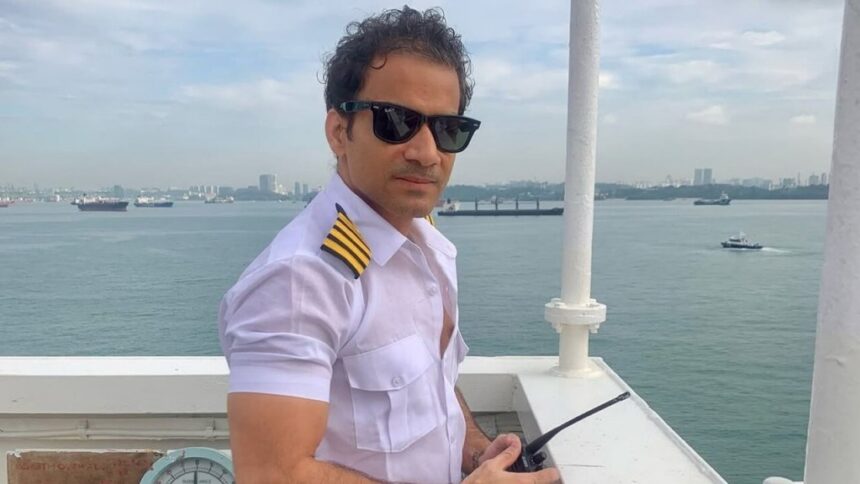
The wife of Indian merchant navy captain Ajay Pant, who is being held in Britain over alleged violations of sanctions on Russian oil, has reportedly said her husband has been made a “scapegoat”. His arrest has also raised questions about how Western sanctions laws are being applied to seafarers working aboard vessels allegedly linked to Russia’s so-called shadow fleet.
Pant, 38, is a resident of Ramnagar in Uttarakhand’s Nainital district. He was arrested in June after British authorities intercepted the oil tanker Smyrtos, which he was captaining, in the English Channel.

British authorities have charged Pant with sanctions-related offences. If convicted, he could face a maximum prison sentence of 10 years. His trial is scheduled to begin on December 15, according to news agency AFP.
The case has drawn attention in India because Pant is a merchant navy professional who was working as the captain of the vessel when it was intercepted. His family has reportedly argued that he should not be held responsible for wider sanctions violations allegedly connected to the tanker or its operations.
The case also highlights the increasingly complicated environment facing commercial seafarers operating aboard ships suspected of being part of the shadow fleet. The term generally refers to vessels used to transport sanctioned oil and other commodities while attempting to avoid restrictions imposed by Western governments.
Following Russia’s invasion of Ukraine, Western countries introduced extensive sanctions targeting Russian oil exports and entities involved in facilitating the trade. Authorities have since increased scrutiny of tankers, shipping companies, insurers and other participants in the maritime supply chain.
For seafarers, however, the enforcement of such measures can create difficult legal questions. Captains and crew members are responsible for operating vessels and ensuring maritime safety, but they may have limited control over ownership arrangements, cargo transactions, commercial contracts or the ultimate destination of a shipment.
Pant’s case could therefore become significant beyond the individual allegations against him, particularly if it prompts wider debate over the extent to which individual seafarers can be held criminally responsible for sanctions violations involving the vessels they operate.
The Smyrtos interception in the English Channel has placed Pant at the centre of that debate. His family maintains that he has been unfairly singled out, while British authorities have brought formal charges that will now be tested in court.
With the trial scheduled for December, the case is likely to be closely watched by the maritime industry, particularly Indian seafarers and their families. It could also provide greater clarity on how sanctions enforcement applies to crew members working aboard vessels suspected of transporting sanctioned Russian oil.
For Pant, the proceedings will determine whether the allegations against him can be established in court. For the wider shipping community, the case could have implications for how captains and crew assess the legal risks associated with operating vessels connected to sanctioned trade.