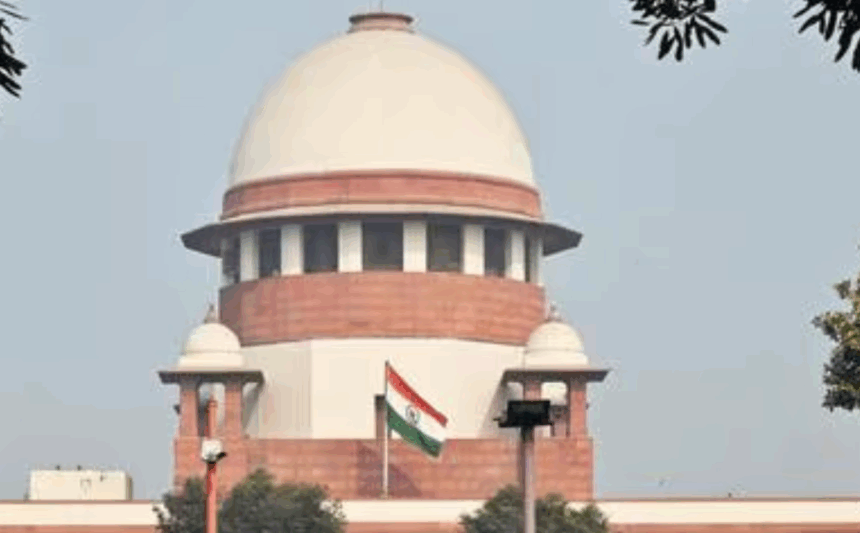
The Supreme Court on Monday expressed concern over what it described as a growing lack of judicial sensitivity in cases involving sexual violence, as it moved to formulate comprehensive, gender-sensitive guidelines for all courts. A bench led by Chief Justice of India D.Y. Chandrachud, along with Justice Joymalya Bagchi, said that “the degree of sensitivity which we are required to observe is missing” in several recent rulings across the country.
The bench was hearing applications linked to its March decision to take suo motu cognisance of an Allahabad High Court judgment that triggered nationwide outrage. In March, the top court had stayed the High Court’s controversial observations, calling them “insensitive and inhuman,” and directed the Allahabad High Court Chief Justice to initiate appropriate action against the judge concerned, Justice Ram Manohar Narayan Mishra.

During the hearing, senior advocate Shobha Gupta, representing the NGO We the Women of India, said the Allahabad High Court ruling was not an isolated instance but part of a pattern where courts issued remarks that risked shaming survivors or downplaying the gravity of sexual crimes. She cited similar remarks from benches of the Allahabad, Calcutta and Rajasthan High Courts, noting instances where victims were implicitly blamed for the assault.
Concerns were also raised about the treatment of survivors during in-camera trials. One counsel highlighted a Kerala sessions court case where several individuals were present during a minor survivor’s testimony, subjecting her to harassment even in what should have been a protected setting.
CJI Chandrachud stressed the profound impact of judicial language, warning that insensitive remarks could discourage survivors from seeking justice. “Sometimes we ignore and make observations which may have a chilling effect on the victims or the society at large,” he said, adding that such comments at the trial court level often go unreported but may pressure families into compromising with the accused.
The Supreme Court has now stayed the Allahabad High Court judgment in its entirety. It clarified that the trial against the accused — who allegedly assaulted an 11-year-old girl in Uttar Pradesh in November 2021 — will proceed under charges of rape and attempt to rape under the Indian Penal Code, along with relevant sections of the POCSO Act. The bench instructed the state to keep the accused informed about the next hearing and invited written suggestions from counsel on the framework for new guidelines.
The controversy began after Justice Mishra downgraded charges from attempt to rape to lesser offences under Section 354-B of the IPC and Sections 9/10 of POCSO, ruling that the accused had not gone “beyond preparation.” The judgment drew sharp criticism from activists, legal experts and political leaders, who said the reasoning reflected a harmful understanding of sexual violence.
When the Supreme Court first took up the matter on March 26 — following a letter from senior advocate Gupta — it condemned the Allahabad High Court’s reasoning as demonstrating “a complete lack of sensitivity” and violating legal principles. Solicitor General Tushar Mehta had also taken “strong exception” to the ruling, calling it a case demanding intervention from the High Court’s leadership.
The judgment had sparked widespread public and political backlash. Union Minister for Women and Child Development Annapurna Devi termed it “unacceptable,” while Shiv Sena (UBT) MP Priyanka Chaturvedi wrote to the CJI and Union Law Minister seeking Justice Mishra’s removal from judicial duties, describing the ruling as “depraved.”
The matter will return to the Supreme Court for further consideration as it moves toward issuing formal guidelines aimed at ensuring survivor-centric, gender-sensitive judicial conduct across all levels of the judiciary.
(This story is published from a syndicated feed)