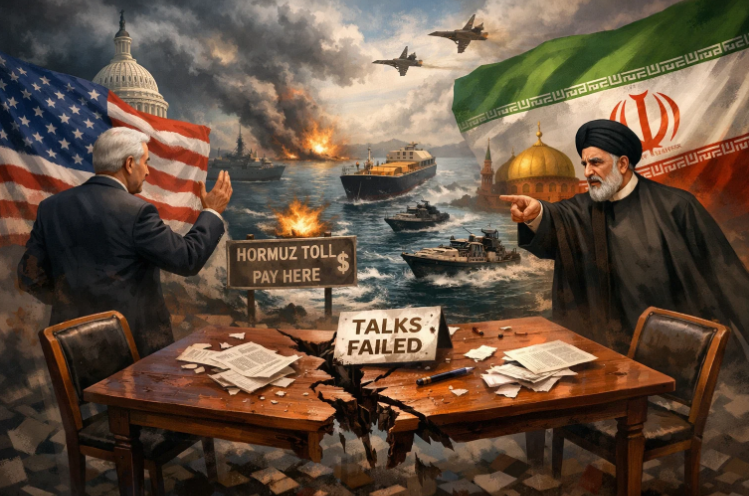
High-stakes negotiations between the United States and Iran ended without a breakthrough last week, as talks held in Pakistan collapsed over deep divisions on nuclear policy and regional security issues.
Washington, represented by Vice President JD Vance, accused Tehran of pursuing nuclear weapons capabilities and pushed for the complete dismantling of Iran’s nuclear-related programmes, along with its ballistic missile systems. However, Iranian officials firmly rejected the allegations, maintaining that their nuclear activities are strictly for civilian purposes and denying any intent to develop nuclear arms.

Tensions escalated further when Iranian negotiators refused to accept third-party inspections proposed by the US, arguing that such measures would violate the country’s sovereignty. The already strained discussions were further complicated by Tehran’s controversial demand to impose a toll—reportedly up to $2 million per vessel—on ships passing through the strategic Strait of Hormuz, a vital global oil transit route.
After nearly 21 hours of deliberations, both sides failed to find common ground and ultimately walked away from the negotiating table without any agreement.
In a parting gesture, Iranian officials invoked the Joint Comprehensive Plan of Action, the landmark 2015 agreement brokered under former US President Barack Obama, underscoring past diplomatic efforts to resolve the nuclear dispute.
(This story is published from a syndicated feed)