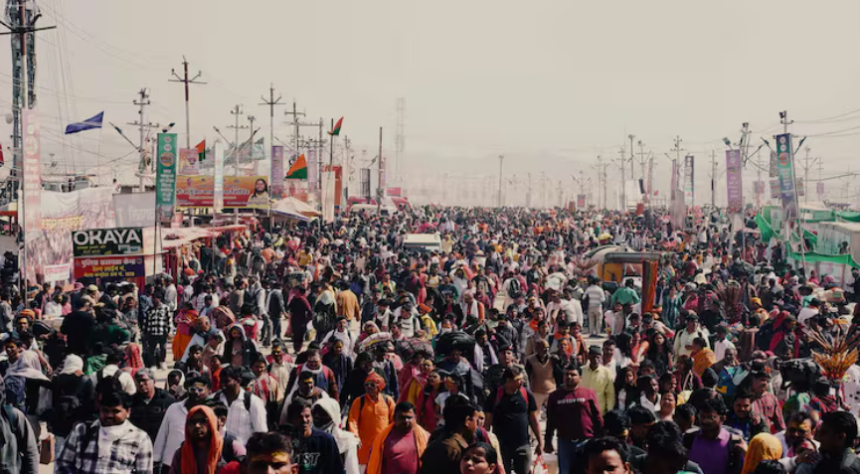
India on Thursday commenced its long-awaited national census, aiming to count its population of an estimated 1.4 billion people after years of delay, partly caused by the COVID-19 pandemic.
The first phase of the massive exercise has begun across five states and three Union Territories, marking the start of a year-long process to gather comprehensive demographic data across the country.

To carry out the enumeration, more than three million officials—primarily school teachers—have been mobilised. These personnel will conduct door-to-door surveys, visiting every household across India’s 36 states and Union Territories, including nearly 640,000 villages, to ensure that every individual is counted.
The census will be conducted in two phases. The initial phase will focus on listing houses and assessing housing conditions, while the second phase will collect detailed information about residents, including their social and economic characteristics.
The large-scale operation highlights the logistical challenge of conducting one of the world’s biggest population surveys, which plays a crucial role in policy planning, resource allocation, and governance.
(This story is published from a syndicated feed)