VASCO: March 1 to September 23 the ruling party, the opposition, the MLAs and MPs of Goa had time to know, read, understand and debate the Major Ports Authorities Bill which was passed in the Lok Sabha on the last day of the monsoon session, sine die, with no debate or discussion. It was literally passed in the din.
For six months and twenty-two days, a Bill which will significantly alter the autonomy or basic control that village panchayats and local bodies had over their lands and interests was not even the realm of discussion.

Of all major ports which will be given a sweeping ‘Authority’: to take decisions which can override any local State body, the Mormugao Port Trust is in the smallest state whose operational jurisdiction (not to be confused with land ownership). And the causes in the Ports Bill will impact Goa, far more severely than any other State.
Apart from BJP’s Cortalim MLA, who has firmly stood on the side of the people, other MLAs of Mormugao were almost caught unawares. Urban Development Minister Milind Naik, who is also an MLA of Mormugao where the Mormugao Port Trust is located, said that he cannot comment on the Major Port Authorities Bill 2020, while Carlos Almeida BJP MLA from Vasco, who wasn’t aware of the Bill too, asked for time to read points forwarded, and then said that the Bill needs to be amended.
It is evident that there has been no discussion within the Government or the ruling party on such an important piece of legislation, with more than 90% of MLAs not even aware.
Let’s cut to the chase and look at 4 key sections that it slices Goa’s basic powers
1) Sec 22(2) of this Bill says that all port assets shall be used and developed as by the Board regulations excluding the regulations of the local governing bodies.
2) Sec 22(3) of this Bill states that the board of each development for improving the commerce and trade in national interest, no regulatory licence or approval from State authorities will be needed unless mandated by the Central Government, and major ports may build, erect civil structures for the port.
3) Sec 25 mentions that the board of each port shall be entitled to create a specific master plan for any development, infrastructure established or proposed within port limits and the land appurtenant thereto and such master plan shall be independent of any local or State govt regulations of any authority whatsoever, and in case of any conflict related to the master plan, the master plan created by the board shall prevail.
4) Sec 26(2) of this Bill further reiterates that the power of the board to make regulations shall be independent of powers of any local authority to make regulations in respect of major port, and in case of any conflict between the regulations made by the Board and the local authorities, regulations made by the board shall prevail.

Looking at these four sections of the Major Ports Bill 2020, the clear picture of the “draconian nature” of this bill surfaces. Understanding and having a sense of the marching danger on the near future towards the tiny state of Goa, many Goan civil society members and legal experts are of the opinion that if the Major Ports Bill 2020 passes in Rajya Sabha then nobody will be able to avert the unforeseen destruction of Goa which will be likely to take place in the coming few years.
Cleofato Coutinho, a lawyer and a constitutional expert commented on this Major Ports Bill 2020, that “It is almost privatisation of the Ports but the Central govt would control it. India would now follow Singapore landlord port model. Thereafter the Authority could be converted into a company. Thousands of sq mts could go into private hands where State and municipal laws may not apply. It can create a master plan for infrastructure development independent of local and State laws.
He further said, “Thousands of sq mts of land would go into the hands of private persons nominated, who can create infrastructure development independent of local and the State laws. It is like creating a small reputation licence within the State.”
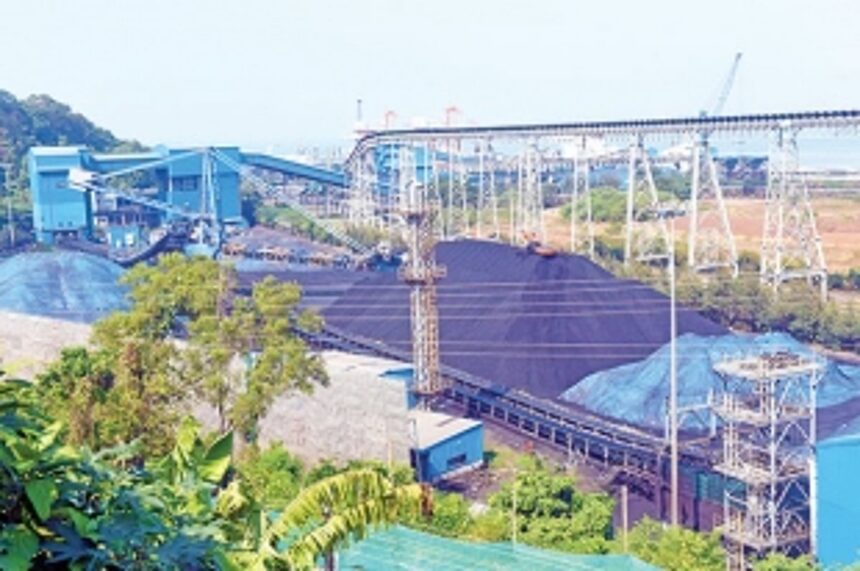
Sherwyn Correia, Vasco-based Law student activist, who has been vocal against the coal operations in the MPT, opined that the MPA Bill 2020 puts the critical missing link of the “Sagarmala” programme in place. The admitted objective for Mormugao Port is its development as a coal import hub, and for Goa as a coal transportation corridor. The proposed Mormugao Major Port Authority will have unimaginable and unfettered powers to develop vast swathes of appurtenant land and water area within their port jurisdiction under the garb of “national interest” independently and to the exclusion and supersession of local laws and development plans.
“As a youth living in Vasco, I seek answers from my elected representatives. Future generations will never forgive them,” he added.
Capt Viriato Fernandes of Goencho Avaaz organisation said, “(It’s a) total sell out by the Central Government, and a big let down by Goa’s elected representatives, but Goencho Avaaz along with the people of Goa will fight back, will not allow an inch of our land to be misused by MPT for the benefit of crony capitalists”.
“The surrender and sell out by the Modi government to benefit industrialists at the cost of Goa will never be allowed”, he warned.
Another activist from Vasco Sanjay Redkar also mentioned that if the Major Port Bill 2020 is looked at, it overrides the local bodies even the State government and this will be a major repercussion. “Expansion of National Highways, river nationalisation, doubling of tracks, etc, are interconnected and basically will be utilised for coal transportation as all these will connect to the Port. After this Bill becomes an Act, the State will lose its right over its own land which is basically a conflict of interest wherein an autonomous body will override the authority of the local bodies and the State and more sad part is our elected representatives don’t know about it,” he added.
Indeed. The biggest blow to Goa is that Goa’s public representatives and the government itself slept over this for more than six months.