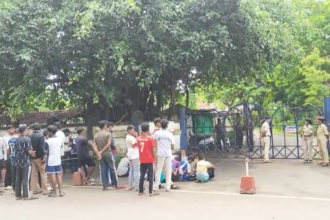
The high-pro file Mungul gang war case has returned to the spot light after a sessions court, while granting conditional bail to several accused, de livered stinging observa tions on serious gaps and contradictions in the pros ecution’s case — raising questions over the quality of the investigation. The case stems from a violent armed ambush on August 12, 2025, on the Margao–Colva road at Mungul, where nearly 28 persons allegedly inter cepted a car and attacked two youths. While granting bail, the court flagged ‘glaring discrep ancies’ in the statements of the complainant and injured victims, particularly with respect to identification of the alleged assailants. The court noted that the precise role attributed to several accused appeared doubtful and that the prosecution had failed, at this stage, to establish strong prima facie grounds linking them to the offence. It also held that there was no convincing material to suggest that the accused were likely to abscond or tamper with evidence. In its order, the court said it had carefully scrutinised witness statements recorded under Section 183 of the Bharatiya Nagarik Suraksha Sanhita (BNSS) before the Magistrate, and found serious inconsistencies between earlier versions and subsequent statements. The con tradictions and apparent embellishments, the court ob served, substantially weakened the prosecution’s case. The observations have reportedly prompted the Fator da police to reassess the investigation. Sources said inves tigators are reviewing evidence and witness statements and are considering approaching the sessions court to seek additional time for further investigation. A police of ficer associated with the probe has already consulted the public prosecutor on the legal feasibility of such a move. Legal experts say the case could test the implementa tion of the newly enacted BNSS. Advocate Vidatha Dessai explained that Section 193(9) of the BNSS — replacing Section 173(8) of the CrPC — permits further investiga tion even after filing of the charge sheet, but under strict er judicial oversight and within a mandatory 90-day time frame. Any extension, she noted, requires court approval. “Further investigation supplements the earlier probe; it does not wipe it out,” she clarified, adding that police must also update the informant or victim on progress within the prescribed period. Former Special Public Prosecutor Pritam Morais said the Supreme Court has consistently held that the object of further investigation is to arrive at the truth and en sure substantial justice, even after trial has commenced. However, he cautioned that the right to a speedy trial re mains fundamental and that prolonged or unexplained delays can vitiate the entire prosecution — citing recent Supreme Court rulings where proceedings were quashed due to inordinate investigative delays.
Mungul gang war case: Court flags major gaps in probe