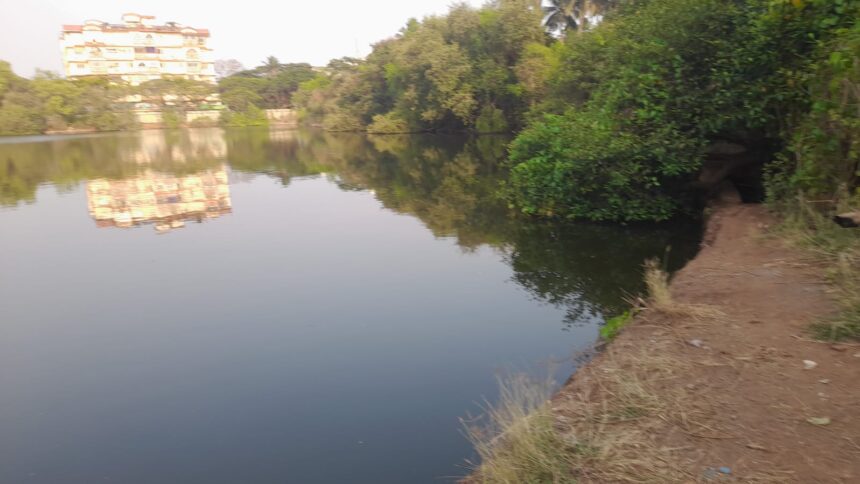
PANJIM: A casual walk around Mala Lake is enough to understand why hundreds of fish recently turned up dead.
Open drains carrying black, stagnant water, choked with plastic and garbage, can be seen flowing unchecked straight into the lake. In some stretches, sewage pipes appear to empty directly into the water body — an unmissable, unaddressed reality that lays bare the source of contamination.

Despite inspections and official activity following the fish deaths, the most obvious cause of the crisis continues in full public view.
Residents say there is little mystery here — only prolonged neglect.
“The water has been dirty for a long time,” said a resident, pointing to the steady inflow of polluted water. The recent deaths, they say, have only brought belated attention to what has been visible for years.
The lake, once a thriving freshwater ecosystem in the heart of the capital, now shows clear signs of sustained ecological stress. Environmental observers link the fish deaths to oxygen depletion — a direct consequence of sewage inflow, organic waste and nutrient overload that triggers eutrophication.
Yet the failure is not technical — it is administrative.
Even as authorities from the Corporation of the City of Panaji begin inspections of nearby households to check sewage connections, residents question how such blatant discharge went unchecked for so long.
“We were not shocked to see fish dying,” another resident said, underscoring how normalised the degradation has become.
The problem is compounded by gaps in waste management. Garbage-laden drains continue to funnel contaminants into the lake and with the monsoon approaching, runoff is expected to intensify the pollution load.
Officials maintain that action is underway. An official, speaking anonymously, said inspections are aimed at identifying illegal sewage outlets. “This must stop. We are checking whether proper sewage systems are in place. A report will be submitted to the court,” the official said.
Locals say the immediate stench from the dead fish has subsided after cleanup efforts, but the underlying threat remains. “Fish are not being seen dying now but we remain cautious,” a resident said.
The question now is not what caused the fish deaths, but why, despite years of warning signs in plain sight, nothing stopped them.