Team Herald
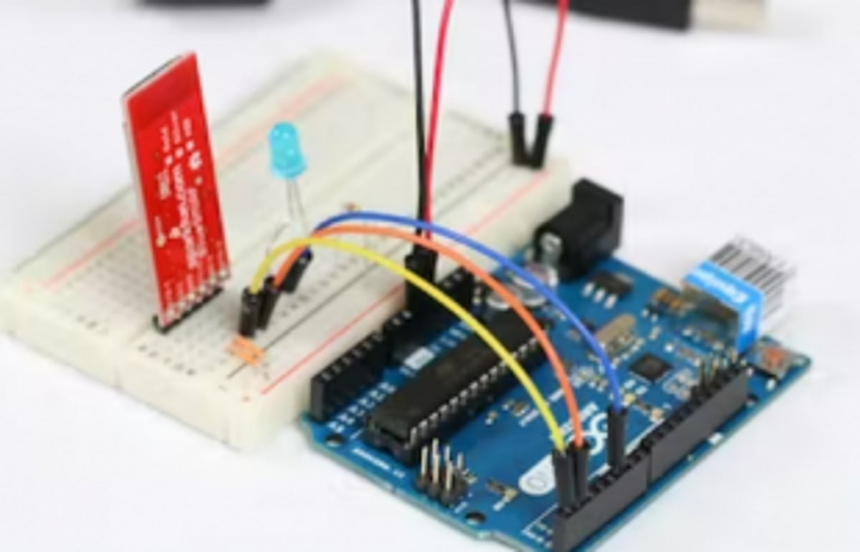
PANJIM: Even as the State government gears up to introduce an advanced curriculum in robotics and coding to be taught to students of Classes VI to X after school hours, it has decided to establish taluka-level satellite centres, with training and testing centres to implement the new syllabus.

Chief Minister Pramod Sawant chaired the third Empowered Committee Meeting of Coding and Robotics Education in School on Thursday, wherein it was decided to extend the curriculum to students of Class IX and X. Currently, the syllabus is designed for Class VI to VIII.
The committee also decided to rope in 60 ‘lead schools’ to offer their computer lab facilities, where engineering graduates and professionals will be invited as ‘teach for Goa’ fellows to teach the advanced syllabus.
Speaking to media persons after the meeting, Sawant said that the decision was taken to extend the coding and robotics syllabus to Class IX and X. “The scheme has been implemented across 500 government and government-aided schools,” he said, while announcing that from November, the necessary hardware will be provided to each school, free of cost.
He said that in the meeting decisions were taken to establish taluka level satellite centres, maker spaces, protected and training and testing centres.
The new robotics and coding syllabus was introduced in the academic year 2021-22, for over 20,000 students studying in government and aided schools for Class VI to VIII. The scheme is being implemented by the Directorate of Education and the curriculum has been designed based on the broad guidelines provided by a panel of the State Council for Educational Research and Training (SCERT).