In the “Historical and Archaeological Sketch of the City of Goa” by José Nicolau da Fonseca I came across a fascinating account of the history of Goa, which has a bearing with the land governance of today.
As recounted by the author, when Afonso de Albuquerque conquered Goa in 1510, there was a special land division existing where people were divided into village communities and enjoyed special rights and privileges. Albuquerque retained their time honoured traditions instead of destroying them. He chose to continue the constitution of these communities or impose further taxes like other Muslim rulers. This was listed in a register called “Foral de Usos e Constumes”, which detailed the peculiar usage and customs of the communities, and the privileges enjoyed by them from time immemorial. This register served as a guide-book to subsequent rulers.
However, as time progressed, the communities were burdened with additional taxes and restrictions. In the 17th Century, Goa was attacked by neighbouring rulers and the communities had to fund the defence of the State at the behest of the government. This meant that the original land holdings had to be diluted. Thus came in the class of “cuntocares” or “interessados” who bought the shares to the land and were outside of the original communities. About the same time several other changes in the form of regulations were made in the administration of the communities called “Regimento das Comunidades”. The government appointed an administrator through whom the funding was controlled. Even a small sum could not be spent by the comunidade without the sanction of the government. Contributions to the parish church as well as funds for construction and repairs of it were decided by the government. The office bearers of the village comunidade constituted the president, attorney, treasurer and the clerk.
Agriculture: Goa has traditionally been agrarian. However it must be noted that for over 250 years post the Portuguese conquest of Goa, there was very little encouragement of agriculture. It was the religious orders like the Jesuits who planted coconut groves on large tracts of land. But the land available for crop was always limited for the entire population resulting in the government importing rice from neighbouring places. In 1729, after suggestion to improve the cultivation of the land in the villages, the quantity of rice grown in the Ilhas, Salcete and Bardez was improved.
Since then agriculture had made steady progress in Goa. Historically, my village of Taleigao has been well known for its farming and contribution to agriculture. Today, most fields are left fallow due to various issues and need support from the Government to again revive the agriculture.
I would like to point out that Taleigao encompasses three parishes, namely the villages of Durgavaddy, St Inez and Panjim whose respective patron saints are – S Miguel Arcanjo, St Inez and N. Sra da Conceicao.
The name Taleigao is either the word tala e gamv, indicates that the village is flat or low, or the word thor-gamv, meaning that it was big.
The comunidade consist of Gauncares who are members of the families which originally constituted the comunidade, an agrarian village society which functioned as an institution of self-governance and its shareholders. The ancient system of administration lands, held collectively through a common absolute ownership, that had come to be inherited by our ancestors and was referred to as ‘Gaunkars’, are the present day comunidades as existing in Goa.
The Taleigao Gaunkars comprise of nine families as of today, namely Mendonca, Viegas, Martins, Luis, Gomes, Faria, Almeida, Falcao and Abreu. These nine families in rotation every year take turns to solemnise the feast of St Michael. This year my family, the Gomes family is the main celebrant of the feast.
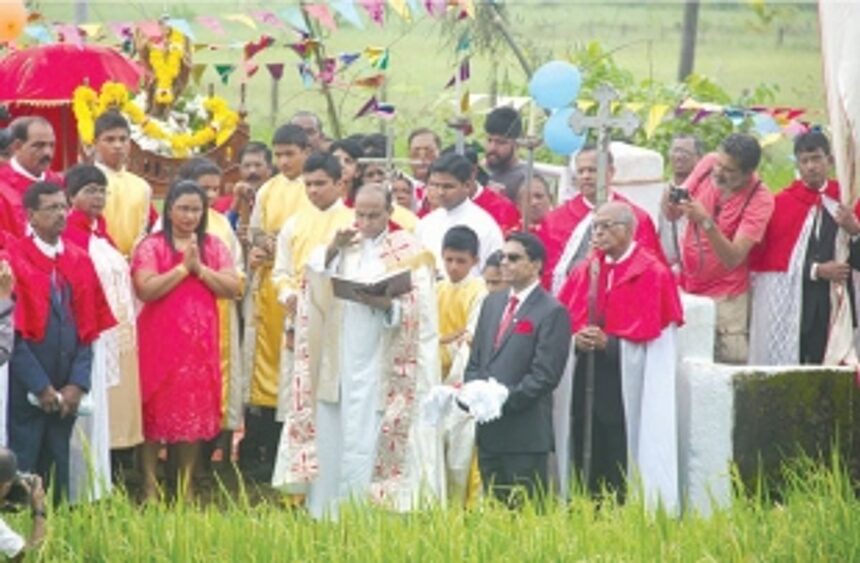
We will follow the tradition where the Vicar will go in procession with the congregation to cut the sheaves of grain in the field. After the blessing, they will proceed to the church for the high Mass, on August 21. On August 22, Fovo will be distributed to the Gaunkars. Finally, on August 24, the new paddy will be offered at the main altar of the Cathedral of Old Goa and the Gaunkars of nine families and 4 committee members will proceed to present it to the Bishop and the Governor.
This ceremony is documented in the book by Fonseca and Taleigao has been referenced by Foral, XLV in the following terms, “the village of Taleigao has a pre-eminence that it will be the first one to start mowing the rice and its Gaunkars will come every year with sheaf of it to present it before the high altar of the Cathedral.”
In the past we used to celebrate the event in our comunidade hall, which was built with comunidade funds and inaugurated on August 21, 1961 by the erstwhile Governor – General Manuel Antonio Vassalo E Silva. It was hosted by the Mendonca family and celebrated in style with lunch followed by tiatr. However, we now struggle to have those light moments in our own comunidade hall for celebrations like this harvest feast.
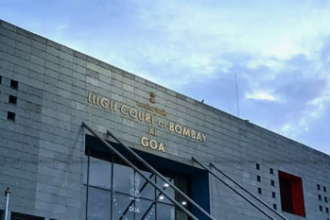
In 1963, the panchayat system of governance was introduced bypassing the traditional system. As an act of solidarity, in 1963, temporary space was given to the panchayat to set up their office in the comunidade hall. Although the panchayat have their own office, until now no effort has been made to vacate the premises. For the last few years the comunidade needed repairs as it proposed to undertake repairs. We requested the panchayat to vacate the office which is occupied with old files. Despite several meetings with them and the MLA, there were no results. Accordingly, the Gaunkars took a resolution to resolve the issue, which is pending in the court.
I take this opportunity to wish the Taleigaokars a happy feast. Let’s work together for the betterment of the comunidade and respect what our forefathers have taught us. Let’s preserve our assets for the future generations.