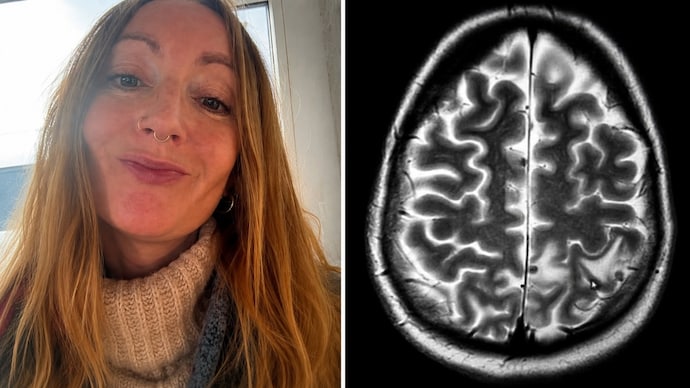
A British woman has claimed that a two-month trip to India in 2007 resulted in a rare parasitic infection that eventually left her with 38 cysts in her brain. While her story has gained widespread attention, medical experts say it is not possible to conclusively establish where the infection was contracted.Lowri Denman, 42, was diagnosed with **neurocysticercosis**, a disease caused by the pork tapeworm *Taenia solium*. According to reports from the BBC and other UK media outlets, Denman first realised something was wrong in 2011—four years after returning from India—when she discovered a metre-long tapeworm after using the toilet. Doctors later performed an MRI scan, which revealed 38 parasitic cysts in her brain.The infection eventually caused epilepsy, forcing Denman to undergo years of treatment. She now requires lifelong medication to control seizures linked to the condition. Despite believing she contracted the parasite during her visit to India, doctors emphasise that proving the exact location of infection is virtually impossible.Neurocysticercosis develops when a person ingests microscopic eggs of *Taenia solium*, usually through food or water contaminated with human faeces. Contrary to popular belief, the disease is not acquired simply by eating pork. Poor sanitation and inadequate hygiene are considered the primary risk factors for transmission.One of the biggest challenges in identifying the source of infection is the disease’s long incubation period. Symptoms may take months or even several years to appear after exposure, making it extremely difficult to determine when and where a person became infected. As a result, experts caution against attributing the illness to a specific country without clear medical evidence.The World Health Organization identifies neurocysticercosis as one of the leading preventable causes of epilepsy worldwide. Although it is more common in regions with poor sanitation, cases have been reported across Asia, Africa, Latin America and even developed countries due to international travel and migration.Health experts say Denman’s case highlights the importance of safe drinking water, proper hand hygiene and food safety practices while travelling. While her experience is rare and severe, it should not be viewed as definitive proof that the infection originated during her visit to India. Instead, doctors stress that the case underscores the need for greater awareness of parasitic diseases and the importance of maintaining good sanitation standards wherever one travels.