Dolcy D’Cruz
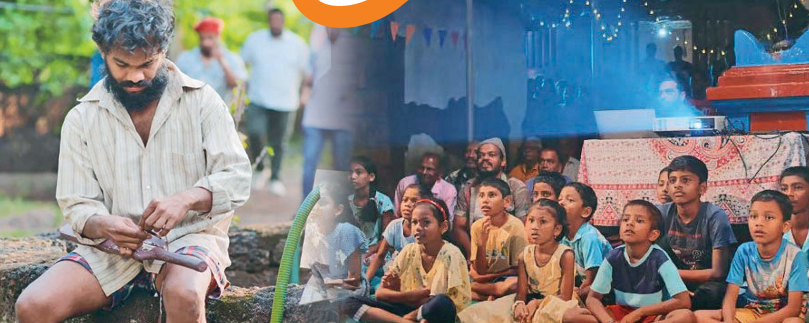
Umesh’ explores the complexities of identity, rejection, and the pursuit of recognition. A theme close to the heart of the director, Vardhan Kamat, the film produced by Guru & Associates Productions, will premiere on April 11 at Entertainment Society of Goa, Panjim at 6.30 pm followed by its next screening at Ravindra Bhavan, Curchorem, Sanvordem on April 12. The story revolves around a man who has been unsuccessful in his career for many reasons. There’s a sense of mystery around him, some say Umesh must have done something wrong, others believe he was suppressed politically, while some think he simply didn’t show up when it mattered. These rumours create multiple versions of his story, but no clear truth. Anton and Rohan set out to chase these possibilities and uncover what actually happened to him. Interestingly, they don’t even know him personally, yet they decide to make a film about his life. Both of them are theatre performers who are curious to explore cinema for the first time, making this project their debut in filmmaking. They are unfamiliar with the process, and that learning curve becomes a part of the narrative itself. The film begins quite organically, with Anton and Rohan casually discussing what kind of story they should tell, how to approach filmmaking, and what it even takes to make a film. These conversations unfold at a local tea stall, Vitobha Tea Stall, which becomes one of the film’s key locations. It is from this everyday setting that the story gradually takes shape and sets everything in motion. Except for few actors like Sushant Nayak, John D’Silva, C D Silva the filmmakers were not getting the lead character for almost two weeks, until Amar Chari auditioned. “We had called for auditions, and more than 100 people showed up. Since we were looking for actors who could improvise on set, we didn’t have a fixed script. Instead, we gave them pointers, where the scene would begin and how it might progress to the end and asked them to build the performance from there. Even at the audition stage, we made it clear that this was our approach and encouraged them to show us how well they could improvise. We didn’t provide a script; rather, we evaluated them based on their ability to respond to the prompts. Based on their performances, we then shortlisted the actors,” explains Vardhan Kamat, director of the film. The film was shot in 2023 in and around Ponda, Savoi Verem, Velling Marcel, Savordem and Margao. There are kids from the village who are a part of the story and they are also an important factor in Umesh’s life. The film falls within the drama genre, but it carries a strong layer of humor throughout. It has a runtime of 99 minutes, with the first 70 minutes leaning heavily into humor and lighthearted moments. With an UA certification (7+), making it suitable for viewers of all ages, the film is a complete family entertainment. “The editing process took a significant amount of time, almost six to seven months after the shoot. This was mainly because we weren’t able to achieve the exact narrative flow and structure we were aiming for. Once the edit was finally locked, we realized there were gaps in the story that needed to be bridged. To bridge these, we wrote 11 additional scenes and went ahead with a second shooting schedule,” informs Vardhan. One of the lead actors is John D’Silva, a well-known name in Konkani cinema, “My experience was very good with the film. So far, I have worked in entertainment, commercial and masalas films but this was different as it is similar to a festival film. I also enjoyed acting in this because the film shows the remote village Goan life with cowsheds, a tea corner which is not seen in the cities of Goa,” says John. Amar Chari shot to fame for his comedy skits and eccentric characters in his reels on his Instagram handle, the_amar_babu_fataski. Now, he is set to surprise his audience with this role as Umesh. “This is the first time I’m playing a lead role on the big screen, and it has been a great experience. The team clearly explained the character, his background, and what they were expecting from me. They liked my audition, and I carried that same approach into my performance. I’ve previously worked in projects like ‘Tu Mhaje’ and ‘Questao De Confusao’. I also completed my acting diploma at the School of Drama in Panjim. Before that, I performed in village plays, but after graduating, I didn’t continue much on stage. This film marks my first major role,” says Amar. “It was an amazing experience working on this film. Whenever I take on a project, I look for something that feels different. The way Goa is usually portrayed in films is very different from what we’ve shown here. This film presents the real Goa, its villages, its traditions, and its people. It explores multiple layers of life, making it a deeply connective story that audiences from all sections of society can relate to. Instead of focusing on the usual, superficial images of Goa—casinos, beach parties, rave culture, and nightlife, it brings out a much more grounded and authentic side. I believe audiences will definitely appreciate and connect with it,” says Sushant Nayak, who has worked on several plays, Konkani films like ‘Home Sweet Home 1 and 2’ and ‘Amori’ Hindi web series, ‘The Royals’ and Marathi film, ‘Guru Purnima’. He has also acted in the short film, ‘White Shirt’, directed by Vardhan Kamat. “Goa has a limited audience, so it’s important that people avoid asking for passes and instead contribute by buying tickets and supporting these films. Konkani cinema needs unconditional support especially through word of mouth to help it grow. It’s very rare to see a producer succeed and go on to make a second film. That’s the reality of the industry here. Filmmaking requires financial backing, and without audience support, it becomes extremely difficult to sustain. Unless someone is a big name, continuing in this space is a challenge,” says Sushant.