Team Herald
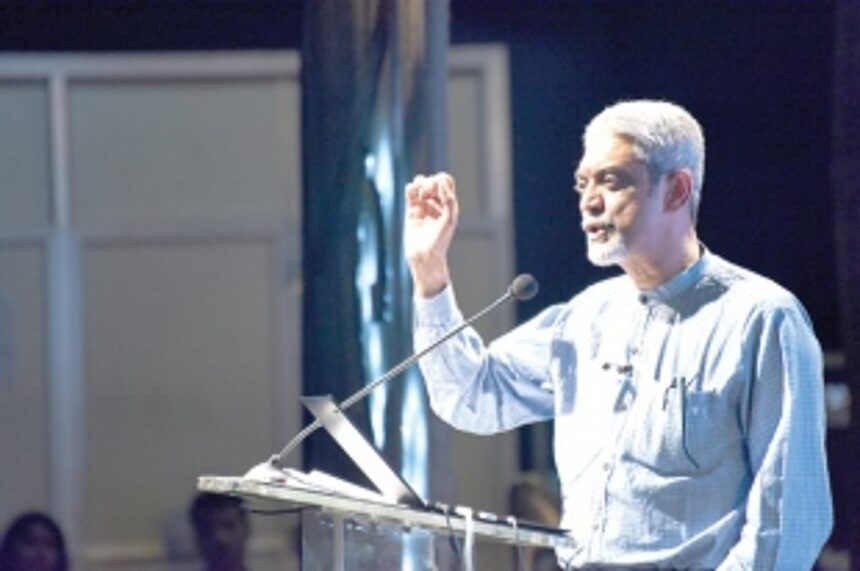
PANJIM: Healthcare for those who can afford it in India is given in hospitals that look like 5 or 7 star hotels with facilities that boggle the mind and then for a large majority it is in facilities where doctors are not present, medicines and diagnostic facilities are not available. Goa, however, was fortunate to have a good public health care facility. Prof Vikram Patel, noted child development and mental health care specialist, made this observation during the course of his talk at the 10th DD Kosambi Festival of Ideas.
There were he said two different countries in India. He also pointed out that 10 pe rcent of the country’s population suffered from some kind of mental problem and 90 per cent of the patients had not received any counselling or help.
The poor, he said, were forced to go to the private sector to get world class care in world class facilities where they then ran into a problem. The rich patient would be given treatments like a bypass which is ten times more expensive and they will survive while the poor don’t. This was a based on research where it was concluded that the rich got the treatment because they could pay while the poor would not because they could not afford it. The rich were getting treatment they at times did not need and the poor were left out to dry.
He pointed that economists believe that medical inflation is outstripping every other kind of goods or service. According to research, for every Rs 10 spent on medical bills, Rs 7 was spent by the individual. India has the highest out of pocket expenditure in the world. More than half the payment of hospital bills in India, the research revealed, was by sale of household goods, loans, distress sales. Medical emergencies have outstripped all others in being the main cause of indebtedness.
Patel said that many farmer suicides were not because of agricultural reasons but severe illness in the family which prompted them to take a loan. The perversity in the system is such that the system will compensate him only if he kills himself which will then mean his family getting some compensation which is then used to pay off the debt.
Providing more shocking news, Patel said that a third of all stents put into patients following a heart attack were not needed, which was confirmed to him by doctors. Margins of other medical products, he said, were marked up by 1500 per cent. Products imported for Rs 8500 are sold to patients for Rs 1.2 lakhs. The collusion of the profession was complete in this, he added.
The Medical Council of India, he said was described by a High Court as a den of corruption. The President of the council who was jailed won a re-election to the council while in jail. The government is now focussed on making prices much more reasonable by slashing the prices of important drugs as well as other necessities. The insurance companies in the country were in the loop where claims could only be made if the patient was hospitalised.
A public health system for India has to be re-imagined, Patel said. It is important to do it because, according to him, most people will live longer and have one or two ailments for extended parts of their lives. Our future, he said was in our hands.