Jennifer Fernandes
Sonali Parwar’s relationship with bamboo began quietly, almost instinctively, in her childhood home at Cacoda, Curchorem. After returning from school each day, she would watch her parents work—hands steady, movements precise, transforming raw bamboo into objects of use and beauty. While others saw leftovers and waste, young Sonali saw possibility. She would carefully gather the discarded pieces her parents planned to burn and shape them into small creations of her own. Even then, she knew she wanted to make something meaningful.

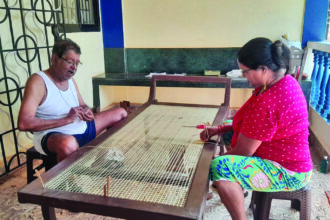
What her mother made during the day, Sonali tried to recreate in her own simple way. With time, observation turned into practice, and practice into skill. Gradually, she began helping her mother, learning not just the craft but the patience and discipline it demanded. Bamboo carving was not new to her family—it was a tradition passed down through generations. Her grandparents, parents, and now Sonali herself lived by this craft, which was the family’s sole source of livelihood.
There was no formal job in her household, but bamboo provided everything the family needed. And today, Sonali continues the same work with pride and clarity of purpose. She never chased another career path, nor did she feel the need to. For her, bamboo craft is not a fallback—it is a calling. Yet she knows this traditional art stands at the edge of disappearance. Few practise it now, and fewer still are willing to learn. Many young people, she observes, shy away from such work, believing education should lead only to office jobs and fast money.
Sonali believes otherwise. To her, growth in life comes from interest, passion, and hard work combined. She discovered her passion early—while studying in the fifth standard—by closely watching her mother’s fingers move effortlessly, shaping bamboo into intricate patterns. Day after day, her eyes learned before her hands did. At first, she avoided sharp tools, afraid of injury, but as she grew older, she learned to use the chopper and knife with confidence. Today, these simple tools—along with her hands—are all she needs. Every piece she creates is made by hand, without machines, shaped by experience, care, and creativity.
Injuries were part of the process. Cuts, pain, and sore hands were common, but never discouraging. Like her parents, she learned to apply turmeric, smile through the discomfort, and continue working. Her parents never stopped her from learning the craft; instead, they encouraged her, carefully guiding her when she was young and trusting her as she grew.
After completing her XII standard, Sonali pursued a diploma in bamboo technology in Maharashtra. The training deepened her knowledge and refined her skills. She learned to identify different bamboo species, their local and scientific names, and explored new possibilities—especially bamboo furniture, a field still rare in Goa. What she had learned at home now found professional structure, expanding her vision of what bamboo could become.
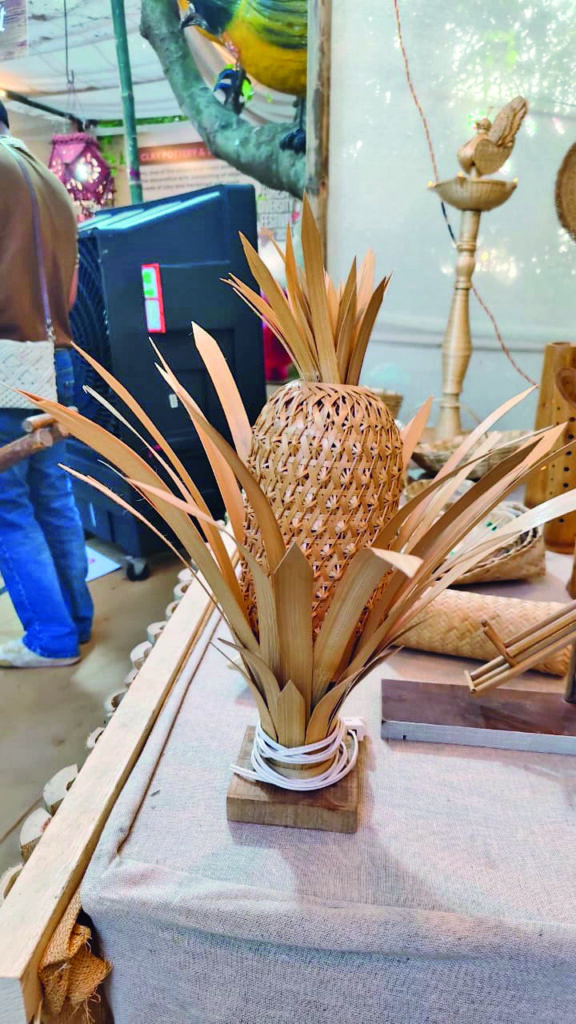
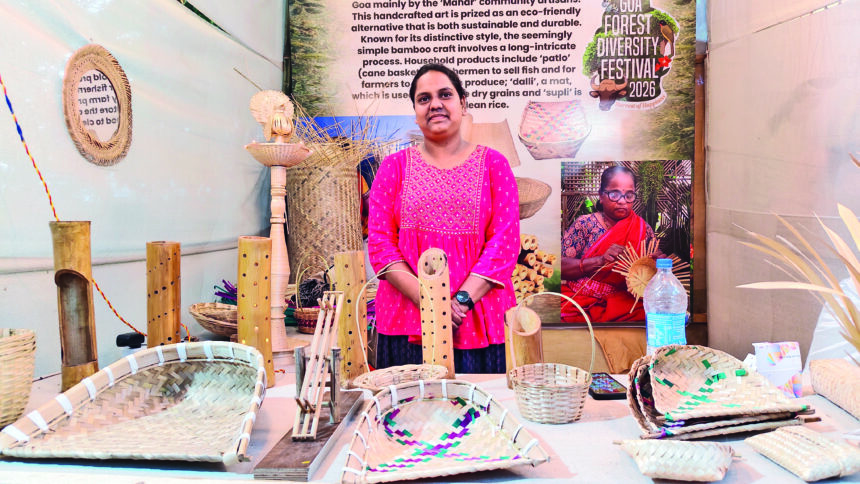
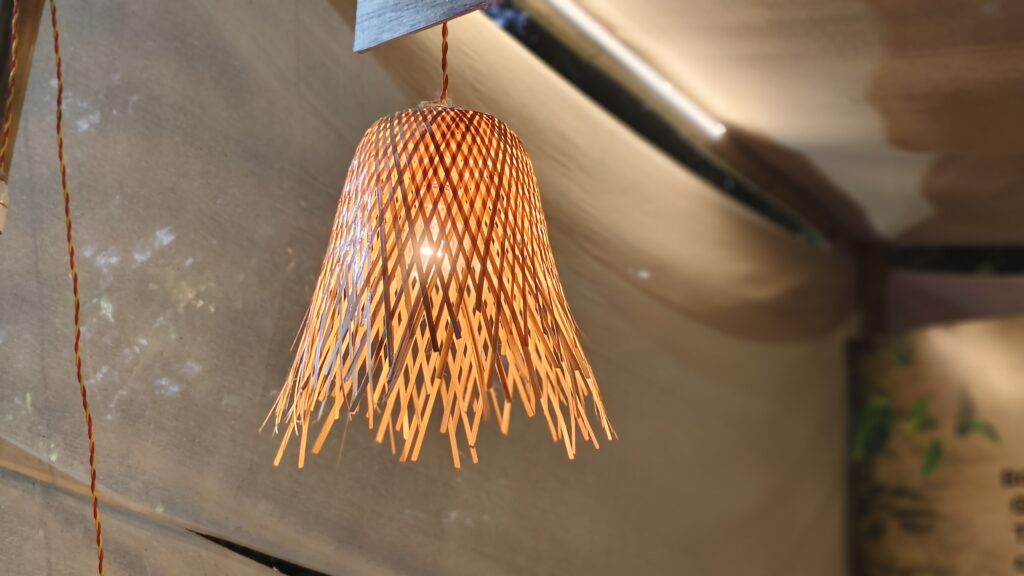
Today, Sonali creates a wide range of bamboo products: baskets, lamps of various designs, decorative fruits, traditional agricultural tools, and custom-made items based on customer requests. If she has never made a particular design before, she takes it as a challenge. Nothing, she believes, is impossible. Bamboo for her craft comes from local plantations, with her family actively supporting her by sourcing materials and helping in preparation.
One of her proud innovations is a bamboo lamp designed for inaugural functions—an eco-friendly alternative to conventional ceremonial lamps. Recognition followed. Customers began placing orders, praising her craftsmanship, and encouraging her to exhibit her work. Each word of appreciation strengthened her resolve. Though she received job offers, Sonali chose to remain rooted in her tradition. There may be no instant wealth in bamboo craft, she admits, but the satisfaction it brings is deeper and lasting.
She worries about a generation that looks only toward government jobs and quick success, often ignoring their natural talents. Even those without employment, she says, hesitate to learn a skill that demands patience. Yet bamboo craft, she reminds us, is sustainable, eco-friendly, and deeply connected to Goa’s cultural identity.
Sonali appeals to Goans to support traditional crafts and replace plastic with bamboo products in their homes. Such choices not only protect the environment but also inspire younger generations to value and preserve heritage. She urges parents to take their children to exhibitions, to let them see how something simple can become extraordinary through skill and dedication.
Many still do not realise how versatile bamboo is—or how many products can be made from it. Sonali continues to do her part, determined to keep the tradition alive. For those willing to learn, she is ready to teach, even through official handicraft platforms.
In every piece she creates, Sonali Parwar weaves together history, resilience, and hope—proving that when passion guides the hands, tradition does not fade; it finds a future.