Lack of Planning affected the Case
Witnesses failed to impress the Tribunal
The Tribunal pointed out that Paresh Porob, the first expert witness for Goa, has merely quoted from the report of the panel of experts without mentioning his views, as an expert, about adequacy or otherwise about the projected water requirement for forest management. There were also other issues with Porob’s statements which the Tribunal did not accept such as the water requirement for Madei Wildlife sanctuary.
The Tribunal did not accept the recommendation of the second second witness, Rajendra P Kerkar. Kerkar had presented a report titled ‘An Assessment of Environmental Flow Requirements of Indian River Basins’ by V Smakhtin and M Anputhas. The Tribunal pointed out that the study was not critically examined, had not relied on accurate data nor accepted by the Ministry of Environment, Forest and Climate Change.
Subrai T Nadkarni has not at all examined and explained, the various aspects, particularly the aspect of availability of utilizable water at different project sites, identified by the Panel of Experts. The Tribunal notices that, while presenting his case for revised assessment of water requirement, Subrai T Nadkarni has not at all mentioned about any new studies indicated by the State of Goa
The Tribunal further finds that, Subrai T Nadkarni has neither undertaken any scientific study nor mentioned about the scientific studies undertaken by the State of Goa or by him, to examine the claims of the State of Goa in respect of the impact of diversion of water outside the basin on the environment, agriculture, flow of river etc. The Tribunal stated “the studies by Shri Subrai T Nadkarni have not been undertaken with due consideration of all aspects, particularly (a) the water availability that can be utilised for the benefit of the society, and (b) the needs projected by the co-basin States” and even called his studies “lot-sided”
Another statement made by the Tribunal was “… when the water availability is found to be less than the demand, which is the case of the State of Goa, in respect of Mahadayi river basin. However, it is noticed by the Tribunal that, no such evaluation has been undertaken by Nadkarni”. Based on all these observations the Tribunal declared that the contents of Nadkarni’s report cannot be relied upon.
Inconsistent information
The Tribunal had pointed out that the demand for water stated by Goa is higher than the water available in Goa in the Mahadayi basin. The Tribunal stated that “The projection of demand of 2674 Mm3 against the utilizable available water of 1531 Mm3, in itself appears to be quite illogical.”. These figures obviously show the lack of planning by Goa Government. Following pertinent inconsistencies/contradictions are also observed from the Statement of Case and related document submitted by Goa.”
In addition, while Goa raised serious objections on the hydrological data observed at Ganjim on river Mahadayi and Colem on river Khandepar (a tributary of river Mahadayi) which has been used by Central Water Commission (CWC) as well as National Water Development Agency (NWDA) for assessment of water availability, Tribunal observed that the Goa WRD did not undertake any detailed studies to check for inconsistency.
Goa has also mentioned that NWDA’s water resources assessments were be based on erroneous assumption of basic hydrological data such as rainfall, river discharge data etc. The Tribunal exposed a grave contradiction Goa when it pointed out that the studies of the “Panel of Experts”, which was used for preparation of Master Plan for the long term needs of water potential of Mahadayi river basin in Goa, primarily based on the findings(assessments) of the technical study of NWDA.
Further, while Goa government claimed that there will be a demand of 2674 Mm3 of water for various purposes by Goa, the Tribunal stated that this cannot be treated as final projection since Goa has not stated any timeframe for completion of studies and Detailed Project Reports (DPRs) of individual projects.
The Tribunal noticed that consistency of the data was a serious issue and that proper consistency checks were not carried out by any agency which led to varying conclusions about the quality of data.
Tribunal stated that it was baffled and also anguished that despite availability of considerable data, existence of expert organization and institutions and implementation of specific projects related to hydrological data, hydrological analysis and capacity building, the Tribunal had to struggle for arriving at an acceptable value of water availability at 75% dependability of the Mahadayi basin.
Lack of adequate information on environment impact
In the absence of data relating to estimation of quantity of water, which would adversely affect ecology, environment, salinity ingress, fisheries, wildlife, flora and fauna etc., the Tribunal was not in a position to come to a definite conclusion as to what extent the above said matters would be adversely affected or what would be the percentage of such adverse effects. The Tribunal stated that “If such data with facts and figures had been placed by the State of Goa before the Tribunal, it would have helped the Tribunal in recording a concrete finding and in absence of such data it is difficult to conclude for the Tribunal as to what particular percentage wildlife, ecology, environment, salinity ingress, fisheries, flora and fauna would be affected”
It’s interesting that in a State which has some of the most active and experienced environmental activists, the National Institute of Oceanography, a University and also some experienced and internationally renowned scientists, the Goa Government was unable to provide critical data and studies on ecology and environment in the Mandovi basin.
Here are some of the studies that the
Tribunal explicitly listed which had not been carried out by Goa
. Not estimated as to what would be the impact of global warming on the water availability in the Mahadayi basin
. Not carried out any scientific studies relating to sea level increase and increased salinity ingress in coastal area of Mahadayi River with due consideration of the scientifically predicted global warming
. Not carried out any in-depth scientific evaluation on prioritization with due consideration to social, economic and environmental aspects.
. Not examined and conducted any scientific studies relating to impact on reduction in flow in the river Mahadayi, if any, on the process of sedimentation
. Not examined and/or undertaken scientific studies about the effect of diversion of water by State of Karnataka and State of Maharashtra, on the agriculture of Mahadayi River Basin in the State of Goa
. Not commissioned any scientific studies regarding the impact of diversion of water by the State of Karnataka and the State of Maharashtra, on the ground of water flow pattern
In spite of this, Goa did manage to prove that the diversion of water would impact Goa’s environment to an extent. The
Tribunal observed that:
. After assessing and deducting from the available waters of river Mahadayi, required for ecological sustenance of the river valley eternally and specifically giving due consideration to the scientifically predicted global warming sea level increase, increased salinity ingress in coastal areas etc., the share of all the riparian states should be determined.
. The proposed diversion schemes of the State of Karnataka and Maharashtra will cause severe and irreparable damage and losses to the forests, wild life, other organic life and biodiversity stratosphere of the area in Mahadayi basin, particularly in the upstream areas and also to overall ecology of the Madei River Basin.
. The proposed diversion schemes of the State of Karnataka and State of Maharashtra would severely result in destruction, exploitation, damage, diversion of habitats from the wildlife sanctuary and also diversion of water into and/or outside the wildlife sanctuary etc.
. That diversion of any kind by the State of Karnataka and the State of Maharashtra of Inter-State Water of River Mahadayi will degrade and impact the ground water flow etc.
Conclusion
Goa Government is yet to understand and analyse the real impact of the Verdict. Goa Government while presenting the requirement for water by the State, relied heavily on the report titled “Master Plan for Madei / Mandovi River Basin” prepared by the Panel of Experts had opined that the Mahadayi river basin has adequate water resources. Having done that, the government presented a expert witness Saurab Nadkarni who presented a different set of figures which varied considerably from that presented in the Masterplan.
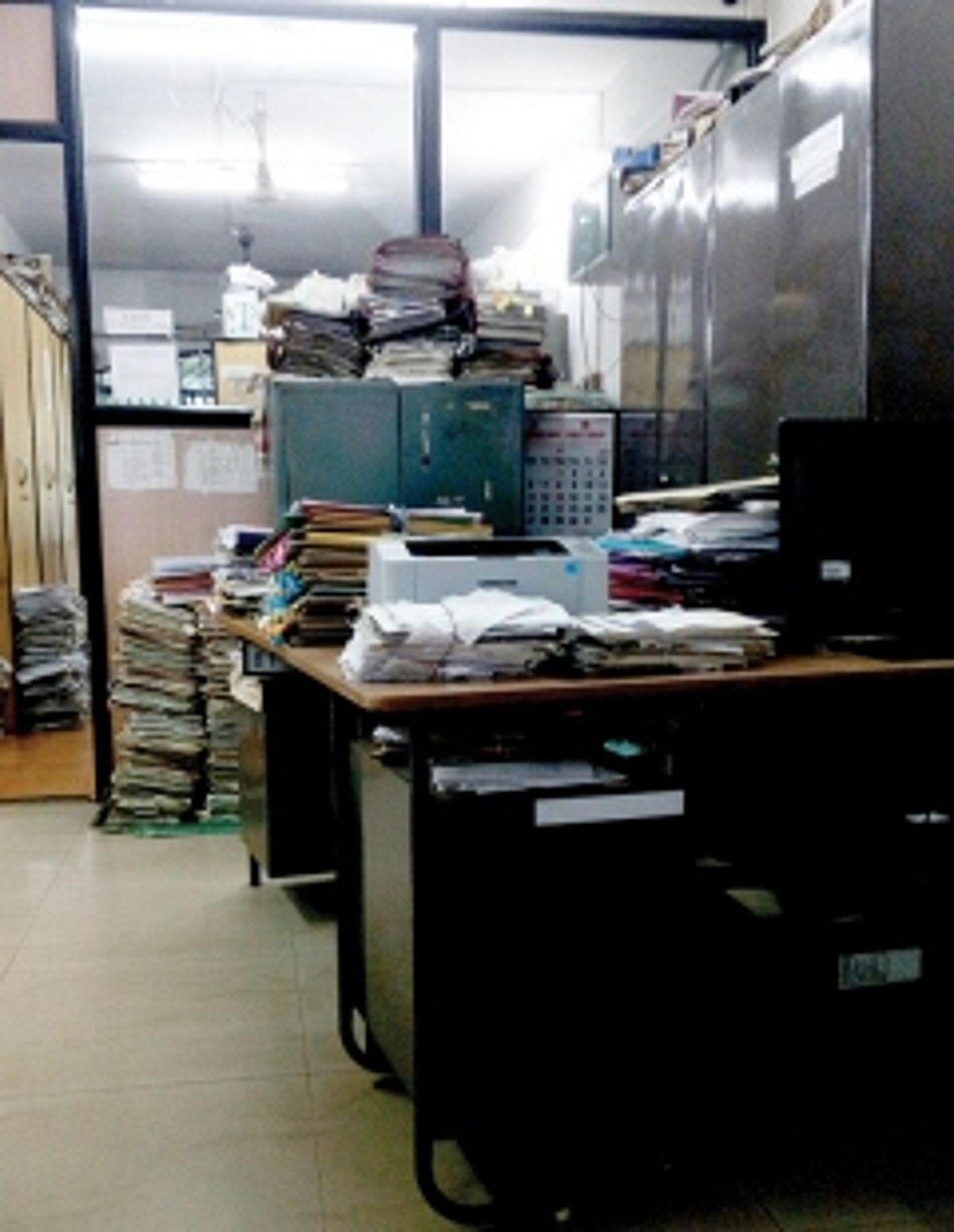
There are several other questions which point to lapses in the case presented by Goa
. In the last 15 years since the case had been going on, why did the government not conduct any scientific study to determine the impact of water diversion on the environment and economy?
. Why didn’t Goa prepare a detailed cumulative environment impact assessment?
. In the last 15 years, Why did the government not prepare the DPR for 61 projects that were listed in the Masterplan?
. Why did the Advocates for Goa not cross check the data and reports for inconsistencies before presenting them to the Tribunal?
. Why didn’t Goa appoint more expert witnesses?
. Inspite of procuring world class equipment under the Hydrology Project, why didn’t the WRD conduct any Hydrology study on the Madei River basin?
. Why did the Government not state water availability at Gajnem especially when it is known that this is a water deficit area and that the water at this weir has been augmented with supply from Selaulim
The pertinent question is thus whether Goa had presented a strong case? Have we wasted Crores of rupees in a week defence and what will be the ultimate price Goa will have to pay for this verdic in terms of environment, social and economic impact.