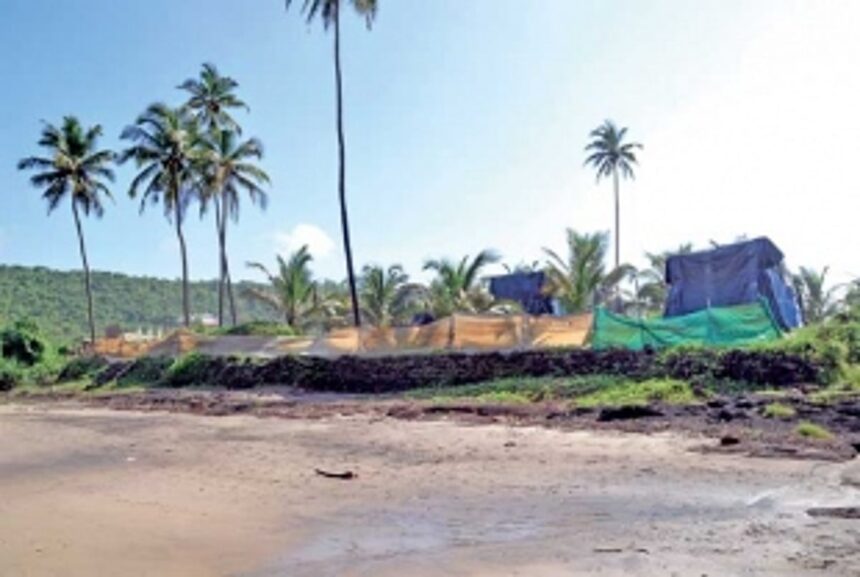
In 2012, the GCZMA received a public complaint of a CRZ violation in this property. The violation was as significant as the name it was linked to. It was NDTV’s Dr Prannoy Roy. While Roy’s name features even in the latest list of CRZ violators (along with one Anthony Fonseca), he chose the quickest way out from being dragged into an environment-related controversy. According to officials, he sold the property in 2013 to a Delhi-based company Nameh Hotels & Resorts Private Limited. As per records, the nature of violation in this case was ‘Illegal construction of a structure/hotel project. Illegal cutting of sand dunes. Illegal road being built to the beach. Illegal excavation.’ GCZMA had issued a show cause notice and the matter is currently pending before the office of GCZMA for inquiry / action.
On Friday, in response to another question pertaining to hotels approved by the GCZMA, Minister for Environment Alina Saldanha presented a village- wise break up of approvals granted to hotels in the state assembly. In this list, survey number 159/3, now appearing under the name of Anthony Fonseca, had been granted approval for construction of a hotel project way back in April 2004.
According to details available on Directorate of Settlement & Land Records, survey number 159/3 belongs to 13 occupants, including Fonseca and Nameh Hotels & Resorts Private Limited. Big violations, little action This is just one case where violations brazenly
flourish, especially in cases of tourism projects. Spanning north and south Goa, GCZMA has taken cognizance of more than 50 CRZ violations by illegal establishments/hotels. Of these 27 violations are in Mandrem and Morjim villages. Terming this stretch as an ‘endemic zone of CRZ violations’, Fatorda MLA Vijai Sardesai questions the special status given to these villages. “Whether it is by design or by default, violations continue unabated, under the patronage of the state government or the local governing bodies,” he says. Interestingly, the updated list of violations tabled in the current session does not look very different from the one submitted during the March session, particularly for the Mandrem-Morjim area where only three new cases figure.
Drawing attention to a common modus
operandi among the bigger commercial players,
Sardesai states, “They know how to veto or circumvent
the law and get stay orders on demolitions.
It is the smaller ones that suffer, like the
traditional fisherfolk or tribals. They are unaware
of the law and are often
the ones that figure
in the list served
demolition notices.
You find overzealous
officers flaunting the
fact action has been
taken against poor
fisherfolk, while flagrant
violations continue.”
The case of Blue
Waves in Morjim,
clearly supports this
argument.
As reported by Herald
Review two weeks
ago, this hotel has been
constructed in a ‘no development
zone’. The
ground plus one structure,
with 21 concrete
pillars and marble
flooring, was also sent
a demolition notice by
GCZMA last year. However,
the order was
challenged by the owners
before the National
Green Tribunal in Delhi. At the time of going to
press, the final hearing in this case has once again
been rescheduled from August 4 to end of the
month.
Another CRZ violator who features in Bardez
Taluka list is Marine Solutions, who have been
served a show cause notice for building an illegal
jetty in Penha De Franca. This matter is now pending
a GCZMA inquiry. This however, is not the first
time the company has been in the news for violations.
In February 2014, this newspaper ran a
story on Marine Solutions operating a pontoon
in Chapora River without all the required clearances.
Clearly Goa’s entire coast is at stake, but tourism
officials would rather not confront the elephant
in the room.
Tourism minister Dilip Parulekar is quick to absolve
his department of responsibility. CRZ issues,
he says, are in the domain of the environment
ministry. But given the pronounced focus on the
CRZ violations during this assembly session, he
states that they plan to work with the centre to
deal with the issue.
“If we give license for 200 sq mts and the establishment
builds beyond that, it is the duty of
local panchayats to bring it to the attention of the
concerned authorities. If we come to know about
such illegalities, we refer the case to the environment
authorities,” he says.
But how does the minister then justify CRZ violators
who enter the state on a tourism ticket?
Like Sunburn.
Even as the event organisers have begun sale
of passes to this year’s edition, their case from a
CRZ violation in 2013 is pending before the NGT.
Their offence–constructing illegal temporary
structures in a no-development zone during the
festival.
Of course the age-old technique of passing the
buck between panchayats and ministries seems
to bode well for violators.
“On the one hand, they want to bring in companies
like KPMG and prepare tourism master
plans, while on the other such haphazard and unregulated
development in ecologically sensitive
zones continue rampantly,” Sardesai says.
In what is probably a much-needed step,
GCZMA member secretary Srinet Kothwale has
sent a letter in July 2014 to about 25 authorities,
including various deputy collectors and block development
officers to expedite disposal of pending
appeals, execution of demolition orders and completion
of inquiries.