orn on May 31, 1829 in Navelim, to Dr. Francisco Salvador Gomes and Deodata Francisca Furtado, Francisco’s birth coincided with the juncture when liberalism was creating a huge upheaval in Goa. It affected his mind in a huge way. At the age of eight, he could write in Portuguese and before attaining majority he became a doctor. He was a precocious child. He was proficient in English, French, Portuguese and Italian among other languages.
Gomes was first elected from Goa as a Member of the Portuguese Parliament from 1861 to 1869. His first speech was appreciated by many due to his brilliant oratorical skills. He was applauded by his political adversaries. He was offered a cabinet position thrice – a rare distinction, but he refused to accept it. Even though Gomes sat on the opposition side, he got various private bills passed in Parliament. It is due to his significant contribution that the funeral tax, marriage tax and toddy tappers tax were abolished. In Europe, Gomes came into contact with John Stuart Mill, Alphonse de Lamartine, Chevalier and Elias Regnaulty among other great intellectuals. In Portugal, Tomas Ribeiro, the famous Scholar and Poet even called him the ‘Star of the East’.
Gomes was a versatile writer and intellectual. He did a great deal of literary activity during his parliamentary recesses. In 1861, he published Liberty of Land, which deals with Goan Agriculture. In it he advocated the need for land reforms and creation of credit societies in the former Portuguese colony. This was followed by a biographical study of the Marquis of Pombal. Later, in 1866, he wrote his most famous novel in Portuguese entitled Os Brahmanes, in which he gave a description of the caste discrimination faced particularly by the Hindu people in the Indian subcontinent. The book is set in Lucknow and the Indian Mutiny of 1857 is its backdrop. His economic work titled L’Essai sur la theorie de l’Economie Politique et de ses Rapports avec la Morale et le Droi earned him great recognition as an Economist in Europe.
At a time when the Sangh Parivar is using every trick possible in the country to enable defections of elected representatives from rival political parties, Gomes’ values hold special significance. Gomes always argued for the equality of vote and fair representation of people. Not just this, he was against all forms of tyranny and exploitation. He stood and expounded the ideal of freedom for all. Gomes was a true patriot too. This is evident when he writes a letter to his friend Alphonse Lamartine – “I was born in India, the cradle of poetry, philosophy and history. I belong to that race which composed the Mahabharata and invented chess- two conceptions that bear in them the eternal and the infinite”. Gomes was very proud of his Indian roots.
Francisco Luis Gomes was also a member of numerous renowned institutions. He was a member of the Asiatic Society of Bombay (now Mumbai), Royal Academy of Sciences of Lisbon, Society of Economists of Paris as well as the Society of Medical Sciences of Lisbon among other institutions.
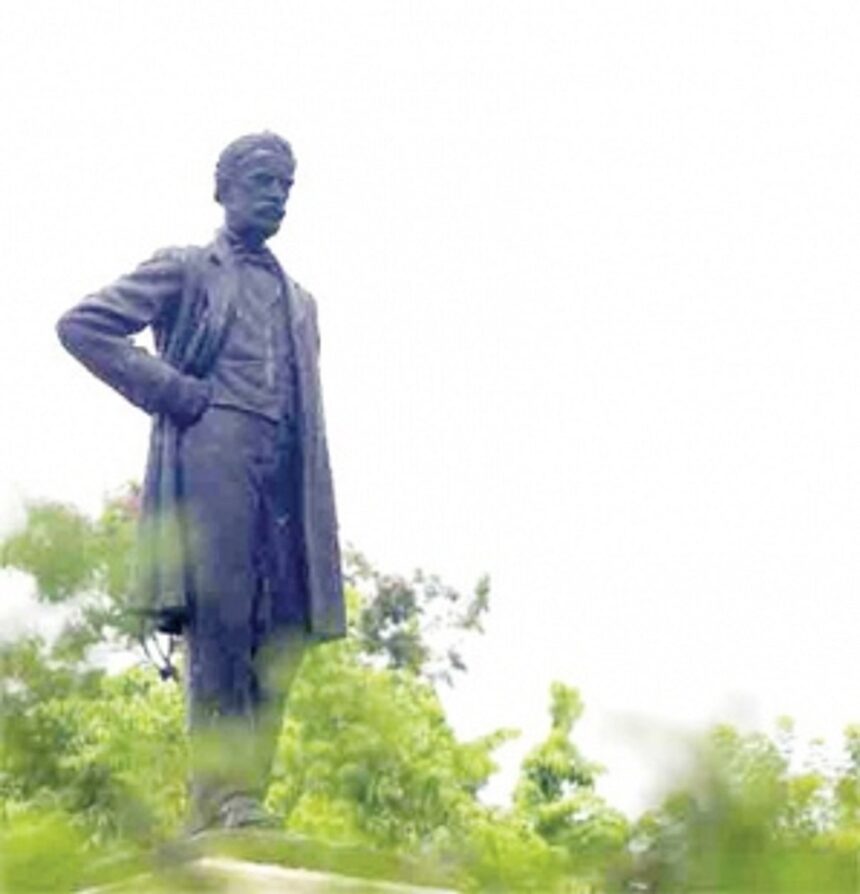
In 1869, while returning to India on a ship, Gomes contracted tuberculosis and passed away on September 30. He was buried at sea. The life of a great man was cut short due to tragic circumstances. Though his ancestral house lies in ruins in Navelim, a statue of Gomes and a road named after him in Vasco are two monuments in memory of him.
Gomes will always remain an inspiration as well as a role model to many.