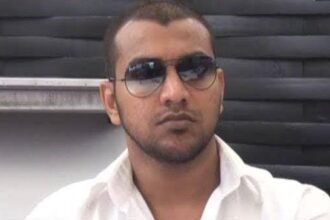
Dr Alan is back in Goa for a short break from the war-torn country of South Sudan where he’s based at providing healthcare when the facilities itself are attacked and targeted because of a civil war going on for years together. Dr Alan also had the ebola crisis to deal with. As a medic he recalls his hard times in West Africa where he worked through bomb blast and gunshots. Goa’s very own hero who started this journey with Médecins Sans Frontières (MSF) also known as Doctors without Borders since June 2009 in Chhattisgarh and the world needs more heroes like him.
When I first heard about Doctors without Borders / Médecins Sans Frontières (MSF) as a 14-year-old, little did I know how it would affect my life and work and provide me with experiences that continued to shape me today. As a happy-go-lucky Goan teenager, I heard a story about a couple of foreign doctors who were then relaxing in Goa after volunteering for MSF during the earthquake in Gujarat in 2001. They spoke about some of the places they had worked previously in corners of the world that I didn’t even know existed, through wars, famines and epidemics, writes Doctor Alan in one of his publications in March 2013.
“I started working for MSF in Bastar, Chhattisgarh, in 2009 where so many of our country’s men, women and children are caught in the power struggle between Maoist (Naxals) and government forces. Due to the dense forests there and the ongoing security situation, access to healthcare is a real problem and we ran mobile health clinics, sometimes walking for 2-3 hours each day with essential drugs and vaccines to designated clinic sites. It helped open my eyes to health issues not too far away from home and at the same time, increased my interest in learning about health crisis situations all over the world,” recalls Alan.
Alan completed his MBBS in 2008 from the Goa Medical College and began his career with MSF in June 2009 as a national doctor working in Bijapur, Chhattisgarh. He worked here till December 2009. This was followed by brief stints as a medical doctor and intern with the Duncan Hospital and Pan American Health Organization/World Health Organization (WHO/PAHO), Washington DC, USA.
Post this; he began working with MSF in programmes in Ethiopia and South Sudan. Dr Alan has also worked as an emergency medical doctor at a hospital in Bangalore. Early 2015, he went to Sierra Leone as a doctor in the high risk unit of Ebola treatment centre. He has been part of MSF’s emergency medical unit since mid-2015 and has been to Yemen, Syria and South Sudan as an emergency doctor.
When on his work in Yemen, Alan narrates how one patient has had his left eye socket blown out by a bullet and was still talking coherently – it is like a scene from a movie. Another has a gunshot wound to the head and is being mechanically ventilated, while a third had multiple gunshots through his abdomen. Our medical team manages these patients calmly and efficiently, he says.
Dr Alan has a Master of Public Health and a certificate in Health Finance and Management from Johns Hopkins Bloomberg School of Public Health.
Alan explains how one of his greatest moments was when he accompanied a patient cured from Ebola back home and hugged the patient in front of the community only to declare the patient Ebola free and he says the reception the patient received to come home alive is a memory that he will always cherish.
Saddened by wars, Alan says, “My heart doesn’t race like it used to. From never seeing gunshot wounds back home in India, to now seeing them on a daily basis, I am learning a lot here in Yemen.”
Alan feels that being home for Diwali this year will be hard for him when he hears “fireworks” in the air and to tell himself that those are not gunshots and bomb blasts.