Team Herald
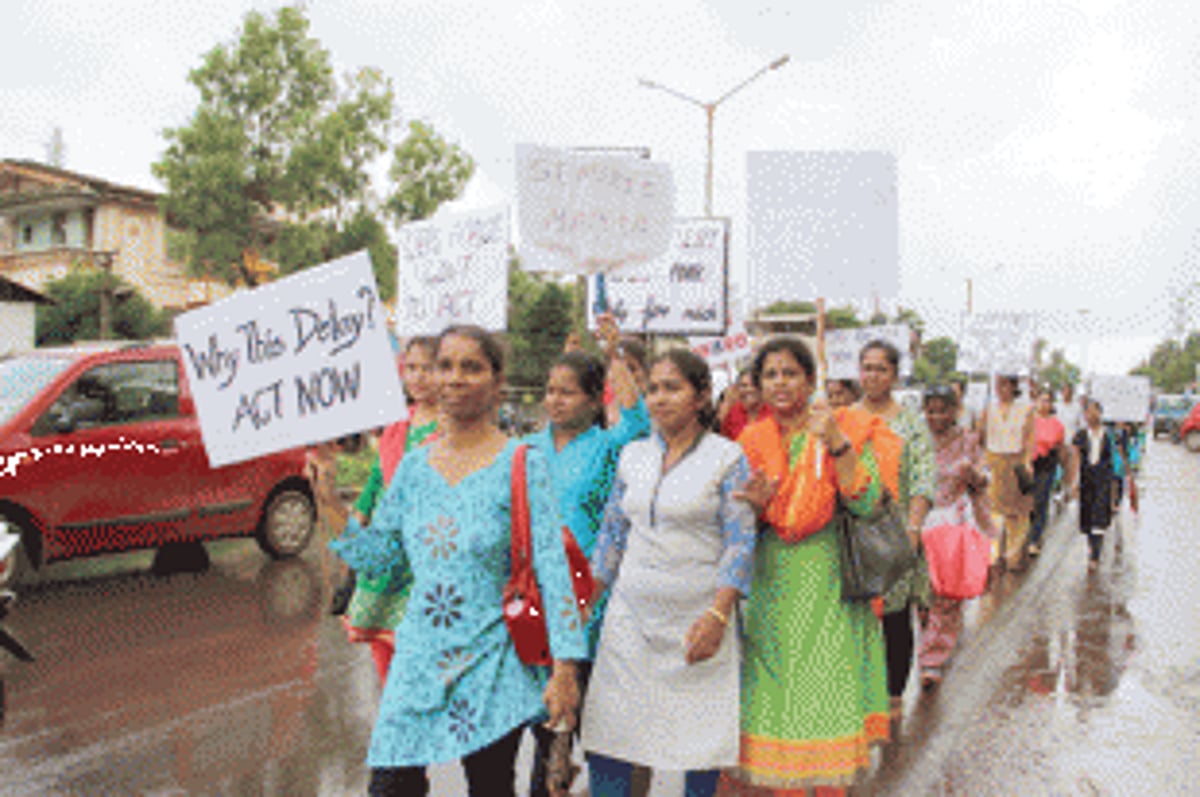
When news of parents blocking roads on Friday morning began trickling in, the first reaction was of amused surprise that slowly led to raised eyebrows and later the speculation of who or what was behind the roadblocks. Forum for Rights of Children’s Education (FORCE) organizing secretary Savio Lopes, who is the face behind the movement, was at the Azad Maidan, on the fifth day of his hunger strike and the peaceful manner in which the people were protesting at the maidan belied the raucous agitation on the streets and roads of Goa, where traffic was brought to a halt for several hours. It was almost unbelievable that FORCE had such support and the niggling doubt did enter the minds that the Church could have a hand in the agitation.
The speculation has always existed that the Catholic Church is the force behind FORCE ever since the forum came onto the scene in 2011. It is after all schools belonging to the Archdiocesan Board of Education that have changed from Konkani to English and will be the most affected by any change or dilution of the cabinet note on the Medium of Instruction (MoI), and so have the most to lose if the government ever changes its mind on the MoI policy.
And then, Chief Minister Laxmikant Parsekar said in the Legislative Assembly, “All the diocesan schools had called parents for morning prayers and were asked to block the road.” He even named a parent who called him up and told him that they had blocked the road because a ‘Father’ had told them to do so.
This of course was denied by Diocesan Board of Education secretary Fr Zeferino D’Souza who said it was a movement of parents and PTAs and no instructions had been given by any Diocesan-run schools.
Later in the day there was a further denial, and this one came from FORCE treasurer Sintia Fernandes who told Herald, “FORCE has not instigated this agitation but parents have carried out this agitation in support of FORCE.”
So did the FORCE leadership know what was happening on the ground?
It perhaps did, for Fernandes didn’t stop there and had a word of caution for the government. “That said, what happened today is just a trailer of what will happen if the government does not act. This is just the beginning,” she added.
But you can’t really take the Church out of the issue of grants to English schools and certain sections are seeing this as a Church versus government issue. There were even veiled references to this by top leaders who suspected groupism and communalizing the issue. “If anybody is saying this (that it is church versus government) then it is very bad. This is an agitation of the parents. All they have to do is go to Azad Maidan and see who are the parents present there. Are they only from the Catholic community? There are parents from all communities protesting there,” said Fr D’Souza.
Michael Lobo, MLA of Calangute who is supporting the FORCE agitation, went on to add that the parents did not belong to any one community as is being made out by a few politicians but all parents including Hindus and Muslims.
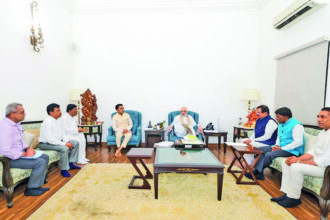
But on Thursday a group of Catholic MLAs of the BJP and its allies met with Archbishop Filipe Neri Ferrao underlining just how important a role the Church plays in education and its stake in the demand for grants for English schools. Notwithstanding the meeting, where the MLAs assured the spiritual head of the Catholic Church in Goa that grants to English medium primary schools would continue, and at which the Archbishop told them that the MoI issue should be taken up in the current session, the next morning there was a sudden and unprecedented blockade of roads across Goa.
So what is this agitation all about? Is it about grants to English medium schools or is it about choice, where the creamy layer and the dregs of society can avail of the same education and in the same language.
Fr Victor Ferrao, dean of philosophy at the Patriarchal seminary of Rachol put a different perspective to the issue. “I think it is denial of democracy paradoxically in the name of democracy. Democracy is open to the future while totalitarianism is closed to the future. Today what we have is cultural imperialism of hypocritical people who have already been intoxicated on English. What we see around is totalitarianism and mimic colonizers. It is ok that you pay and study English. While the poor pay for it the rich control and direct what the government should do.”
Just a couple of days earlier, Konkani writer Uday Bhembre had said, “We Goans haven’t understood the importance of our mother tongue. If we keep our fashion-loving ways and ignorance going, we are only spoiling the future of our children. We will be solely responsible for it.” He had added, “The ignorance of Goans towards our mother tongue and adoption of English will definitely suffocate and stunt the growth of our children, and we will fall back.”
But, Fr Ferrao asks, “How can English taught in private schools transubstantiate into patriotism? It means the burden of looking after the national language is only on the poor while the rich can wash their anti-nationalism with their money? Is this not plain and simple denial that feeds the libido of some self-appointed cultural police? The patriotism of the rich is given and cannot be questioned but the poor have to prove their patriotism.”
And then there is the Marxist view of the issue. The local CPI-M unit had deliberated this issue some years ago and had said, “The hollow claims of the “local language lovers” must be exposed since they are only opposing the grants-in-aid to English medium primary schools, without demanding the closure of the English-medium primary schools. Effectively, this means that they want the continuance of private English-medium primary schools which charge huge fees from the parents of the students even while paying a pittance of salaries to their teachers and non-teaching staff… On the other hand those opposing the grants-in-aid to English-medium primary schools are actually fighting for their “right to sell English-medium education from the primary stage” and make huge profits for themselves.”
The new question of course is: Should grants be ever denied to English language schools, will existing private English schools charging fees be also closed?
While there is no answer to this question at the present time, all this happened in the week that the only newspaper in Goa’s official language, Konkani printed its last edition.