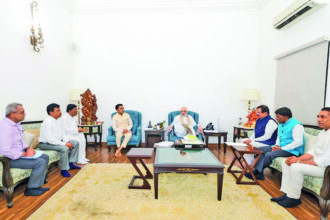
The meeting chaired by Dr Laxman Naik chairman of the board of studies of commerce was well attended by faculty of commerce colleges in the State.
The professors decided that it was best to bring down the weightage of marks of the subject to 25 from the earlier decided 45 as they found this too high. They also sought to correct certain flaws, one of which was that the subject was not meant to feature in the time table.
RTI activists sought special permission to be present at the meeting as observers and watch the proceedings unfold. One
major practical aspect of the syllabus was to allow students to file their own RTI and then write a report based on the reply. Although the new syllabus was proposed by the board of studies and ratified by the academic council early this year, the government feared its departments would be flooded with RTI applications and attempts were made to remove it from the syllabus. To prevent this from happening, the professors came to a practical conclusion at the meeting to follow the same yardstick followed for final year college projects where students work in a group. It was decided that a maximum of ten
students would work together in sending a single RTI application. Both professors and RTI activists considered the meeting a success with the RTI activists even sending a letter of thanks to the vice chancellor of Goa University and board of studies chairman for accepting their representations. However the activists were shocked to find that the minutes of the August 9
meeting were doctored when they were put before the board of studies of commerce that met on August 20, in an attempt
to remove the practical aspect of filing an RTI. The modified version of the minutes mentions that the students should merely prepare a draft of an RTI application in their classrooms.
The professors were angry at the attempt to overrule their decision and brought this to this attention of the board of studies which approved the decided syllabus. It is now for the academic council to give its final approval. It was Bhaskar Nayak, direector of higher education and Radhika Nayak principal of Dempo College of Commerce and Economics who had written to the Goa University recently asking them to review the syllabus with respect to the RTI unit. The board of studies of commerce
had then decided that the professors themselves should have a meeting and decide on the matter.
Ganpat Kurtiker, secretary Goa RTI
Forum says one of the primary objectives
of the RTI module is to make students
aware of their constitutional rights. Filing
of RTI applications by the students will
allow them to understand the actual
working of the government departments.
“The process would make them aware
of their rights and give them an insight
into the responsibilities of a public organisation
and its employees towards
the citizens of the county,” he said.