Cabinet note on Majorda land acquisition has a vast gap between claims and reality
Agenda number 1 of the XXIX cabinet meeting of the Goa government, quietly cleared by the Cabinet, on June 8, 2020, in the middle of the COVID chaos; will go down in the foreseeable history of the initiation of a draconian template, used by the government to claim “consent” from landowners for land acquisition.

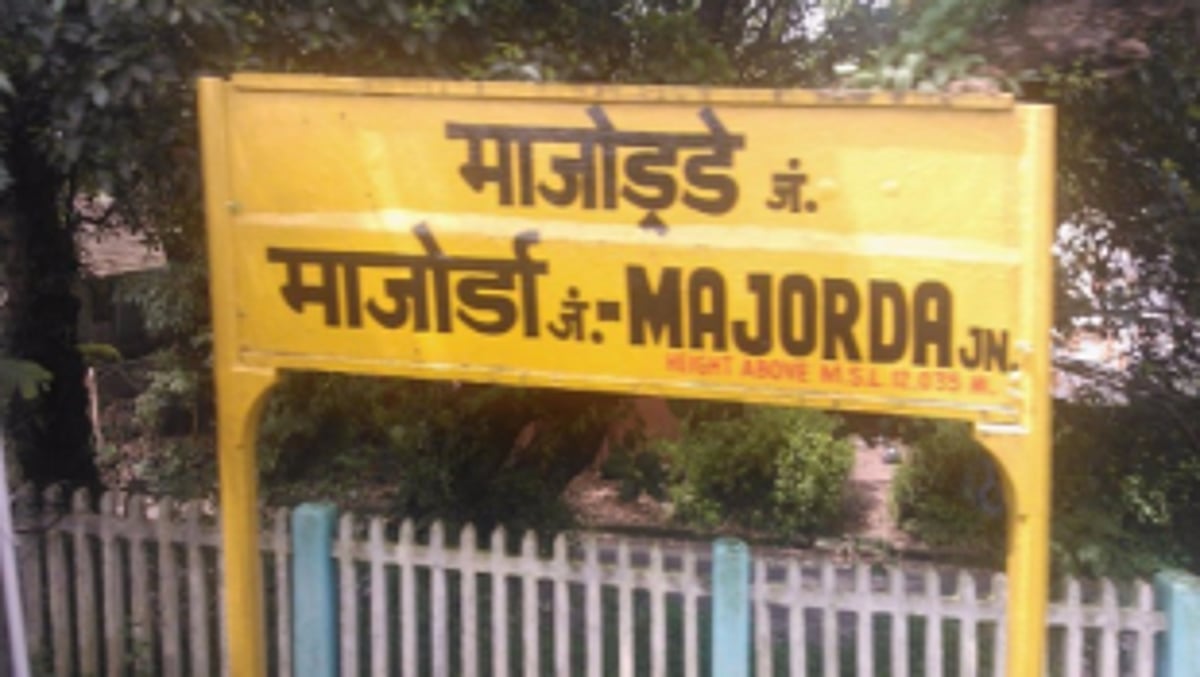
In that meeting, the Cabinet “resolved to grant approval to procure 1,235 square meters of land under four survey numbers 109/3, 110/8, 110/4 and 114/5 as per the policy on procurement of land under Right to Fair Compensation and Transparency in Land Acquisition, Rehabilitation and Resettlement Act of 2013”.
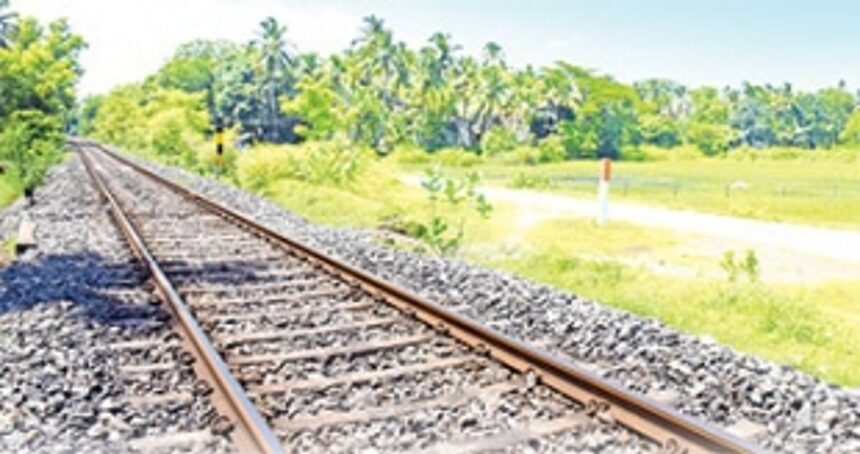
This acquisition was for the double-tracking of the railway track from Margao to the Vasco section as part of the overall double tracking project of the South Western Railway.
The significance of this decision cannot be overstated.
While the opposition to the double-tracking reached a crescendo in the coastal villages of Cortalim bordering Majorda, where only the intent to acquire has been announced but not the final decision, but the manner of the Majorda land acquisition has made it very clear that people’s consent, will be a mere lip service by the Railways and the State government.
Herald learnt by visiting and speaking to each of the landowners of the lands, which will be acquired, how little they were involved; and that on three of the four cases, there has been either no consent or coerced consent. In fact, one of the landowners who agreed to sell their land for compensation, provided the money was transferred nine months ago, is doing serious rethink.
Clause 1.2 of the cabinet note dated 08/06/2020 (with the date 08 overwritten in ink) states “A team headed by the Deputy Collector/SDO Salcette have furnished the detailed working of the Compensation, Deed of Sale and Consent letter for vetting .. for direct procurement land ….in the Majorda village of Salcete taluka
Herald asks on behalf of the people:
This “working of the Compensation, Deed of Sale and Consent letter is not available with a single one of the landowners of Majorda. And if the working of the Compensation, Deed of Sale and Consent letter needs to be vetted, on what basis did the Chief Minister say that the land in Majorda has been acquired by “consent”, because there is a huge gap between ground realities and what is being claimed?
The justification of land acquisition is a cut and paste justification
Section 1.3 of the cabinet note justifying the land procurement in Majorda states: “it will directly or indirectly lead to the creation of employment and contribute to socio-economic development”. Anyone who knows Majorda will realise that this is a typical textbook reasoning.
The village is developed with landowners owning both cultivable and settlement land and run businesses. In fact, the majority of the land being acquired belongs to the Comunidade of Majorda, while the person with the next largest parcel of land is a Saudi Arabia-returned large farmer and baker. (See accompanying story)
To even assume that Majorda is a village that is looking for development vide the expansion of a railway line is actually laughable.
The compensation imbroglio
The consideration amount that has been calculated for the procurement of 1,235 square meters of land is Rs 85,38,724, which works out to Rs 6913 per square meter. This figure is still unclear to the landowners. Of the people Herald met, the landowner of survey number 109/3 and 114/15 Joaquim Santano Fernandes, claims he has been offered Rs 12,500 per square meter for his settlement lands, while Francisco Vas, son of Joao Vaz, landowner of the survey number 110/8 says that the price for a barren uncultivable land is Rs 2,000 per square metre. But his “consent” given earlier will not hold since his six other siblings who are legal descendants of Joao Vaz have not signed on the consent letter (See accompanying story for details of this)
The other two landowners, the Communidade of Majorda and descendants of Inacio Mariano Vaz, have not even taken a decision of giving “consent” to the acquisition of the largest parcel for acquisition (See table of landowners and land to be acquired). Thus there has been no discussion on the price being offered for this.
In the case of Inacio Mariano Vaz, who features in form 1 and XIV, there is a separate claim on the tenancy of that land for which a process of changing the name is going on.