Team Herald
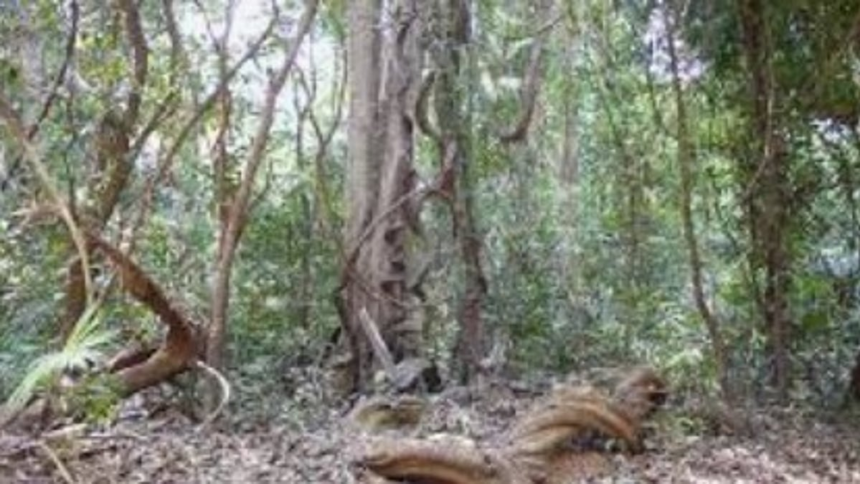
MARGAO: The fate of a virgin tract of forest land in Mollem will be decided today in faraway Bangalore, and the decision may become a pointer to whether the ecologically fragile Western Ghats can be saved for future

generations.
The land is question is 15.6077 hectares of forest tract in the Kulem-Kalem section that has been earmarked for a controversial railway double tracking project, which has been on hold due to an abeyance order from 2022. However, the Goa government has urged the Union Ministry of Environment, Forests & Climate Change (MoEF&CC) to revoke the abeyance order. The Regional Empowered Committee (REC) chaired by the Deputy Director General of Forests (Central), will decide on this request at its meeting in Bengaluru on Wednesday.
The Goa government has pointed to previous
approvals, including clearance from the National Board for Wildlife (NBWL) in December 2019, to support its case. Chief Minister Pramod Sawant has also cited an environmental impact assessment (EIA) conducted by the Indian Institute of Science (IISc), Bengaluru, which recommended mitigation measures, such as electronically controlled gates at tunnel entrances to prevent animals from becoming trapped.
However, the government’s push comes amid strong opposition from scientists, environmentalists, and activists who are urging the REC to reject the proposal and uphold the recommendations of the Supreme Court-appointed Central Empowered Committee (CEC). The CEC has opposed the project, stating that it poses a severe threat to the biodiversity of the Western Ghats, a globally recognized hotspot for wildlife. The committee has argued that the project would disrupt critical wildlife corridors within the Bhagwan Mahavir Wildlife Sanctuary and Mollem National Park, with minimal benefits to railway capacity.
In a letter to the REC, a group of scientists and researchers warned of the irreversible ecological damage that the project could cause, including habitat fragmentation, deforestation, and increased wildlife mortality due to train collisions. “This project threatens not only the fragile ecosystems of the Western Ghats but also the livelihoods and well-being of local communities that depend on these ecosystems,” said Dr. Anushka Rege, a scientist specializing in landscape ecology. “Upholding the CEC’s recommendation is essential for protecting both the ecological integrity and societal welfare of the region.”
Dr. Sinead D’Silva, a researcher from the University of Leeds, pointed out that the project has faced consistent opposition from the people of Goa, who are deeply concerned about its environmental impacts. “If the people of Goa understand the dangers, why is the government pushing forward with it?” she questioned.
The CEC has also questioned its economic justification, pointing to the steep gradient of the existing railway line, which is considered one of the most inefficient in the country. Critics argue that the primary aim of the double-tracking is to facilitate coal transportation, despite the country’s shift away from coal imports. Environmental groups also note that Goa’s expanding highway network and the new Mopa airport already address the region’s transport needs, rendering the railway expansion unnecessary.
As the REC prepares to make its decision, all eyes are on whether it will uphold the CEC’s findings and protect the Western Ghats ecosystem or allow the forest land diversion to proceed, advancing the contentious railway project.