his story is fairly straight and simple and you need to know before you lose your ancestral/hard earned land thanks to the government that you selected and elected.
• Imagine a scenario where government issues you a notice to vacate your property claiming that they need it for a few years for a “public purpose”
• Imagine another scenario where you and your family work abroad and you return home only to find your ancestral land has been already taken over by the government
The Goa Requisition and Acquisition Bill allows the government to do just that. While the Bill itself is disturbing, what’s even more shocking is the intent behind the Bill which was revealed in the Select Committee Report and the Minutes of Meeting.
Interestingly, the BJP MLA from Cortalim, Alina Saldhana, was the most vocal of the Committee members who were against the Bill followed by Curtorim’s Congress MLA Aleixo Reginaldo Lourenco. Nilesh Cabral suggested he was in favour of the bill while Pratapsingh Rane and Felipe Nery Rodrigues were opposed only to certain aspects of the Bill. There is no record of any statement or suggestions made by Carlos Almeida and Prasad Gaonkar.
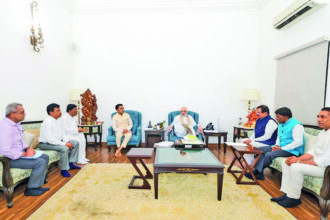
The conversation between the Select Committee members, particularly the statements made by Revenue Minister Rohan Kaunte and Additional Secretary (Law) S G Marathe, gives a fascinating insight into the mindset, the inner workings of the government and what they think of people’s opinion and their right to property. Herald presents the excerpts of the conversation between the committee members in context of the fundamental issues with regards to the bill.
The fundamental debate over this bill is the rights of the individual versus larger public interest. We leave it to the wisdom of the reader to judge for themselves which is more important for Goa and which of the MLAs stood up for the interest of Goa and Goans.
ACT 1
WHY DOES GOA NEED THE BILL?
(Meeting held on 5/2/18: Kaunte, Rane, Anila and Filip Nery discuss the Bill. Reginaldo arrives late while Nilesh Cabral remains absent.)
SCENE 1: The Revenue Minister and Add Secretary (Law) express their opinion of the Right to Fair Compensation and Transparency in Land Acquisition, Rehabilitation and Resettlement (Second Amendment) Act, 2015
KAUNTE: “This Bill was basically raised for one thing because we are having problems for every acquisition for the area other than a place where we have a procurement policy in place. The procurement policy is the only policy which now being in existence allows you to have things in mutual agreement, rest of it is not able to. That is why to move things fast, to move things from developmental areasin Constituencies in the State projects wherever required this requisition and acquisition came in. “
SALDANHA: Now, we have this Right to Fair Compensation and Transparency in Land
Acquisition, Rehabilitation and Resettlement (Second Amendment) Act, 2015. Can’t this Act take care of our needs?
KAUNTE: That is more bad then this one. 2013, you have gone through this Act?
SALDANHA: Yes but..
KAUNTE: If you call this draconian by some of the opposition colleagues which they use the word, they would use some other word no?
SCENE 2
Government’s opinion on social impact study and rehabilitiation
ADDL. SECY (LAW): After coming into force, this Act the compensations were too high and rehabilitation, all these problems were there. And regarding taking the social impact assessment, it takes more than 9-10 months. Very lengthy procedure and then asking for the public opinion and see sometimes, everybody had different opinion.
KAUNTE: Instead of having 2013, not having is only the better thing. As it won’t work, it is not working.
ADDL. SECY (LAW): Yes, it is not working.
ADDL. SECY (LAW): I agree that there is no social assessment and does not required because last 15 years as per the Act, land will be vest with the Government, as requisite the property. So, now those social impact and all those questions will not come. So only what remains for the new act is applicability is payment of the compensation.
(The Central Act makes it mandatory for a Social Impact Assessment to be conducted before a land is acquired. Interestingly, this Bill does not require any social impact assessment before a land is requisitioned. Therefore if the government wants to acquire a land by bypassing the provision of the central law such as need for social impact assessment, they can requisition the land for a few years and then acquire the land. By doing so, there won’t be a need for social impact since the project will have already been set up by the time the acquisition process starts. The Addl. Secretary (Law) explains this in his comment below.)
SCENE 3
Minister justifies why the real intention behind the Bill
SALDANHA: What is the Government’s stand in that case? Supposing you feel you need that land and the owner feels he cannot give the Government that land because he has his own plans for the land. What happens then?
KAUNTE: Because Government needs the land that is why this Bill is introduced.
RANE: It is required for public purpose.
SALDANHA: So, that means if I am not ready to give my land, my say does not have value.
KAUNTE: If you are not agreeing to give your land you are disagreeing to the present procurement
policy. That is why this policy is introduced
SALDANHA: So, that means this policy will take the land irrespective of the owner wanting or not wanting to give the land.
KAUNTE: Yes. That is why this Bill.
Scene 4
The Mysterious Arbitrator
In the proposed bill, if a landlord is agrieved by the decision of requisitioning his or her land, he or she can approach an “Arbitrator” to appeal against the decision. The Committee members deliberated over who should be the Arbitrator under the Act.
ADDL. SECY (LAW): Here the powers are given to the District Court because in Kerala District Court get the powers. We are not given powers to the District Court because we have appointed an arbitrator again the arbitrator appeal will lie. That provision we have made. So, no Civil Court, District Court is having the power.
RANE: Who will appoint the Arbitrator?
ADDL. SECY (LAW): Government.
RANE: Government will appoint the Arbitrator. It can be a Government Officer?
KAUNTE: No, no. We have addressed that, who will be the Arbitrator.
SALDANHA: Arbitrator should be a neutral person, were people should have faith.
CHAIRMAN: He is.
SALDANHA: Otherwise, people will have doubts in their minds.
ADDL. SECY (LAW): Arbitrator will be a qualified Judge of the High Court.
SALDANHA: Arbitrator will be a Judge?
ADDL. SECY (LAW): Yes. Qualified, to become a High Court Judge.
RANE: I am quite suspicious about qualified, I will take my own.
ADDL. SECY (LAW): Whoever, it has to be Judge of the High Court.
RANE: Ok. Judge of the High Court or a retired Judge of the High Court.
KAUNTE: Retired Judge only
ADDL. SECY (LAW): We don’t take acting Judge
Interestingly, none of the members debated whether its better bestow the responsibitlity of arbitration to the the District Court as done in Kerala or whether a government appointed arbitrator.
Scene 5
Why you want public suggestions?
(At the end of the meeting on 5/2/2017, the MLAs debate over the need for suggestions from the public
LOURENCO: You are not asking for public suggestions?
KAUNTE: Why do you want public suggestions?
LOURENCO: It’s a Right?
LOURENCO: Any objections/suggestions has to come to the Select Committee on this from the public.
U/SECY: You can do it, but it is for the members to decide.
SALDANHA: If we put it to the public then I think it will be more chaotic. We have to decide amongst us.
KAUNTE: We have to decide on this amongst us, that is why we the Legislators are sitting. If you want to open everything to the public then public should be sitting here. Then you don’t need a Select Committee here.
ACT 2
PUBLIC OPINION VS PUBLIC INTEREST?
(Meeting on 9/7/2019 : Kaunte, Anila, Reginaldo, Filip Nery and Rane are joined by Nilesh Cabral )
Scene 1:
What is public purpose?
(The bill allows the government to requisition any land for “Public purpose”. The original list of projects under the definition of Public Purpose was debated in the meeting on 5th Feb, 2018).
KAUNTE : ‘Public purpose’ was some topic which in the last meeting we came to a conclusion that we have to relook at ‘Public purpose’ and do something which we can do as defined. ‘Public purpose’ does not find any mention in the Central Act, so it is quite vast, anything can be ‘public purpose’. In the State we have defined 13 items under the Act. Now, there were reservations from certain Members of this Committee that they still felt that we needed to further clarify what the sequence is and how we need to go about. After deliberating and after putting across and getting some representations from Alina & Reginaldo, I think we have boiled down to categories and the infrastructure sub sectors of what we feel can be taken, to keep a very clear thought process of what the Bill is and what the ‘public purpose’ is. Whatever has been put as ‘public purpose’ for 1 to 13 it is read now as Category – Transport which includes three sub sectors i.e. Roads & bridges including land for construction of culverts, widening of existing roads. Airports, Urban Public Transport. Under Energy – Oil pipelines and Gas Pipelines. Water & Sanitation – Solid Waste Management, Water Supply pipelines, Water treatment Plants, Sewerage collection, treatment and disposal system including toilets. Communication which includes telecommunication fixed network and laying of cables for telecommunication and related infrastructure. I think these are four broad categories, which are very clear on the areas which we will take as Public Sectors. Public purpose. Now there is one issue which needs discussion, I think we should put it across. We have the social and commercial infrastructure. Social and Commercial infrastructure will include Educational Institutes, Hospitals, Tourism, Agriculture Animal Husbandry and Sports.
LOURENCO: Now the whole section 2 (m). 2 (m) will be read as this, what you gave.
CHAIRMAN: 2 (m) Sagle tera item kaad aata (Remove all 13 items now)
SALDANHA: Airport is a big term.
SECY(LAW): Airport and allied activity because sometimes you have to create a funnel zone and lot of buildings come up later. So we keep for funnel zone
CHAIRMAN: I think other than this, we have already broken down to make ‘public purpose’ very simplified to what we have spoken. Only one thing which needs to come for discussion is whether to take or not to take because later we cannot do any further things for social and commercial infrastructure. That includes Educational Institutes, that includes hospitals, that includes Tourism that includes Sports, that includes Agriculture and that includes Animal Husbandry
CABRAL: Education Institutes is a Government set up.
LOURENCO: No because it is a Requisition and Acquisition Act.
CHAIRMAN: To requisite they were having issues. So I will only say Education Institutes, Hospital, Tourism, Agriculture, Animal Husbandry and Sports have been discussed but not taken in the present Bill because of the apprehensions of few Members.
CABRAL: My point is Education. See what they have apprehensions, may be they are
coming from the Constituencies where there are all developed Institutes but we are not having lands to put such Institutes.
SALDANHA: Where we have developed Institutes?
LOURENCO: It does not mean that. You are trying to say that there are no Education Institutes, so it does not mean that we have but at the same time public interest is more important for us. That is why we are doing it.
CABRAL: Education is what, Education is…
LOURENCO: You just can’t go and acquire somebody’s agriculture land.
CABRAL: Land for bus stand, transportation can be acquire for public.
LOURENCO: Use it that way, no problem.
SALDANHA: See, Education infrastructure calls for huge area of land. Ok, of course, now you are talking about a school. Now you cannot compare a school to a bus stop.
CABRAL: Bus stand.
LOURENCO: No, no say that it is temporary. The whole thing is for requisition for few years and this requisition is for fifteen years.
SCENE 2
Climax & Conclusion
RANE: Liberation of Goa was in 1961 and till today we have built so many things, including this building everything has been acquired. Why we need this?
SALDANHA: Yes, why we need this, let us go the way it is.
RANE: We have been liberated in 1961.
SALDANHA: And we managed, without this.
RANE: Now, how many years have passed? We have acquired so many things, including this building here. We are trying to be very specific because of the Bill, it’s alright but don’t go on including every single thing, it will be confusing.
SALDANHA: We have to be careful. See we must remember no, this requisition and acquisition whatever it may be it is a property Bill only to somebody else not to us. If it belongs to us, we can decide.
CHAIRMAN: I thank all of you for having good debates in the last 4-5 meetings and coming down and boiling to a very conclusive point. All the points which we have discussed under transport, energy, water, sanitation and communications are the once which were taking as a replacement of the earlier public purpose which was defined this is being replaced to the earlier public purpose which was defined and will be adopted in this Bill which is being placed in the Select Committee. I request you all to, numinously support this particular Bill and I am sure that the development works of the State will get going in the interest of Goa.