Land ahoy
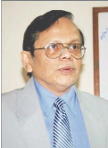
Goa’s outspoken member of Parliament, Shantaram Naik, has this time called for steps to regulate land transactions in the State. Without doubt, this is a matter which has been causing significant concern here. Landowners are willing to sell out in many cases — maybe the financial pressures are simply too high, or too tempting. But the many who work a lifetime in Goa and can’t afford a home are bound to feel alienated.
Naik, news reports said, called on prime minister Manmohan Singh, and requested him to amend the Constitution of India (Article 371), to empower Goa to pass a law to empower the State to regulate land transactions.
Given the deep rifts and polarisations in public opinion here — and the tendency of politicians to pull each other down — such a step is possibly a long way off, if at all!
Before one jumps to finding a solution, there is need to properly identify the root of the problem. Who is adding to the biggest pressures on Goan land? Is it the big buyer? If so, how is it that Goa is yet to implement a land ceiling act, after all these years? What is the impact of speculation on the land market? Is it just being seen as an investment to play around with?
Shantaram Naik’s proposal does seem interesting at first glance, but there are other un-addressed sides to the problem. Rampant corruption, and land-rackets which Goa’s politicians learnt from Maharashtra, have made it very easy to squeeze the small players out of the market. Anyone wanting to build a modest home would face innumerable difficulties; someone erecting a huge complex and offering large illicit payments do get permissions in a jiffy.
It’s almost as if the enforcement authorities are the last to wake up to the situation, though the ‘black’ component of land deals in Goa is universal knowledge. Enforcement Directorate plans to scan land deals for “drug money” is not a day too early. But the targeting of foreigners alone — earlier heartedly welcomed but now faced drastic policy shifts — is unfair. Money from India’s big affluent cities can as well swamp local buyers out of the competition.
Is arming the State with more powers really the solution? Simplistic approaches might, at best, not work. At worst, these could end up like Goa’s town planning laws of the mid-1970s. By creating artificial bottlenecks and restrictions, such laws only fuelled an artificial demand for land, and made it far more profitable to break the law. The builder-politician-bureaucrat nexus got strengthened. Think about it: before Goa’s Town and Country Planning Act of 1974, land-conversion rackets were simply less lucrative!
Tools and doles
Goa’s government, and its officials, have recently acknowledged the role of a “free and vibrant media”, while unveiling a long-delayed loan scheme for journalists to buy their own computers. Besides this, the Goa government also noted its modest Rs 2000 pension to retired scribes, and a grant of upto Rs 200,000 for “distressed journalists”.
The computer scheme, in effect, only means the Goa government pays for the interest on the loans taken (through the Mapusa Urban Bank), while the journalists themselves repay the principal amount. Some of these schemes were in fact promised by the former Parrikar government, but delayed. The official argument is that a scribe’s efficiency today depends on how effectively he — increasingly she too — understands and exploits information enabling technologies.
True. But the government has many more tasks ahead, if it aims to sincerely promote press freedom. Likewise, creating artificial divisions between “accredited” and other journalists leaves many uncovered. One can also ponder whether such schemes would propel the media to strengthen its concern for the travails of the general public, whom it promises to serve, or simply jostle in the queue — hoping its own concerns would get redressed first.