PANJIM: Nothing moved. Buses, trucks, taxis, auto rickshaws and all forms of public transport stayed off the roads, grinding Goa to a halt.
The bandh was called by the trade unions to oppose the proposed Road Motor Transport and Safety Bill, 2015. The peaceful protest was, however, overshadowed by minor incidents at few locations where some striking workers pelted stones on buses.
Normal life was adversely affected as people travelling by public transport suffered and essential commodities like vegetables, fruits, milk, fish, meat, failed to reach retailers. Though banks remained open, a majority refused to transact business. Similarly, educational institutions and government offices saw poor attendance and those who failed to attend classes and work respectively, were marked absent for the day.
Buses, taxis, rickshaws, trucks, and a few motorcycle pilots stayed off the roads. Transport operators stopped plying vehicles from morning and bus stands were nearly empty. In some cases passengers who wanted to travel to far off towns had to wait till evening for a bus. The shutdown also affected some bus passengers travelling out of Goa.
To cope with the situation, Kadamba Transport Corporation plied 300 buses on nationalized and other routes. The buses were overcrowded and made more trips than the usual per day.
The impact was also seen on some private firms, restaurants and eateries that remained closed. However, emergency services like hospitals and pharmacies were kept open.
All roads wore a deserted look and markets had limited stocks of vegetables and fish, which were sold at higher prices. Vendors also sold old vegetable stock as trucks did not come from Belgaum.
Small retailers of Margao’s Gandhi Market and new market claimed losses of more than Rs 20 to 30 lakh. These include grocery wholesalers and retailers of groundnuts and peas. The bandh saw a mixed response in Margao with the main markets closed and commercial areas of Borda, Aquem and others remaining 70 to 80 percent open.
Deepak Shah of the Mahalaxmi Trading in Margao said, “Shops may be closed but what cannot be seen is the interest and salaries we have to pay despite the shop being closed due to outside factors.”
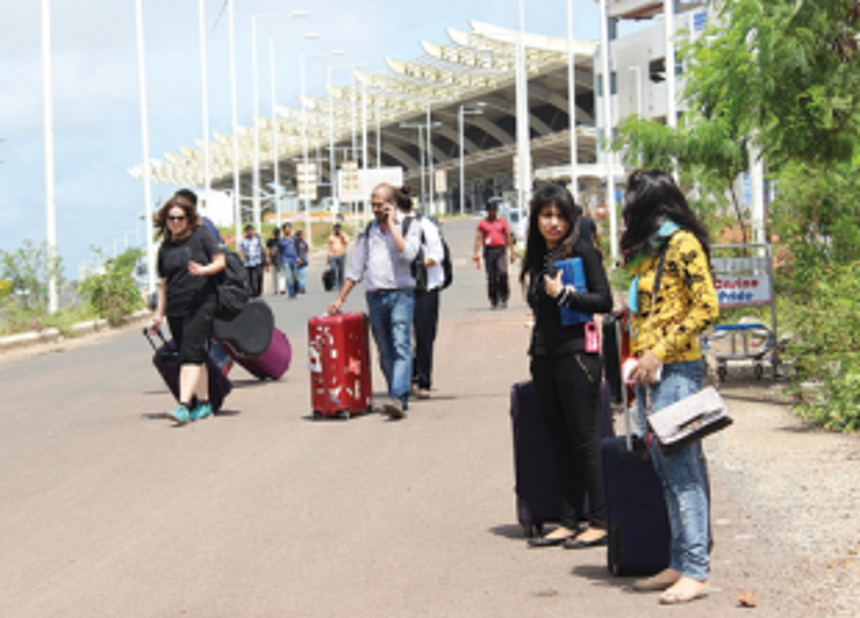
Tourists could be seen walking long distances to reach their hotels in Calangute and Candolim, some even carrying their own luggage.
AITUC Convener Suhas Naik claimed the bandh was successful as most places saw a total shutdown. “Mapusa, Vasco, Ponda, Valpoi, Sanguem, Savordem, Bicholim, Marcela, Margao were completely shut. Panjim witnessed a partial bandh. The coastal belt from Arambol to Sinquerim and from Colva to Palolem too remained closed,” he said.
“The entire commercial transport remained closed. Taxis and private buses were 100 percent off the road. KTCL tried to operate certain routes forcefully under police protection and yet Goa bandh was successful. At least now the government must realize the people’s mood and scrap all draconian laws against shop keepers, transport operators, workers and farmers.”
Goa police said the situation was by and large peaceful with no serious untoward incidents reported. “A large police force was deployed to ensure the protest does not take a violent turn,” IGP Sunil Garg said.
Four persons were, however, detained by Margao Police on Wednesday evening for obstructing the transport of tourists. They were later released. There was also an incident of provocation and anger at the railway station which was later settled by the police.
Various associations of black and yellow taxis, motorcycle pilots, tourist buses and rickshaw association demonstrated at Margao Railway station, burning an effigy of Prime Minister Narendra Modi.
Workers of Varun Beverages Pepsi held a demonstration outside the factory at Arlem. While police cleared the main road they couldn’t act to clear the protests as the workers caused no hindrance to the public nor did the management interfere in the protests.
In Mapusa most shops remained closed in the morning but opened later. Though Mapusa fish market was closed, fish was being sold outside the market.
All private companies from Honda and Pissurlem industrial estate were shut, while in Bicholim, despite it being market day, the market remained shut.
Bandh call
The bandh was called to protest the anti-worker policies of the government. They demanded withdrawal of labour law amendments and the land acquisition amendments ordinance; a stop to privatisation and foreign investment in railways, insurance and defence; a ban on speculative trade in commodities, universalisation of the Public Distribution System; policies to address the price hike and improve employment opportunities.