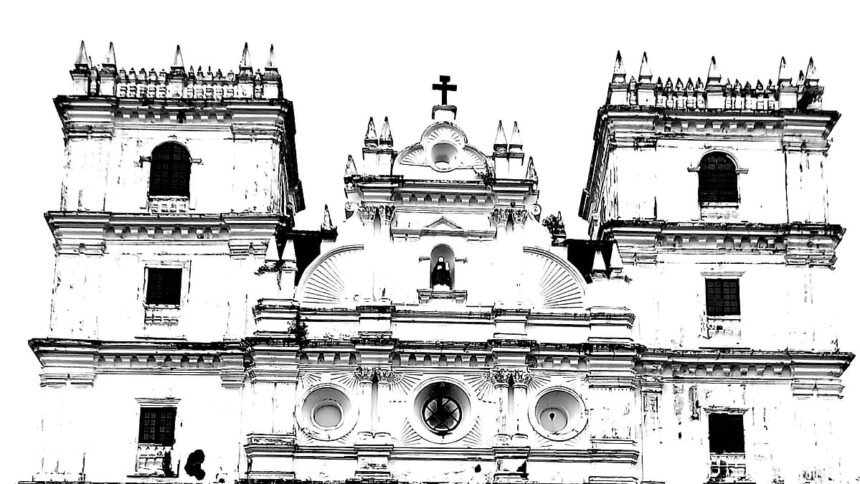
The quaint village of Talaulim in Goa, nestled between a hill and a tributary of the Zuari River, comes alive each year with vibrant devotion and cultural fervor as it celebrates the Feast of St. Anne, affectionately known in Portuguese as Senhora Santa Ana. The grand celebration, also referred to as the Touxeanchem Fest or Cucumber Feast, draws thousands of devotees from all walks of life, transcending caste and creed.
St. Anne, the mother of the Virgin Mary and grandmother of Jesus Christ, is revered as the patroness of mothers, grandmothers, and childless couples in the Catholic tradition. The devotion to her at Talaulim has deep historical and spiritual roots, with the Church of St. Anne standing as a testament to centuries-old faith and architectural splendor.

History and Origins
The name Talaulim is derived from “tollem” (lake) and “halli” (village), meaning “land of the lake.” This once-flourishing village, which boasted a population of over ten thousand including Portuguese fidalgos and merchants, was ravaged by a deadly plague in 1783. Some legends attribute the tragedy to a sacrilegious act during a Eucharistic procession, believed to have brought a curse upon the village.
Legend has it that the devotion to St. Anne began after a vision experienced by two individuals i.e. an elderly Brahmin woman and a newly converted Christian, Bartholomew Marchona. Both were visited by a mysterious old woman in a hat and holding a staff, who identified the chapel in Talaulim as her home. The priest at the time recognized the figure as St. Anne, and plans were set in motion to build the church in her honor.
The Jesuits from the College of St. Paul catered to the spiritual needs of Talaulim from the mid-1500s. The present edifice was constructed between 1681 and 1695 under the guidance of Msgr. Francisco Rego and his successor, Fr. António da Cunha. The church stands today as one of the finest examples of late Goan Baroque architecture.