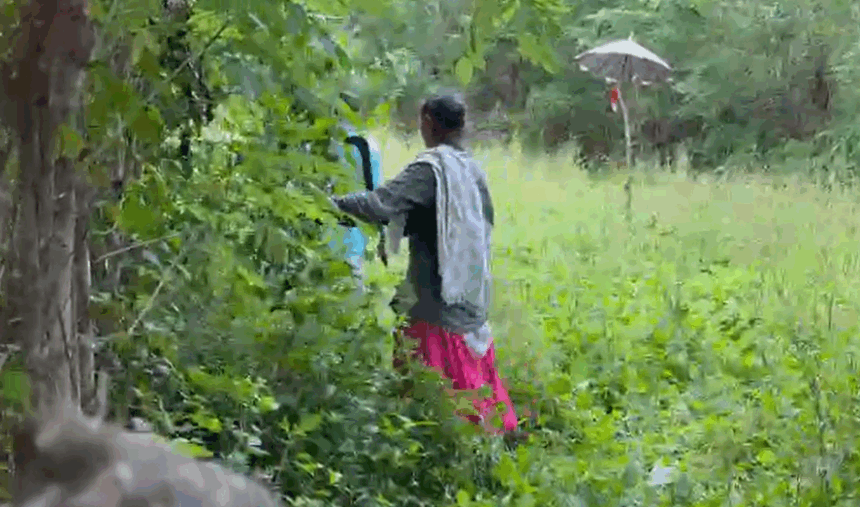
Adnem, Quepem: In the quiet village of Adnem, nestled in the hinterlands of Quepem, a group of women farmers has been preserving a four-decade-old farming tradition—the cultivation of yam, locally known in Konkani as “kanga.”
For over 40 years, women like Pratiksha Velip, Prashanti Velip, and Chandravati Velip, all belonging to the Scheduled Tribe (ST) community, have been growing different varieties of yams such as Zad Kanga, Kat Kanga, and sweet potatoes.
Every June, with the arrival of the monsoon, the women begin planting on leased or borrowed plots of land, using their own limited resources. By November, they harvest their produce, which is then sold along roadsides and in local markets. Despite their commitment, the farmers say they have received no financial assistance, subsidies, or planting material from any government agency.

“We have been doing this for many years, growing yams without any government support. We pick them with our hands and sell them ourselves. Leaders come only during elections to ask for votes, but no one helps us continue this farming,” said Pratiksha Velip, expressing frustration over the lack of institutional support.
The women face multiple challenges—from crop damage by wild animals and birds to the labor-intensive process of tending and harvesting, which they describe as “like taking care of a child.”
Calling it a traditional and cultural practice, the farmers say they are determined to keep the custom alive for as long as they can, even though the younger generation shows little interest. “We have no hope that our children will take this up, but as long as we are here, we will keep this tradition alive. The government must provide us with support,” Pratiksha added.
Their story stands as a poignant reminder of Goa’s rich agrarian heritage—and the resilience of women farmers who continue to nurture it without recognition or aid.