Vivek Menezes
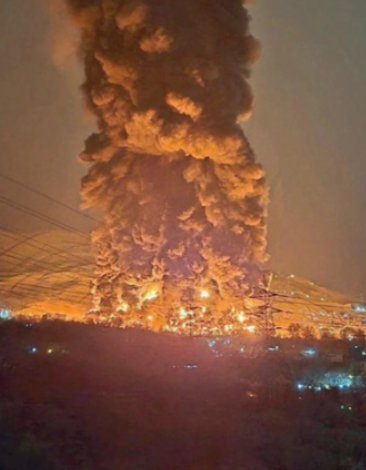
Finally, it was Arundhati Roy who spoke up for India and Indians with all the moral authority so conspicuously lacking “at the top.” Earlier this week, the Booker Prize-winner drew ovations at her book event in New Delhi when she digressed to ask “how can we end the day without talking about those beautiful cities – Tehran, Isfahan and Beirut that are up in flames? In keeping with my Mother Mary’s spirit of candour and impoliteness, I would like to use this platform to say something about the unprovoked and illegal attack by the United States and Israel on Iran.”

Roy said “the theatre of this new war could expand to consume the whole world. We are on the brink of nuclear calamity and economic collapse. The same country that bombed Hiroshima and Nagasaki could be readying itself to bomb one of the most ancient civilisations in the world. There will be other occasions to speak of this in detail, so here, let me simply say that I stand with Iran. Unequivocally. Any regimes that need changing, including the US, Israel and ours, need to be changed by the people, not by some bloated, lying, cheating, greedy, resource-grabbing, bomb-dropping imperial power and its allies who are trying to bully the whole world into submission.”
She continued with righteous ire, “Iran is standing up to them, while India cowers. I am ashamed of how gutless, how spineless our government has been. Long ago, we were a poor country of very poor people. But we had pride. We had dignity. Today, we are a rich country with very poor, unemployed people who are fed on a diet of hatred, poison, and falsehoods instead of real food. We have lost pride. We have lost dignity. We have lost courage. Except in our movies. What sort of people are we whose elected government cannot stand up and condemn the US when it kidnaps and assassinates heads of state of other countries? Would we like that done to us? For our prime minister to have travelled to Israel and embraced Benjamin Netanyahu just days before he attacked Iran – what does it mean? For our government to sign a grovelling trade deal with the US that literally sells our farmers and textile industry down the river, only days before the US Supreme Court declared Trump’s tariffs illegal – what does it mean? For us to now be given ‘permission’ to buy oil from Russia – what does it mean? What else do we need permission for? To go to the bathroom? To take a day off work? To visit our mothers?”
Similar points were made by Nirupa Menon Rao, the former Foreign Secretary who posted that “the issue is not whether India should be ‘for’ or ‘against’ Israel, the United States, Iran, or the Gulf states in some emotional or ideological sense. The issue is whether any of these relationships, as they are currently conducted, advance India’s long-term interests without narrowing India’s strategic autonomy. India’s strength has always lain in balance — in keeping multiple relationships alive at once, in speaking across divides, and in refusing to let anyone partnership become a trap. That is not weakness. Israeli military prowess is not strategy. It is emotional substitution. India is not Israel. Our geography is different, our scale is different, our society is different, and our vulnerabilities are different. We cannot afford to inherit another country’s siege mentality as if it were our own doctrine. The real test for India is not whether it can applaud force. It is whether it can preserve room for manoeuvre. It is the essence of serious statecraft for a country of India’s scale, geography, and civilisational depth.”
Unfortunately, says Rao, “what has changed in recent years is the tone of the domestic discourse. There is a marked tendency to see Israel less as a partner than an object of admiration, even envy — a symbol of unapologetic force, swift retaliation, and the fantasy of unencumbered power. Much of the media has climbed aboard this train, cheering Israel less as a state with which India has specific interests than as a projection of their own ideological desires. That is where the danger lies. Admiration for protect its energy and maritime interests, maintain credibility across West Asia, and keep its own voice. A country like India should not suffer from ‘Israel envy’. It should have the confidence to be itself.”
That is why most Indians can easily relate to “the desolation and shame” Pankaj Mishra describes in the New York Review of Books this week, about “the American torpedoing of the IRIS Dena, an Iranian vessel that thought itself safe in international waters, as it was returning from an international naval exercise at the East Indian port of Visakhapatnam. A few days before the unleashing of Operation Epic Fury, the men on board this ship had been feted on Indian streets. They had visited the Taj Mahal and taken selfies with curious spectators. Yet neither their ‘silent death,’ in Pete Hegseth’s gloating description, death by a 3,700-pound American missile in the Indian Ocean, where the present Indian government claims to provide ‘net security,’ nor the violation of international law that requires belligerents to help sailors wounded in battle merited an official protest at the US embassy in New Delhi. The Indian Navy’s statement failed even to mention the attack—an act of ‘fun,’ as Trump described it to a Republican gathering this Monday, to much laughter—that sank the vessel. Nor did it express regret at the deaths of nearly a hundred unarmed sailors. I read that civilians in Sri Lanka, whose navy recovered some of the bodies of the drowned sailors, had donated money to a refrigerated storage unit that could keep them until their repatriation to Iran. I kept scanning the Indian and international press in futile search for some thought or emotion that matched this atrocity or, however inadvertently, mourned the silent death of what Tagore hailed as ‘Indo-Iranian civilisation.’”
(Vivek Menezes is a writer and co-founder of the Goa Arts and Literature Festival.)