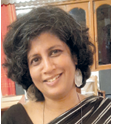
TALLULAH D’SILVA
We were walking in the streets of Manipal, an educational hub and University town within Udupi. It was so lovely to see so many students everywhere. The ambi ence was quite similar to other University hubs we had visited earlier like NIT in Trichy Tamil Nadu and Srinivas School of Architecture in Man galore. We were in Manipal to conduct a mud-building workshop with college students. In the morning, we had visited the Mani pal lake for an outdoor session on ecology and discovered that its name Manipal in Tulu, Man na Palla means muddy hole. The students had a very immersive session and later reflected how being in nature, making art from found materi al, watching migratory birds at the lake and walking in the tranquil forest gave them a sense of joy, made them feel calm and invoked a sense of rootedness or con nectedness with the land and its biodiversity. Over the two days, we were in this quaint town, we had seen students walking from the main hub into the campus or using rickshaws. One of the students walking along with us shared how he was not given parental consent to drive a car as there was a rise in rash driving and accidents in the town. He softly re flected how young blood, their instinct to do things fast and perhaps a lack of wisdom at this age may be the cause for this. In the night post dinner as we were returning to our hotel, my son pointed to a large advertisement from a psychologist for students grappling with exam anxiety, stress, mental illness, addic tions, etc. He was sur prised to see such an un likely ad compared to the ones often seen with slim phones, new develop ments across the city, etc ! At the campus, we had a super time as stu dents were absolutely thorough, worked col laboratively, tried their best to patiently and with perfection complete assigned tasks. We are always impressed with students because given an opportunity, we have found them to be enthu siastic, responsible and lead others to be pro active. As we interacted with faculty members and exchanged our own experiences with stu dents here in Goa, where beyond academics, most needed emotional sup port to navigate through day to day challenges. We gently asked if they too had to play the role of an advisor to the many diffi cult situations students may be facing. We got an affirmative. Goa has seen a num ber of student deaths in the last few years. Rash driving, driving in an in ebriated state, suicides… Drug addiction, gaming, excessive use of phones among the young has been on the rise. Dur ing the pandemic ,when children had to be giv en access to computers, phones and other de vices for online classes, completion of notes and homework instructions, didn’t psychologists and counsellors warn us that in a few years, we would be faced with another type of pandemic, a crisis of mental health? While interacting with parents of teenagers and young adults, the issues adults lament about are the same. “My son who is 14 uses the phone exces sively. He does not have a phone yet, but uses his mother’s phone. If we ask him to hand over the phone, he gets angry, vi olent and is uncontrolla ble,” shared one parent from South Goa. Anoth er parent from Tiswadi adds, “My daughter who is barely 13, likes to watch reels and spend time on social media. I have a pa rental control app but de spite this we have clashes everyday. We are at our wits end. Nothing seems to spark her interest al though she is very creative and intelligent.” A young group of col lege students from Can acona have made some very good reels on creat ing awareness of keeping good company of friends, to stay alert from being lured to try smoking, drinking and other sub stances laced with food and drinks. It is sad to see how youngsters are routinely lured and bait ed to fit in, be cool or be outcast if not willing to join peer groups engaged in substance abuse, ped dling or dealing. A prominent counsel lor guides saying that today substances that are being circulated or flooded in the market are a complex mix and its im pact cannot be assessed easily. Recent reports in the newspapers call for alert ness and action as use of drugs by adolescents and young students leads to mental health issues and long term impact on the well being of youngsters, affecting brain develop ment, increasing the rate of psychosis, schizophre nia, depression, anxiety and loss of intelligence. Early instances of using vapes is reported to lead to popcorn lung and im paired brain develop ment among teenagers. Alcohol addiction among youth is also another concern with roughly more than 80% of youth consuming alcohol at the age of 17-18 years with serious consequences of increased risks of acci dents, violence and men tal health issues. Depression is on the rise as reported by WHO with nearly a 50% in crease in the last 2 dec ades. Another report men tions the rise in rehabil itation centres and high end rehab facilities as more and more youth from all strata become victims of substance abuse. As parents, adults, teachers and citizens what can we do to help our youth? As a community what can we do to address this addiction epidemic? What can we expect from the Government? Children, teenagers and youth need to be understood. We need to create that healthy at mosphere for dialogue and discussion respect ing boundaries. Seeking help from counsellors is another way to bridge the gap. As parents, it is crit ical to practice the very values and ethics we hope children can emulate. As a community, we need to build support systems. Government can enforce bans, strict monitoring and action. But of course the key is for youth to be alert, wise and be a sup port to others on a path of self-realization, strength and renewal. (Tallulah D’Silva is an Architect and silver awardee of the Golden Door Award 2020 for truth and integrity.)