Andre Velho
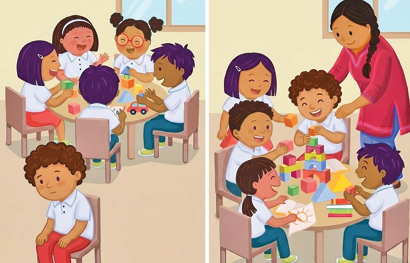
World Autism Awareness Day is on April 2. This year, the United Nations has chosen the theme, ‘Autism and Humanity – Every Life Has Value.’ It is a time to pause and ask. are autistic children truly included? Or are they just in the room? Priya’s (name changed) mother was relieved when her seven-year-old daughter was f inally allowed to join the regular classroom at her school. But within a month, that relief turned into sadness. Priya sat at the back of the class. She never raised her hand. During lunch break, she ate alone. The other children ran out to play. She was in school. But she was not yet taking part. BEING PRESENT IS NOT THE SAME AS BEING INCLUDED It is often thought that if an autistic child is allowed into a place – admitted to school or invited to a birthday party – that is enough. But inclusion is not just about being let in. It is about what happens once the child is there. Think about an autistic girl who finds it hard to follow fast instructions, sitting on the bench at her school sports day because the rules were never explained in a way she could understand. She enjoyed movement and was ready to take part — she just needed to know what to do. Or an autistic boy with noise sensitivity at a family wedding, who slowly moved to a corner as the hall got loud and crowded. He wanted to be there with his family. He just found it hard to stay. Both children needed the same thing – not pity, but someone to think ahead about what would help them join in.

WHY PARTICIPATION CHANGES EVERYTHING When a child can truly take part, things change. They feel more confident. They learn more. They make friends. They feel like they belong. A child always on the outskirts, watching, never quite part of what is happening, starts to feel invisible. Even if no one means it, they can begin to feel like they don’t fully belong. In Goa, community life is rich and deeply social. The local feast with its music and procession, a wedding that spills out into the street, a religious gathering where everyone knows where they fit. These are where children learn who they are and where they belong. An autistic child deserves to be part of that too. Priya’s teacher began to see this. She noticed that Priya felt more
when she knew what to expect and had time to understand things. Each morning, she took a few extra minutes to tell Priya what the day would look like. A classmate encouraged her to join a game at break time. Little by little, Priya started to raise her hand and join in. The classroom began to feel like somewhere she belonged. That is what real inclusion looks like. Not one big moment. Just small, thoughtful choices made every day by people who are paying attention.
SMALL ADJUSTMENTS, REAL CHANGE
None of what helped Priya needed a big plan or a special programme. It needed attention, patience, and a willingness to think about what she needed. The same is true everywhere. When a neighbour calls a child by their name and waits for them to reply, the child feels noticed. When a librarian helps a child f ind a quiet spot, the child can stay and read. When a bus conductor waits a moment instead of rushing, the child gets on calmly. When a football coach lets a child learn one move at a time before joining the game, the child stays and keeps trying. When a priest reminds people that all children are welcome, even if they behave differently, the child feels they belong. Remember the girl at sports day on the bench. She was ready to take part. She just needed to understand the structure. A simple visual schedule of events could have been enough. At the wedding, the boy wanted to stay connected but found the noise overwhelming. Something as small as noise-reducing headphones could have helped him be part of the evening in his own way. These are not big things. They are small, thoughtful actions. But for an autistic child, they can make the difference between just being somewhere and truly participating. Every life has value. But that value is not shown just by letting a child through the door. It is shown by what people do to make sure that they belong once they are inside. (Andre Velho heads the autism program at Sethu, a social purpose organisation in Goa. Their approach is neuro-affirming, strengths-based, and family-centred.)