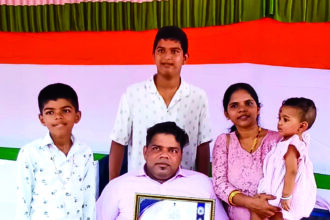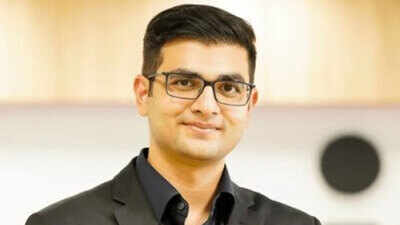
Awais Ahmed’s journey to building one of India’s leading space startups began without the advantages many students enjoy today. Raised in Aldur village in Karnataka, he spent much of his childhood without internet access or a smartphone. Instead, his father nurtured his interest in science by bringing home encyclopaedias that sparked his fascination with space.
That passion eventually led him to BITS Pilani, where he studied Mathematics and participated in Team Anant, the institute’s satellite initiative in collaboration with ISRO. He also led Hyperloop India during the SpaceX Hyperloop Pod Competition, gaining valuable engineering experience.

The turning point came during the IBM Watson AI Challenge in 2018. Alongside fellow student Kshitij Khandelwal, Awais needed hyperspectral satellite data for a crop-monitoring project but realised such data was unavailable. Rather than abandoning the idea, they decided to build their own satellite company.
In 2019, the pair launched Pixxel using borrowed funds and modest personal savings. Since then, the startup has attracted around $95 million in funding from prominent global investors.
Pixxel’s satellites now provide advanced Earth observation by capturing more than 250 spectral bands, enabling industries to monitor crop health, detect methane leaks, identify illegal mining and track pollution.
The startup’s achievements have received worldwide recognition. TIME named Pixxel among its Best Inventions in 2023, while the World Economic Forum selected it as a Technology Pioneer in 2024. The company also became the first Indian private space startup to secure a NASA contract, cementing its place in the global space industry.