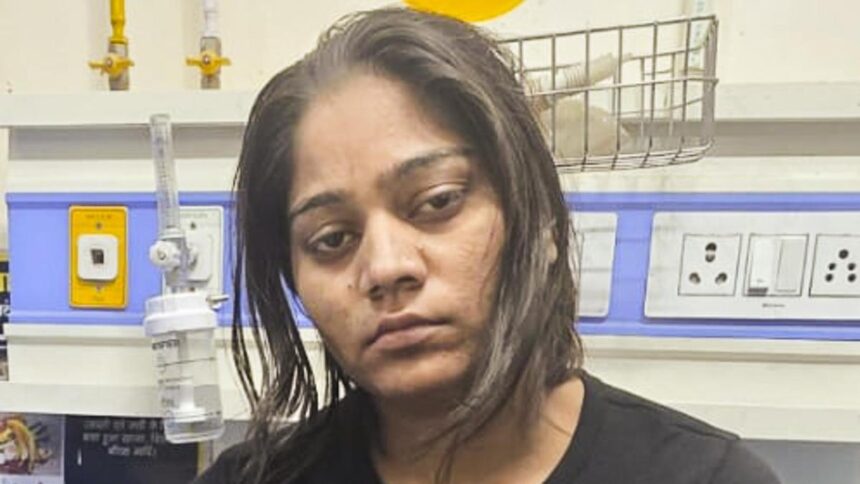
The Supreme Court on Friday refused to stay the bail granted to Sonam Raghuvanshi, the prime accused in the alleged murder of her husband, Raja Raghuvanshi, during their honeymoon in Meghalaya. While the court expressed prima facie reservations about the reasoning adopted by the High Court in granting bail, it declined to interfere immediately as the accused had already been released from custody.
A bench of Justices M.M. Sundresh and Sheel Nagu issued notice on the petition filed by the State of Meghalaya challenging the bail order and sought a response from the accused.

Appearing for the state, Solicitor General Tushar Mehta argued that the High Court’s decision was “shocking” and based solely on a typographical error in the arrest documents. He submitted that the police had mistakenly mentioned Section 403(1) of the Bharatiya Nyaya Sanhita (BNS), a non-existent provision, instead of Section 103(1), which deals with punishment for murder.
The Solicitor General contended that the grounds of arrest had been properly communicated to Sonam and that the error caused no prejudice. He also informed the court that the trial was already underway with 94 witnesses expected to testify.
Justice Sundresh observed that the bench had reservations about the High Court’s approach, particularly because the issue regarding the arrest memo was not raised during earlier bail applications. The court questioned whether bail should have been granted solely because of a clerical mistake when previous applications had been rejected on merits.
Counsel appearing for Sonam Raghuvanshi maintained that the grounds of arrest had never been properly communicated and argued that she was complying with strict bail conditions, including remaining in Shillong during the trial. He added that there was no likelihood of her absconding.
Although the bench remarked that it would likely have stayed the bail order had the accused still been in custody, it held that doing so after her release was not appropriate. The Supreme Court will now examine the legality of the High Court’s order while the trial in the sensational honeymoon murder case continues.