Shravani G Kumbhar
As the world evolves, gyms have become an important part of modern life, helping people improve their health, build strength, reduce stress and stay active amid increasingly sedentary lifestyles. Yet, one question continues to come up in fitness discussions: do men and women train differently? While the fundamental principles of exercise remain the same, individual goals, preferences and physical needs can influence how people approach their workouts.

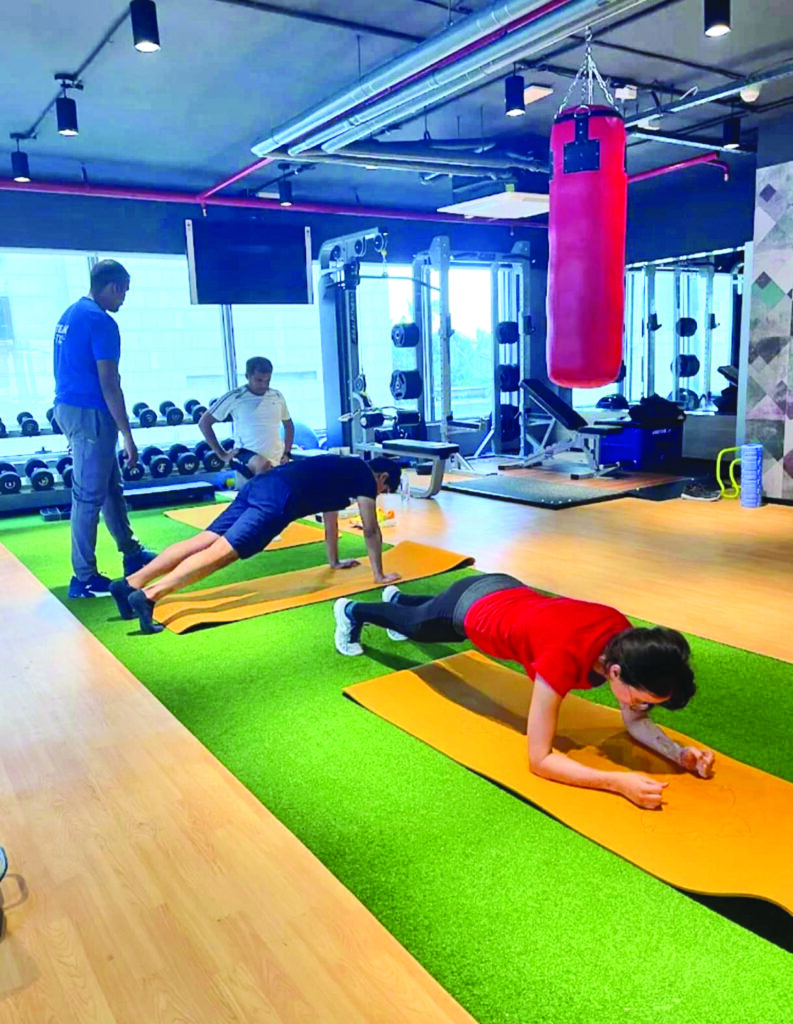
Men and women may enter gyms with different fitness goals and body preferences. Men are often associated with muscle building and strength training, while women are commonly seen focusing on weight loss, toning, posture and overall health. However, these preferences are changing. Women are increasingly taking up strength training, while more men are exploring mobility, flexibility and wellness-focused exercises. Traditional stereotypes have long shaped these choices, with heavy lifting often being perceived as masculine and lighter workouts being associated with women.
Ashwyn Michael Barreto, a gym trainer from Panjim with eight years of experience, says “At foundation level, men and women both need to train the same basic movement patterns including strength, mobility and conditioning exercises.” He believes workout plans should be determined by a person’s goals, lifestyle and physical capacity rather than gender.
According to Ashwyn, men may traditionally focus on muscle building while women often prioritise fat loss and toning. However, these patterns are changing as more women take up strength training and more men incorporate mobility, flexibility and overall wellness into their routines. He believes exercises should not be categorised as either male or female, since movements such as squats, push-ups and core exercises can benefit everyone. On the importance of consistency, he says, “Even a few quality workout sessions every week can support long-term fitness and health.”
Mansi Naik, a gym trainer from Margao with five years of experience, says “Workout routines for men and women are mostly the same, except during women’s menstrual cycles when energy levels and workout intensity may vary.” She explains that hormonal changes and menstrual cycles can influence how some women feel during exercise. While some may prefer reducing their workout intensity during their periods, others may continue with their regular routines if they do not experience cramps or discomfort. She also points out that exercise can sometimes help alleviate period-related discomfort.
Mansi says that weight loss and spot reduction are among the common reasons women join gyms, with many focusing on areas such as the belly, thighs and arms. However, she believes the focus should shift towards building strength and reducing body fat rather than simply lowering body weight. She has also noticed that some women feel uncomfortable in gyms because of a lack of support or concerns about body shaming. In her view, proper guidance can help women gain confidence and eventually become independent in their workouts. She estimates that around 70 percent of gym members are men, compared to 30 percent women, while younger women tend to be more visible in gyms than married women.
Nutrition is another important part of fitness, although dietary requirements vary according to individual goals and physical characteristics. People looking to build muscle may need higher calorie and protein intake, while those aiming for fat loss may focus more on managing their overall calorie intake while maintaining adequate protein. Regardless of gender, a balanced diet remains essential for energy, recovery and long-term health.
Sairaj R Sawant, a gym trainer from Bicholim, says that men and women may follow different training routines depending on factors such as hormones, body type, workout intensity and individual goals. He stresses that women should not automatically be associated with low-intensity workouts, as many are capable of undertaking demanding training similar to men.
He also explains that calorie and protein requirements vary according to body weight, body composition and individual goals. While many women may initially join gyms with goals such as weight loss, fat loss or achieving a toned physique, he has also observed an increasing number of women training to gain healthy weight and improve their overall fitness. At the same time, he notes that male members continue to outnumber female members in many gyms.
Priyanshi Naik, 45, a fitness trainer from St. Inez with seven years of experience, says “Both men and women perform strength training, cardio and functional workouts.” She says men often opt for split routines and heavier strength-focused workouts, while women may show a greater preference for full-body workouts, lower-body training, HIIT (High-Intensity Interval Training), yoga and Zumba. However, she stresses that these preferences do not make any exercise gender-specific, as training should ultimately be based on individual goals. She also observes that gym attendance often increases during weight-loss seasons, fitness challenges, festivals and wedding periods, but says consistency is what ultimately produces lasting results.
Pranit Suresh Sawant, 27, from Nachinola, Bardez, with six years of experience, says that women often gravitate towards lower-body and core exercises, partly influenced by social media trends promoting a flat stomach. Men, meanwhile, may focus more on upper-body development or overall strength depending on their goals. He notes that hormones can influence training intensity and recovery, but says cardio and protein requirements can be broadly similar when individuals have comparable goals. Ultimately, he believes workout plans should be based on personal preferences and objectives, with the number of sets and intensity adjusted accordingly.
The changing fitness landscape is challenging traditional ideas about what constitutes a “male” or “female” workout. Women are increasingly participating in powerlifting competitions and bodybuilding, while men are becoming more comfortable with Pilates, functional training and flexibility-focused workouts.
The growing diversity in gym routines suggests that fitness is gradually moving away from gender-based stereotypes. Rather than following a predetermined “men’s” or “women’s” workout, individuals are increasingly choosing exercises according to their goals, fitness levels, physical abilities and preferences. In the modern fitness environment, the focus is less on who should perform a particular exercise and more on what helps each individual become healthier, stronger and more confident.