SHASHWAT GUPTA RAY
For many young women, an irregular men strual cycle may seem like a minor inconvenience — something to be dealt with later. But doctors warn that increasingly, such symptoms are signalling a much larger metabolic and hormonal problem Polycystic Ovary Syn drome (PCOS), also referred to by some clinicians as Pol ycystic Metabolic Ovary Syn drome (PMOS), is being seen with increasing frequency among young women in Goa, significantly raising the risk of serious health conditions, including Type 2 diabetes, obesity and infertility. “Earlier, around one in 10 women used to have PCOS. But now, nearly one in every six female OPD patients ex hibits signs of PCOS/PMOS, with young women aged 18 to 25 being the most affected group,” former Head of Obstetrics and Gy naecology at Goa Medical College (GMC), Dr Gurupras ad Pednekar, told O Heraldo.

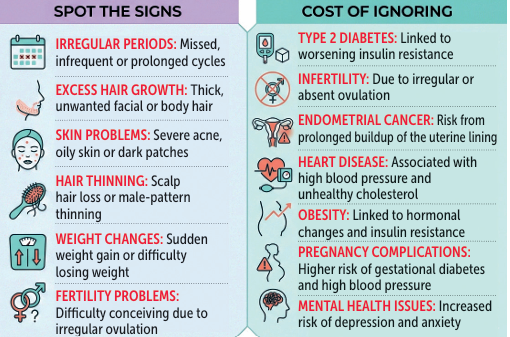
The condition occurs when the body produces higher-than-normal levels of androgens, or male hormones, interfering with ovulation. The consequences can extend well beyond reproductive health. The primary triggers stem from daily habits, including high consumption of junk and processed foods, reduced physical activity replaced by vehicular commuting, and heavy screen time that disrupts natural circadian rhythms. At a physiological level, PMOS causes anovulation — where the ovaries fail to release eggs properly. This can result in menstrual periods being delayed by six weeks to five months, often followed by heavy bleeding, along with physical changes such as hirsutism, severe acne, weight gain and skin darkening. Beyond physical symptoms, PMOS carries serious metabolic and psychological risks. Driven by insulin resistance, untreated cases significantly increase the likelihood of developing Type 2 diabetes, hypertension, cardiovascular disease, endometrial cancer and MASLD (fatty liver). While the condition creates fertility hurdles and in creases the risk of early abortion, experts emphasise that PMOS-related infertility remains highly treatable.
Howev er, the accompanying cosmetic and physical changes fre quently trigger anxiety, depression and low self-esteem among young women. Reversing this trend requires sustainable lifestyle changes. Experts recommend daily brisk walks, yoga and regular physical activity over brief, high-intensity gym routines, alongside cutting out fast foods, cheeses and processed meats. For obese patients, weight loss alone can improve over all symptoms by 50%. Clinicians may also prescribe short courses of hormonal therapy when necessary.
For married women, specialists advise against unnecessarily delaying conception, as pregnancy and lactation can help reset hor monal balances. Demographically, local research by Dr Pednekar and former Professor and Head of the Pathology Depart ment, Dr R G Wiseman Pinto, indicates that 3% to 5% of teenage girls in Goa suffer from PMOS, matching national figures. “Nationally, incidence ranges from 3% to 35%, while global estimates stand at 8% to 13%, with the WHO noting that over 70% of affected females remain undiagnosed,” Dr Wiseman Pinto said.
He noted that diagnosis relies on identifying irregular or anovulatory cycles, elevated blood androgen levels and fluid-filled ovarian cysts through ultrasound. “Addressing this emerging crisis requires coordinated community outreach across Goan panchayats, municipali ties, educational institutions, medical associations like the IMA and AYUSH, and local service clubs including Rotary, Lions, Jaycees and Samrat clubs,” he said.