Is it the decade to checkmate political opportunism?
At 3,702 sq km, Goa is a small State, but its problems, especially in the political arena, are of a gargantuan nature. They surpass those of larger States, and ironically, this could all be because of the small size of the State and its population. With a 40-member Assembly, it has become extremely facile to twist the law to the advantage of the political class, with scant respect for the electorate.
Former State Election Commissioner Prabhakar Timble, also a political commentator, says, “Politics in Goa would bag the first rank at the national level for being the murkiest and for not leaving any dirty trick unexplored and untouched. Public confidence in the politicians and their politics has sunk to a level of frustration making citizens disinterested in institutions of democratic governance. Communal polarisation is also seeping in at the grassroots level. Politicians through their defections, coalitions and misdeeds of corruption have destroyed the faith of the people in democratic institutions. BJP has given respectability to political defections and politics of hatred. The Congress party stands wounded, not showing signs of recovery. The regional parties through their recent conduct have proved to the electorate that they are only power brokers and cannot be trusted.”
What Goa needs is to break the practice of defections – the changing of colours and ideology – with scant respect to the people’s vote. In a State where politics means being in a position of power, and where sitting on the opposition benches makes MLAs restless, there is definitely some course correction required.
Journalist Rajdeep Sardesai, who from Delhi follows Goan politics closesly, believes that the State’s population has been rather lenient with the political class. “I think Goans need to start being a little tougher with their politicians. We allow politicians to get away too easily in Goa. We must have a stronger measure of accountability – perform or perish.” If Goa were to use this measure, then it would probably end up substituting almost its entire Assembly every election.
One doesn’t need to go back too far into history to understand just how politicians play with the voters once they have been elected.
In March 2017, minutes after taking oath as member of the legislative assembly, Vishwajit Rane quit his membership, resigned from the Congress and later joined the BJP. He was sworn in as a minister, contested a by-election on a BJP ticket and returned to the Assembly. In October 2018 two other Congress MLAs quit the party and joined the BJP. They too got re-elected as MLAs in May 2019. In July 2019, there was a mass exodus from the Congress when 10 MLAs quit as a group and joined BJP. This included the Congress leader in the House, Chandrakant (Babu) Kavlekar, who was then appointed Dy Chief Minister.
The 2017 results also saw an unexpected marriage of convenience, when the debutant regional formation, Goa Forward Party, tied up with the BJP, a party with which it shares no ideology. The coalition brought together also the MGP and three Independents in an alliance that led to widespread condemnation, especially as the GFP had campaigned against the BJP. When the coalition collapsed in 2019, the two regional parties lost no time in launching invectives at the BJP, the kind that can be associated with a messy divorce.
This is the backdrop against which Goa enters the 2020s, with an election two years from now. Sardesai says, “I keep maintaining that a week is long time in Indian politics. Goa has elections still two years away. So I would hesitate to predict anything for Goa and particularly for a State like Goa. My own sense is that I think people should judge a government on its trackrecord on governance. Give them five years and judge them at the end of five years. The BJP formed the government in 2017. They formed another one in 2019, so judge them in 2022. They should be judged on governance, ethics, standards of public behaviour and then if they do not measure up be prepared to vote them out and if they measure up, vote them back.”
What Goa requires in the coming years is that correction in politics to see it through the decade and beyond. The question is, can Goa do it? “The course correction for the coming decade will have to be finally done by the people. First of course is to send the strong signal by rejecting the political defectors. It looks that the electorate having burnt their fingers may not repose confidence in regional outfits and Independents in the coming decade,” says Timble.
But it cannot happen spontaneously. As Peter Ronald deSouza, the DD Kosambi Visiting Professor at Goa University puts it, “It requires guts and vision. This has been in short supply in our leadership since Bandodkar. Alas.”
The lack of vision has plagued Goa since the 1960s. Politicians, on campaign trails, have mouthed what the electorate wants to hear only to turn the other way on being elected. Take for instance the 2019 Lok Sabha polls and the twist given to the political discourse by the two Congress candidates. Instead of launching their campaigns from temples and churches, as is the habit in Goa and the rest of the country, they started of from some troubled spots. The South Goa candidate Francisco Sardinha, who eventually won, had first reached out to the people engulfed by the coal dust in Vasco, and then went to the rest of the constituency. The North Goa candidate Girish Chodankar, who lost the polls, went to the banks of the River Mandovi seeking the blessings of the Mhadei.
A good seven months after the elections, both issues remain smouldering, but this showed that the political class can – even if it be only to get some news coverage – change their routine.
In recent years, Goa’s leadership has often times been found wanting. The Mhadei muddle, where the Centre has succeeded in sidelining Goa, while giving Karnataka a listening ear and helping hand, has exposed the lack of strong leadership.
Commenting on this, Rahul Tripathi, HoD, Political Science, Goa University says, “One big challenge I see before Goa in the coming decade is its inability to negotiate terms with the Central government which are in Goa’s favour. Our State today lacks political leaders who are tall enough to push forward Goa’s case with conviction. Central leadership on the other hand is far too obsessed with national concerns to treat Goa’s concerns with urgency. The recent flux over Mhadei is one such example.”
Tripathi adds, “Perhaps it is time now for civil society and political parties to put their act together and present Goa’s case through the Governor, who has shown extraordinary sensitivity on the Mhadei issue during the short time he has been here. Goa has far more intellectual capital than is being utilised for seeking better treatment from the Centre and the bigger neighbours.”
Following the 2017 elections there have been massive shifting of allegiances, all away from the Congress and towards the BJP. The latter now has MLAs in constituencies that in the past it could not even find candidates to field.
Timble says, “The BJP is in no position of envy as we approach the next elections. It is overcrowded with ambitious, power-hungry politicians. The drought in the Congress party could prove advantageous if they come out with new and young faces with adequate representation for women. Though this looks risky, the Congress has nothing to lose more than it has lost.”
What could happen when the intelligent voter decides that there has been enough of this. Results of the preceding few elections prove that Congress and the BJP remain the main players in the Goan political arena, but the space for an alternative does exist. In 2012, five Independents and five regional party MLAs were elected, and in 2017 there were six regional party MLAs, three Independents and one from another party elected. In both elections, it was 25 percent of the strength of the Assembly. The regional parties and Independents together polled about 30 per cent of the vote, a significant block of votes that can change the game.
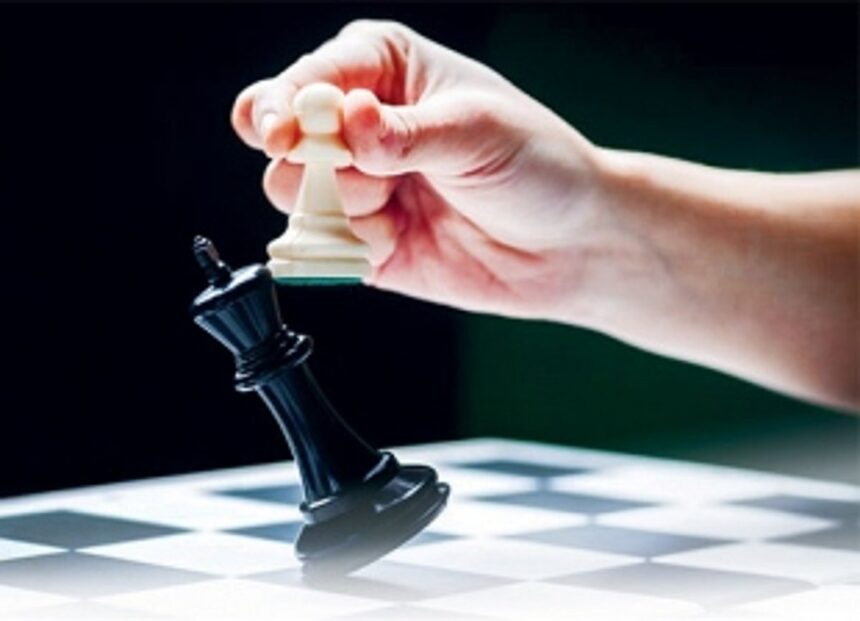
Goan politics, however, is fragile, with even a slight breeze strong enough to bring a change to the voting patterns. This could well be the decade to play a game of political chess, where the pawn checkmates the king. It is when the people realise that it is their vote that counts in an election, that this can happen.