Dolcy D’Cruz
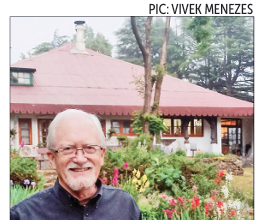
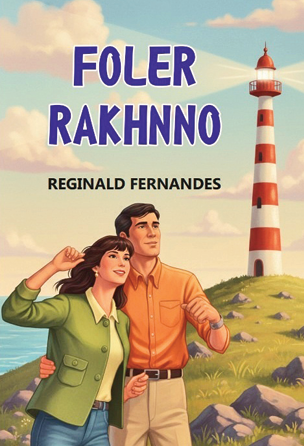
After decades out of print, a beloved Konkani classic by Reginald Fernandes will soon be in the hands of readers. ‘Foler Rakhnno (The Guardian of the Lighthouse)’ by the Romanxincho Patxai, will be released on March 16 at 4 pm at the Reginald Fernandes Conference Hall of the Dalgado Konknni Akademi in Panjim. The novel is published by New Age Printers, Goa Archdiocesan Printing press. “Reginaldo Fernandes was born on June 14, 1914, in the village of Siolim. He is an unfamiliar image amongst the younger generation as little efforts are made to recognise him and his works. He was Goa’s finest and prolific Roman Konkani writer, popularly known as Romanxincho Patxai. There is a greater need to study and write thesis on his novels. He is an inspiration to promote and protect Konkani literature. Reginald’s writing style is distinctive for its vivid descriptions of places, presented in a simple and easily understandable manner. He writes in a way that closely reflects spoken language, allowing readers to connect with and relate to his work. Another notable feature of his writing is the use of concise, to-the-point dialogues that are crafted in an engaging and appealing way,” says Fr Myron Barreto, president of Dalgado Konknni Akademi while also managing New Age Printers in Verna. Reginald was fondly remembered for his work of novels and since his publications are not available, the New Age Printers decided to print. A native of Siolim in Bardez, he authored more than 200 novels and novelettes. ‘Foler Rakhnno’, first published in 1970, is remembered for its romantic theme and suspenseful narrative. The book has an additional 10 pages written about him, a multifaceted personality, musician and tiatrist, to reintroduce him to the younger readers. “I still have three handwritten manuscripts by my father, Reginaldo Fernandes, which were never printed. I hope this new publication marks the beginning of more of his works being brought out for readers. My wish is that the new generation will discover his books, recognize his distinctive writing style, and develop a greater interest in reading Konkani. His stories were written in simple Romi Konkani, making them easy and enjoyable for everyone to read,” says Salvador Fernandes, son of Reginald. “After my father passed away in 1994, nothing much was done to bring his books back into print. It has been almost 32 years now. Over the years, some people gave me hope that something would happen, but it never really moved forward. I realized that printing a book is actually the easy part. What truly matters is publishing it properly. It is not just about having the money to print; you also need the support of an established organization with the reach and network to take the book to the common reader,” he explains. Reginald Fernandes’ wife was Lilia, and his elder daughter, Philomena, now lives in Aurangabad, Maharashtra. Speaking about his younger days in Goa during the Portuguese rule, Salvador says, “When we were living in Goa during the Portuguese era, my father worked at Emissora de Goa, which was the radio station that later became All India Radio Goa. He would go to work in the morning and usually return home by the afternoon, leaving his evenings free. Whenever he had a spark of an idea, he would quickly jot down a few notes, and once the idea took shape, he could complete an entire novel within just two or three days. In the evenings, he often spent time with friends who were well known musicians of that period, including Johnson Carvalho, a respected band leader from Siolim, and Anthony de Souza, who was the music director at Emissora de Goa. They would regularly meet at the bandstand of St Anthony Church in Siolim, where they gathered to talk, share ideas, and spend time together.”

Most of his novels cannot be singled out as the most famous because he wrote extensively and titled his books from A to Z. One of his earliest titles began with ‘Arabesca’, representing the letter A, while ‘Zorzoro’ marked the letter Z. The upcoming reprint, ‘Foler Rakhnno’, falls under the letter F. Although he sometimes repeated letters, he ensured that his titles spanned the entire alphabet. Many of these books were published by Jack of All Stalls in Byculla, Mumbai. “After 1961, he moved to Mumbai where he also pursued his passion for music. He played the trumpet with the well-known band Nelly and Her Dance Band, led by a Parsi bandleader and made up largely of Goan musicians. His trumpet was a prized possession, it was the same model used by Louis Armstrong and even carried his signature. In the 1980s, I persuaded my father to retire and return to Goa, a place he loved deeply. Even after settling back, he continued writing. He contributed stories to publications such as Gulab and church magazines, and also wrote short stories and compiled a book of proverbs. Even today, when people meet me, the first question they ask is when his books will be published again,” says Salvador.
The book is edited by Fausto Da Costa, Konkani writer. “Some people used to say that his Konkani was not up to the mark, but that was not really the case. His Konkani was good; the only issue was with the orthography or the way certain words were written. However, his style of writing was very strong and engaging. You can understand it better than even what they write today, he had a very flowery language. He had a unique way of describing scenes that truly brought them to life, something not many Konkani writers did in the same way. Interestingly, he would begin most of his novels with a short poem of about eight to twelve lines that captured the essence of the story,” explains Fausto. “Although ‘Foler Rakhnno’ was published in the 1970s, I read it only in the late 1980s. What struck me most was how vividly the novel describes places like Sinquerim, Aguada, and the lighthouse there, which today has been turned into a museum. These locations give the story a special significance. He also beautifully portrays the village of Parra, describing how the characters walk there and capturing the charm and atmosphere of the village as it existed in those days. The Parra of the 1970s, as described in the book, is very different from what we see today. Aguada too was quite different at that time,” he adds. In the days of lending books from the library or passing it on to the next reader in the clubs in Bombay or on the cruise line ships, his books were very much in demand among Romi Konkani readers. “When a new novel by Reginald was released through Jack of All Stalls, the publisher would announce it about two months in advance. The price of the book was just two Rupees, but readers could pre-book it for Rs 1.75. The first print run was usually limited to around 1,000 copies, yet his novels often went on to sell as many as 10,000 copies. During the 1970s and 1980s, he would typically publish one or two novels every year. In total, he wrote more than 200 novels, though no exact record exists. A few of his unpublished stories still remain, some with the publisher and others with the family,” concludes Fausto.