Govind S Poteker
The grand spectacle of fire walking, the lore of Shree Lairai, the Devi wearing a green saree is all set to relive the devotional atmosphere in the village of Shirgao and across the state. Shirgavchi Jatra will be celebrated today April 21, the waning lunar phase of Vaishakha. And, it is the time once a year when Our Lady of Milagres (Miracles) sends the fragrant Jasmine flower for the feast, and in return she receives a pot of coconut oil from Devi Lairai during the St Milagres feast that was celebrated a day prior on Monday, April 20. What a great tradition of syncretic communal harmony between two faiths, when the world is breaking apart!

As per the legends that date back to about 500 years ago, Lairai Devi who is worshipped as an anthill, along with her six sisters, Kelbai (Mulgao), Mahamaya (Mayem), Morjai (Morjim), Mirabai or Milagres (Mapusa), Ajadipa (Anjadive), Sheetalai (goddess of netherworld) and her younger brother Khetoba (Vainguinim) came from Chorla village from the Sahyadri Ghats and settled at different places. They are revered as Gramdevtas or guardians of the villages. It is believed that all of them meet together during this Jatra. Devi’s devotees come from all over Goa, neighbouring states and other regions of India. With close to 100,000 devotees, it is considered the largest congregation of people gathering on a single night for any feast in the state.
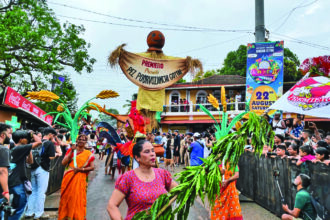
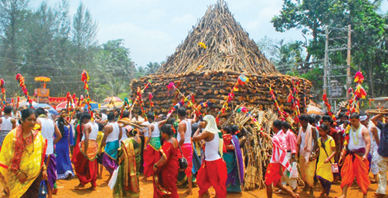
On the day of festivity, devotees pour into the village from all walks of life, from every possible lane and bylane, to seek darshan. Devi, represented as Kalash (copper pitcher), is taken out in a colourful procession after a rhythmic dance by dhonds holding the colourful cane sticks in the precincts of the temple. Festivity begins after 22 Chowgules (Mankaris), close deovtees and Dhonds arrive from Mahamaya temple, Mayem. Chowgules, belonging to different communities, carry out the various rituals during the feast. Devi’s Kalash is taken after the invocation and prayers at the Shree Lairai temple to Mudder, where on the hillock is the original temple of Devi, next to the temple of Gram Purush. The customary ritual of fire walking is a grand occasion and symbolic as Shree Lairai Devi is believed to have walked on the fire amber along with 500 Dhonds as a mark of penance for hurting her brother in anger. And her devotees follow the legend in a religious devotion for generations.
One of the fascinating visuals at the Jatra, without doubt, apart from fire walking, is the assembly of thousands of Dhonds taking a ceremonial bath at the sacred Talli (pond). On the second day of the festival, Devi’s Kalash visits every household in the village, offering Kaul Prasad and blessings to the devotees for the good health and well-being of the family. Before the festivity of the goddess known as the reincarnation of Goddess Parvati, the preparations begin well in advance as Dhonds, the devotees of Devi in many villages, quarantine themselves away from their families living in a designated place. They strictly follow vegetarian food and follow a high standard of cleanliness. Renowned Konkani writer, Dr Prakash Parienkar from Dhave, Sattari, going down memory lane, recollects how Shree Lairai Dhond Mandal, Tar Sattari Goa was established by his father, late Shamba Porienkar in the year 1945. Parienkar says, “Dhonds from neighbouring villages used to come and stay at this place, which is situated on the bank of the River Mhadei. Presently, it is composed of 51 devotees, out of which three are females. Some of these dhonds are from Chinchinim, Salcete.” Elder brothers Narayan, Ganesh (Dadi) are also dhonds, Parienkar mentioned. Since 1990, they have been organising Shree Satyanarayan pooja and a cultural programme to keep the group upbeat buildup the festive atmosphere. Responsibility is shared among the four different groups to cook the food for the devotees. The uniqueness of this Mandal lies in a complete ban on any anti-social activities, he adds.
In Mayem, a small group of dhonds gather at Turthbhag near Shri Gothneshwar temple close to Shree Kelbai temple, informed Nitesh Talavnekar. “While staying in (Matov) for five days under the blessing of Devi Lairai Mata everything is exciting and a great moment,” Nitesh stated. During the festival, many devotees offer logs of wood for the bonfire in fulfilment of their wishes and thanks-giving for the blessings bestowed by Devi. Fairs are an integral part of the festivals, something that people keenly wait for their various needs as almost everything is available from kitchen to living room furniture and furnishings, beauty to costumes at best bargains, and many more. Milagres feast is also well-known as Purumetachea fest, for stocking spices and local groceries for the ensuing monsoon period. It’s an experience to be part of these festivals and the diversity.
However, due to the tragic incident of a stampede during fire walking last year, there won’t be any fair this year. Dinanath Gaonkar, president of the Shree Lairai Devasthan committee, informed, “Only limited stalls selling Khaje (sweets) and refreshment will be allowed this time at designated places only.” This year, the government has made strict traffic regulations and safety arrangements, ensuring proper care and safety of every devotee who attends the largest congregation of people coming from far and wide. As the legends live on through these festivities, the folklore of jasmine flowers and coconut oil retains the essence of unity and the deep faith in devotees