ALVARINHO J LUIS
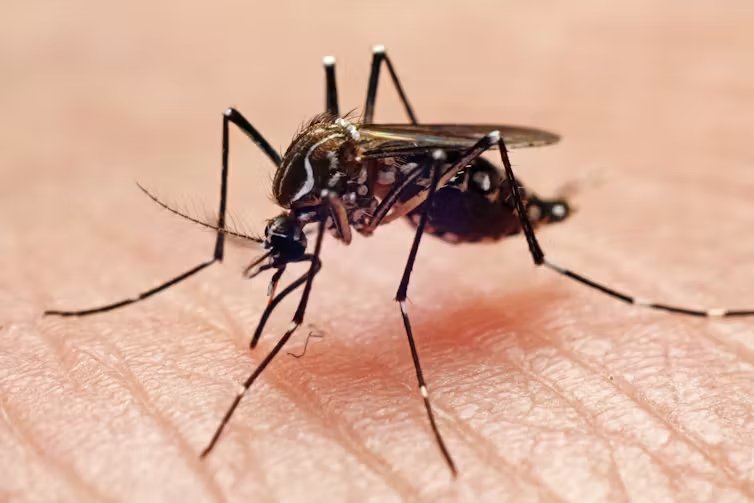
Scientists and the public alike have long debated why mosquitoes prefer specific individuals, citing factors such as blood type, body odour, and alcohol consumption. As early as the 5th century BCE, the Greek historian Herodotus described mosquito nuisance, long before the role of mosquitoes in transmitting diseases was known. Today, mosquitoes are recognised as carriers of deadly pathogens, making them more than just an annoyance in tropical regions.

Individuals who are bitten more frequently are at a greater risk of contracting diseases such as malaria and dengue.
Mosquitoes locate their human hosts using a mix of sensory cues. The hunt typically begins with the detection of carbon dioxide (CO₂) exhaled by humans, which triggers their host-seeking behaviour. This is followed by a complex combination of olfactory, visual, thermal, and tactile signals that guide mosquitoes to their target.
While CO₂ and body heat attract all humans, individual differences in body odour largely determine who gets bitten more. Human odour varies depending on the composition of the skin microbiota and the volatile compounds it produces. Individuals highly attractive to mosquitoes tend to have less diverse bacterial communities and emit higher levels of volatile fatty acids/long-chain carboxylic acids. In contrast, short-chain fatty acids appear to repel mosquitoes, reducing the likelihood of landings.
The role of blood type in mosquito preference has also been explored, though findings remain inconsistent. Despite decades of study, scientists still lack a definitive answer as to why mosquitoes are drawn to specific individuals more than others. Understanding these factors, however, is essential for improving prevention strategies and reducing bite frequency, especially in regions where mosquito-borne diseases are endemic.
To explore this further, researchers conducted the Mosquito Magnet Trial, the most extensive study of its kind, during a three-day music festival in the Netherlands. This real-world experiment provided a rare opportunity to study mosquito attraction under natural yet variable conditions, where human behaviour, hygiene, and body odour fluctuated more than in controlled laboratory settings.
Mosquito attraction was quantified by counting the number of landings on participants’ forearms, revealing substantial variation among individuals. One key finding was that beer consumption significantly increased mosquito attraction, confirming earlier results from smaller samples. However, measured blood alcohol concentration showed no direct influence, suggesting that mosquitoes may be drawn to the distinctive smell of beer rather than the alcohol in the bloodstream.
Given that beer is the most popular beverage among participants, this effect was particularly noticeable. While the findings are compelling, other unmeasured factors, such as sweat composition or metabolic by-products, could also play a role, warranting further research before anyone gives up beer to avoid mosquito bites.
Conversely, the use of sunscreen was associated with an adverse effect on mosquito attraction. Participants who had applied sunscreen experienced fewer mosquito landings, although the effect appeared to weaken over time since their last shower, suggesting that the protective influence may fade gradually. Sunscreen may reduce mosquito attraction by either masking human odours that typically attract them or by containing mild repellent compounds.
Given that participants likely used various brands yet showed consistent results, the effect is broadly applicable. These findings highlight how everyday habits, such as drinking beer or applying sunscreen, can subtly influence mosquito behaviour.
For now, one practical takeaway stands out: at your next outdoor event, sunscreen might protect you not only from the sun’s rays but also from a few unwelcome bites.