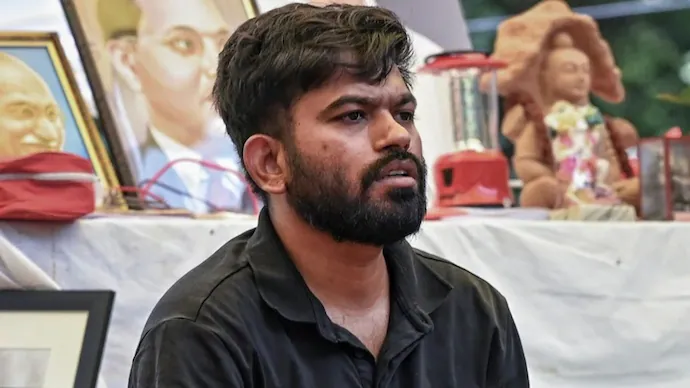
Government schools need to become a bigger political and public priority, CJP convenor Abhijeet Dipke said as he prepared to launch the ‘School Thik Karo’ campaign from Hingoli in Maharashtra on Independence Day.
Before leaving for his native village of Santuk Pimpri, Dipke said government-run schools across India have remained neglected regardless of which political party has been in power. He argued that education must become a bigger part of public discussion, with citizens questioning governments about the condition of schools in their communities.

“People have now understood that they should talk about education, which is the need of the hour,” Dipke told PTI.
The campaign aims to draw attention to the condition of government schools in villages, particularly their infrastructure, basic facilities and day-to-day functioning. Dipke believes greater public involvement can put pressure on authorities to address long-standing problems.
‘Where Is the Money Going?’
Dipke also questioned government spending on political events and publicity while rural schools continue to face shortages of basic facilities.
He referred to large banners installed across Chhatrapati Sambhajinagar during a Tiranga rally attended by Maharashtra Chief Minister Devendra Fadnavis. While describing the rally itself as a positive event, Dipke questioned the amount of money spent on publicity material placed at short intervals along the route.
He suggested that some of those resources could have been directed towards schools and students in rural areas.
“Had this money been spent on schools and students in rural areas, it would have been even better,” he said.
His argument is that public spending should also reflect the everyday needs of children, particularly those studying in government institutions in villages.
From Social Audits to Village Action
Dipke had announced the nationwide ‘School Thik Karo’ campaign earlier this week and urged parents to conduct social audits of basic facilities available at their local government schools.
The campaign also calls on village sarpanches and local representatives to take greater responsibility for improving school infrastructure. Dipke wants communities to examine whether schools have the facilities necessary for children to study in a safe and supportive environment.
He has questioned the contrast between investment in major government buildings and the condition of schools in rural areas.
“We have made a new Parliament, a new PM house. Why have we not been able to build new schools in our villages?” he asked.
Dipke also questioned whether the children of farmers and labourers are being given the same importance when governments plan for India’s future.
Basic Facilities Still a Challenge
According to Dipke, children in several villages continue to face basic barriers to education. Some students have to travel long distances to reach schools, while others study in institutions where essential facilities such as drinking water and toilets may not be adequately available.
The campaign seeks to make these everyday problems a central part of public discussion.
By involving parents, sarpanches and local communities, Dipke hopes the initiative will encourage people to inspect government schools, identify shortcomings and demand action from authorities.
The ‘School Thik Karo’ campaign is therefore being positioned as more than an effort to repair school buildings. It seeks to create greater public accountability around government education and encourage communities to ask whether schools are providing children with the basic conditions required to learn and build a better future.