Herald
Café: You are credited
for making the careers of filmmakers of the likes of Christopher Nolan, Todd
Haynes and others. What is the best way for a filmmaker to get your attention?
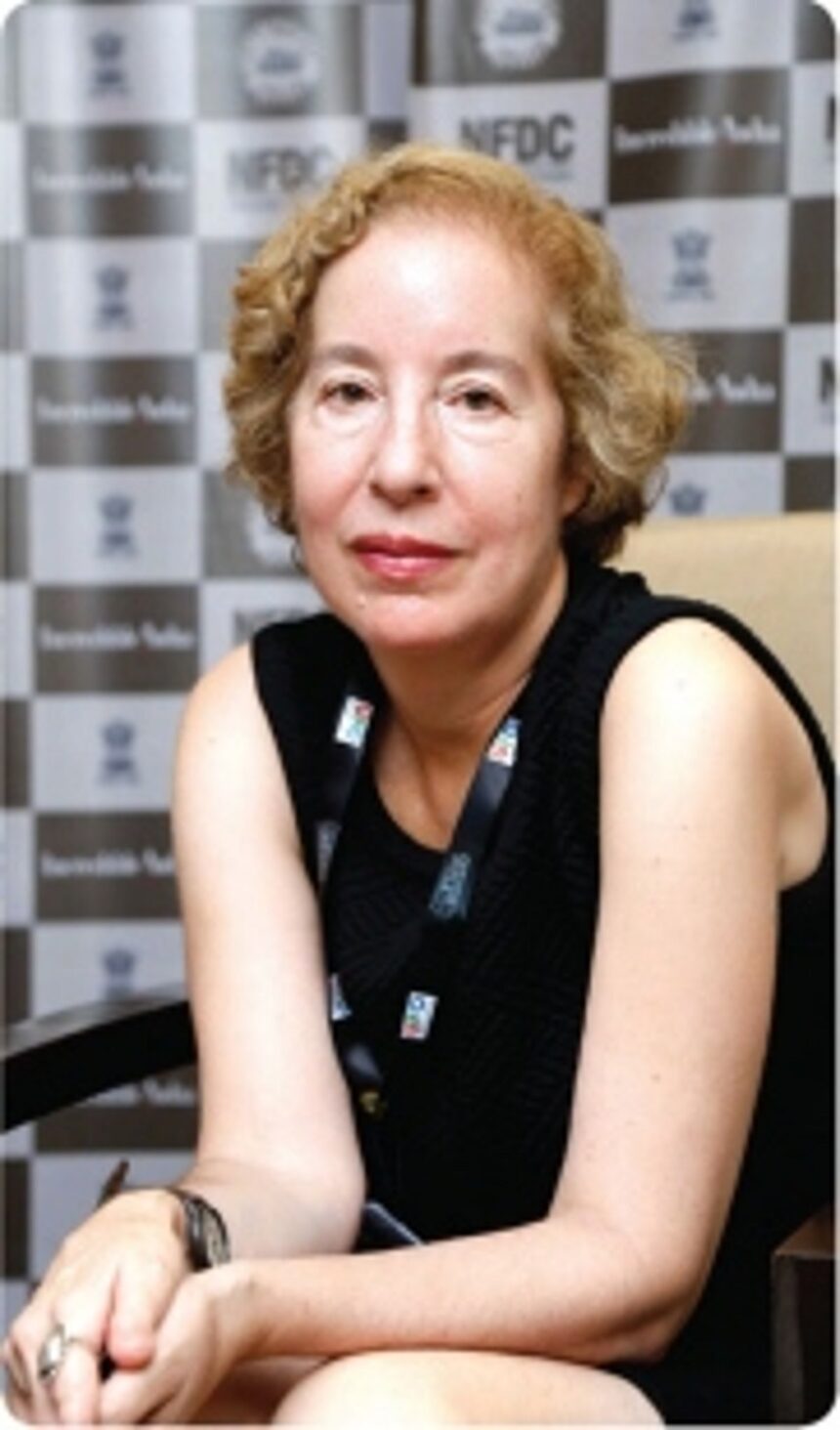
Nancy Gerstman:(laughs) We try to go to as many film festivals as possible during a
year. Honestly, in the first ten years, and our company is 27 years old now, we
never acquired any film unless it came from a film festival, or the programmer
of the festival told us about it or an exhibitor or a filmmaker that we knew
would tell us about it. So I guess a film has to be able to generate some word
of mouth for us to know about it.

HC: You
acquired the rights of Marathi film ‘Court’ for its US release. How do you
break the language barrier in identifying quality cinema?
NG: We
distribute a lot of foreign language films. As a matter of fact, that is really
half of the films that we distribute. The other half are documentary, sometimes
those are in foreign language too. We have learnt how to distribute foreign
language films and this is something that people in the US are just used to. A
lot of quality films out there are foreign language films. So as long as it has
English subtitles, it doesn’t really matter.
HC: Apart
from film festivals, where else do you scout for quality films?
NG:‘Court’
would be a good example. I didn’t really see it at the film festival circuit at
all. I wasn’t in Venice (‘Court’ won the Lion of the Future Award for the best
first feature and was also adjudged the best film in the Orizzonti or Horizons
category at the Venice International Film Festival); I didn’t really know about
it. A distributor that I know and really trust in Canada told us about it. He
was on a jury in Venice. He saw the filmand really loved it; he then acquired
it and recommended it to us. That was a way. The filmmakers of ‘Court’ got into
a festival, they met the right people. This distributor saw them and met them
and he knew me so that’s how it happened.
HC: In
most of your interviews, you have spoken about the need for more women in the
film distribution business. Why do you feel so strongly about this?
NG: There
are basically so few women who have founded theatrical distribution companies
in the United States. It really shouldn’t be so imbalanced. It is not that men
don’t do a great job at distributing films. It’s just that why shouldn’t women
do it too. Women have the ability to do it, I suppose. But I think they just
get discouraged or they may not be able to raise the money. But I think right
now, it is a very difficult time for anyone to start a distribution company.
You could never start it the way Emily (Russo) and I did. We started it with no
capital at all. We had $1000 each and a fax machine. And that was very tough.
You need to find somebody who has money or have money yourself to be able to
start a company and it is going to need a big infusion of capital. So
regardless of whether it’s a man or a woman, but it is definitely different than
the way we did it.
HC: Apart
from the capital, what other challenges can a new company face?
NG: It’s a
totally different market now than when we started. Back then, you could easily
do a theatrical release. Right now, in the US, there are about 25 films
released per week. When we started, there were about 8 or 9 films released. So
you’re fighting for a really small piece of pie. It’s also possible that you
can’t have a theatrical release at all and people go right into the digital
space. But I’m not sure if films do well digitally unless they have something
out there in theatres.
HC: Do
you have any plans to acquire any other Indian films here at Film Bazaar?
NG: Well,
I’m looking. (laughs)